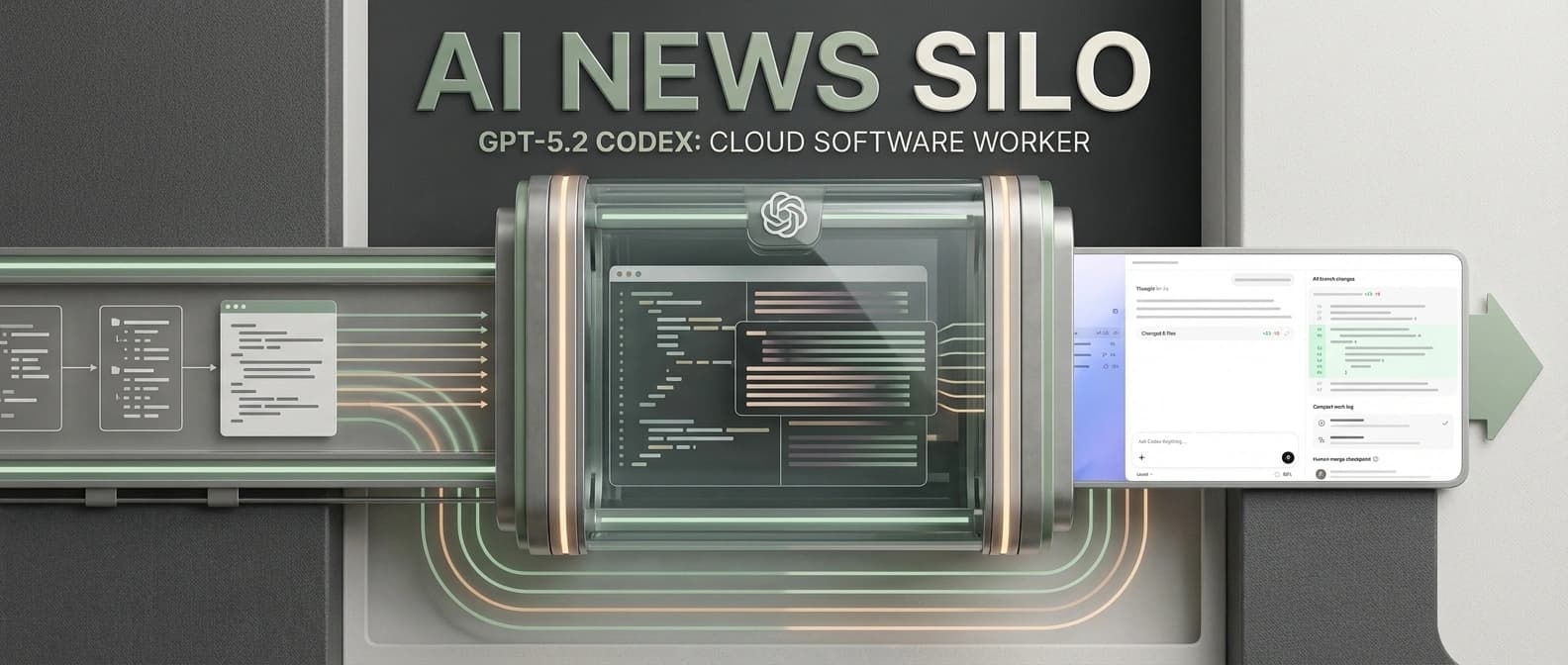
OpenAI Codex plugins turn Codex into a workflow market
OpenAI Codex plugins are less a feature than a distribution move: Codex now has a curated install surface for reusable bundles of skills, apps, and MCP servers.
 ainewssilo.com
When the product gets a curated directory for installable workflow bundles, you are no longer arguing about features. You are arguing about shelf space.
OpenAI introduced Plugins in Codex in its March 26 Business release notes as a curated directory for packaged workflows built from apps and skills. On its own, that could sound like another harmless feature tab. The docs make the bigger point clearer. OpenAI's Codex plugins page says plugins bundle skills, app integrations, and MCP servers into reusable workflows for Codex. I keep coming back to that word: bundle.
Feature launches usually add knobs. Marketplace launches add shelves. This one adds shelves.
That is why I think the interesting part of OpenAI Codex plugins is not the checklist item. It is the distribution shift. Codex now has a place where workflows can be discovered, installed, and reused as packages instead of rebuilt from scratch every time somebody on the team decides to become extremely creative with config files.
What OpenAI Codex plugins actually bundle
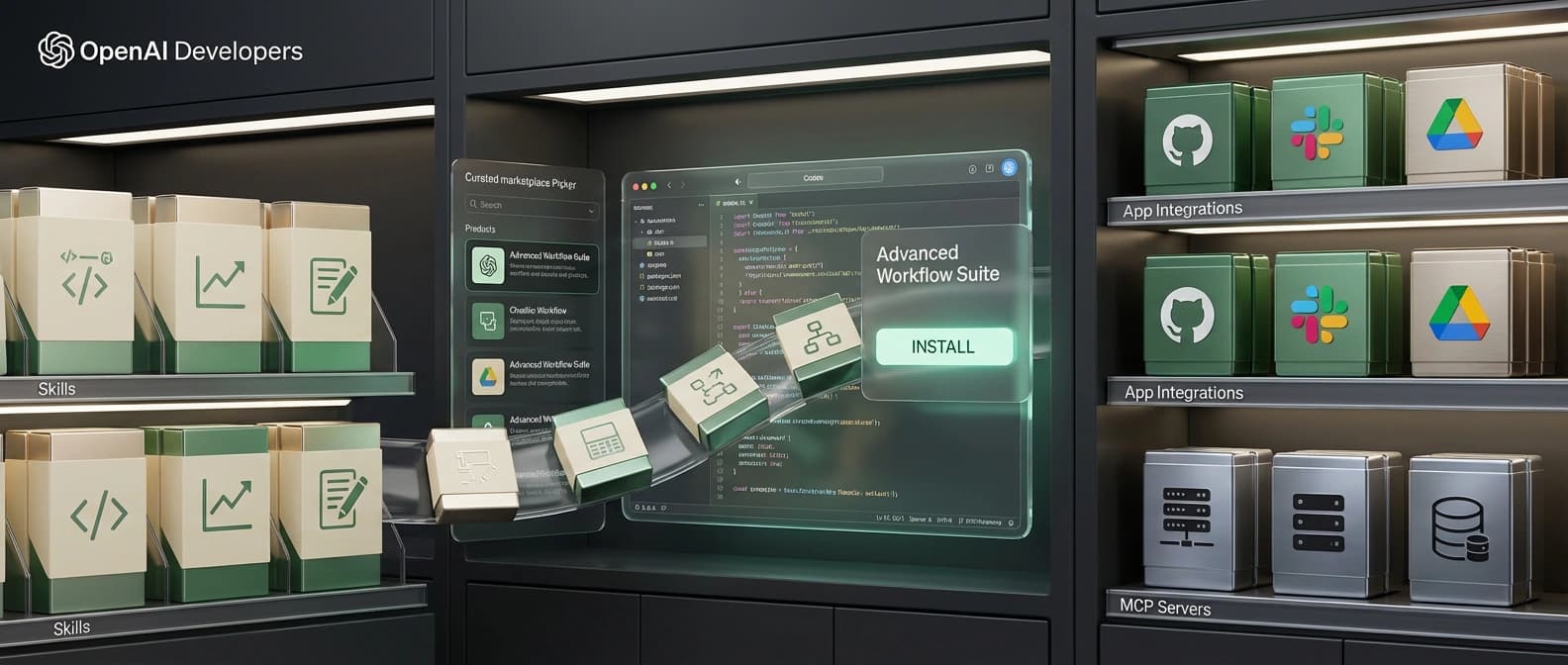
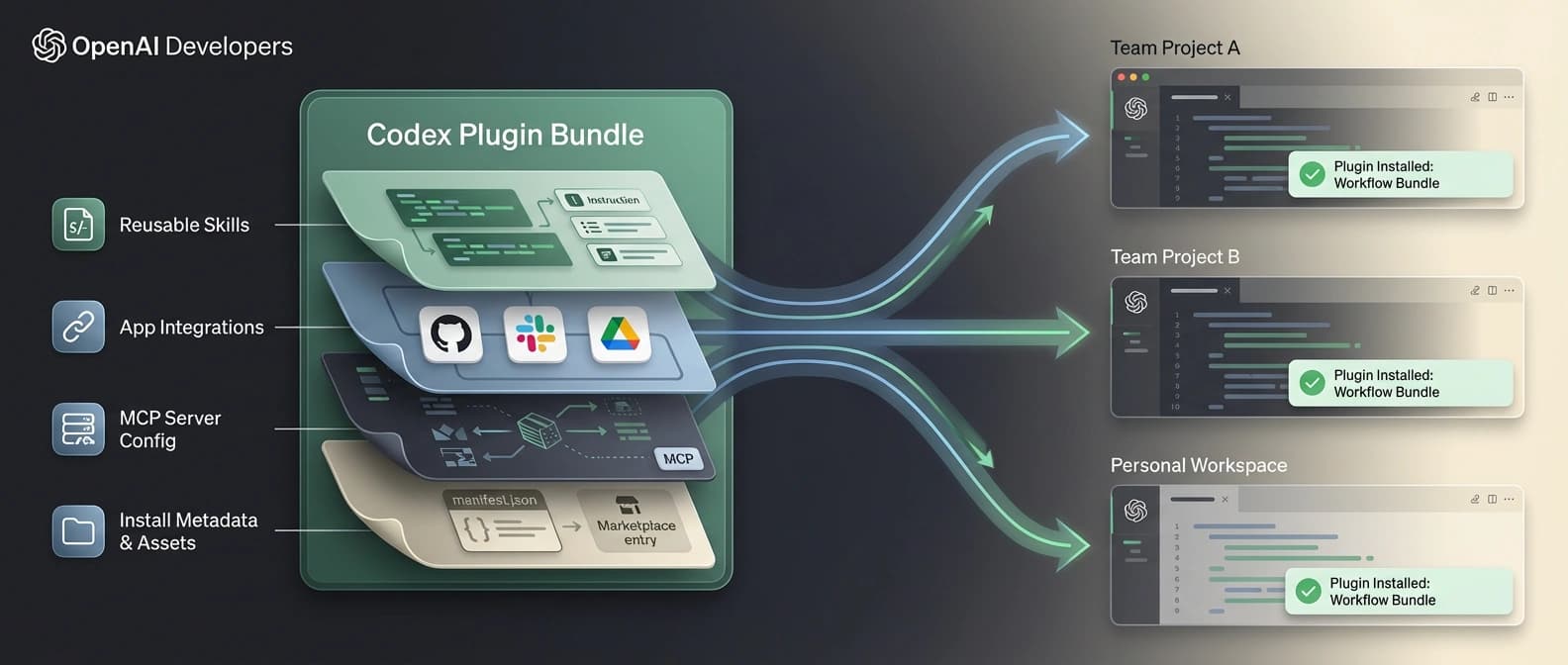
The official docs are direct about what a plugin can contain: skills, apps, and MCP servers. Skills carry reusable instructions. Apps connect Codex to tools like GitHub, Slack, or Google Drive. MCP servers expose extra tools or shared context that may live outside the local repo. OpenAI even gives concrete examples: Gmail for message management, Google Drive for Docs and Sheets, Slack for summaries and drafted replies.
That matters because it moves the category well beyond the old plugin idea of one neat trick in a trench coat. A Codex plugin behaves more like a packaged working method than a simple shortcut.
The install flow reinforces that. In the Codex app, you open Plugins and browse a curated list. In the CLI, you open /plugins. After install, you can either ask Codex to handle a task normally or explicitly invoke a plugin or one of its bundled skills with @. Approval settings still apply. Connected services still carry their own auth and privacy policies. In other words, OpenAI did not throw governance out the window just to get a shinier install button. Very decent of them.
The release notes also say plugins make it easier to share the same setup across projects or teams. That line is doing a lot of work. Once the object being shared is a repeatable workflow package rather than a one-off trick, the product starts to look less like customization and more like distribution.
Why the Codex plugin directory already looks like a marketplace
The plugins page says Codex has a curated plugin directory in both the app and CLI. The build docs go further and stop being coy about the structure. OpenAI defines a marketplace as a JSON catalog of plugins. Each marketplace appears as a selectable source inside the plugin directory. You can keep one marketplace for a repo, keep another one for your personal workflow, or let one marketplace start with a single plugin and grow into a larger curated list.
That is marketplace language. Not adjacent to marketplace language. Not marketplace-inspired. Actual marketplace language wearing a sensible sweater.
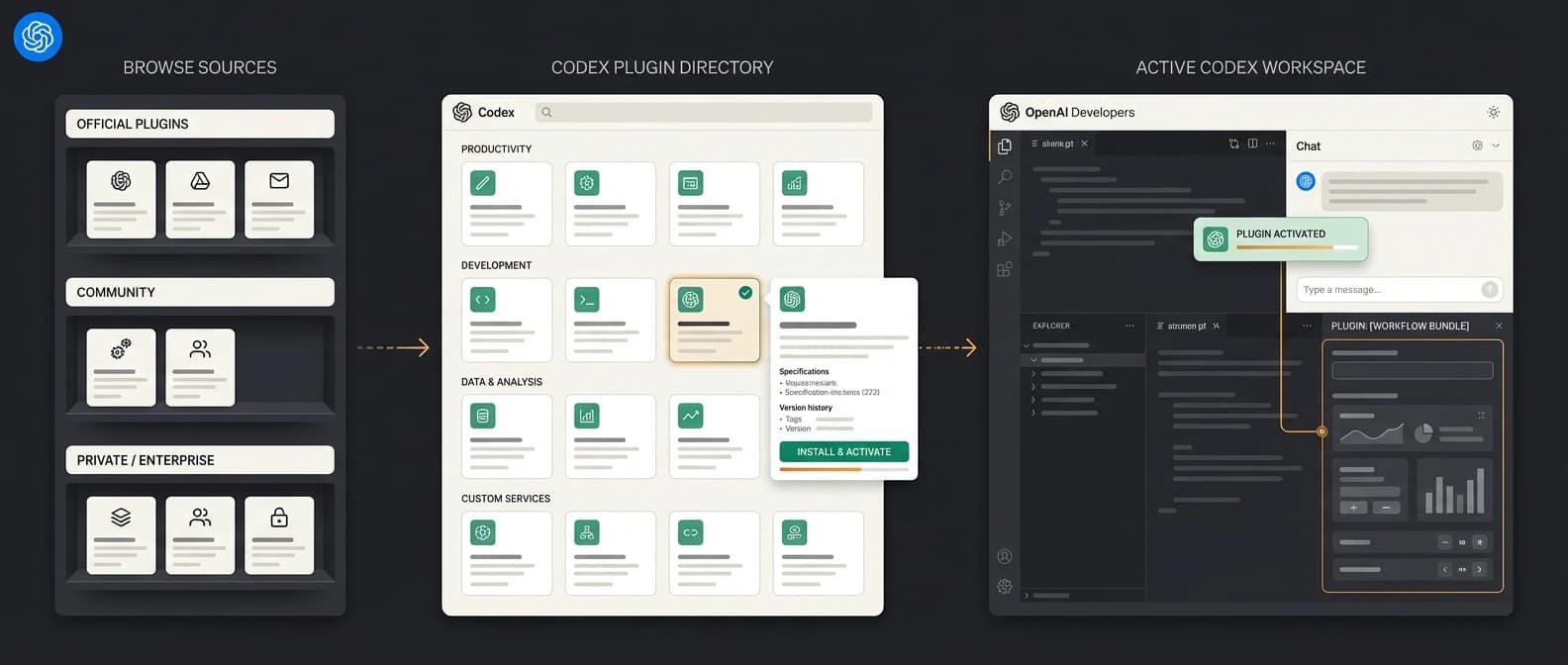
The build docs also describe the official Plugin Directory as the curated marketplace Codex can read from, while repo and personal marketplace files let teams create their own install surfaces. That matters because the behavior is already here even if the public storefront is still gated. Discovery surface. Catalog format. Install policies. Display metadata. Multiple selectable sources. If a thing has aisles, labels, and install buttons, I am going to call it retail-adjacent at minimum.
And yes, it is still a curated version of that idea. OpenAI says adding plugins to the official public Plugin Directory is "coming soon," and self-serve plugin publishing and management are also "coming soon." So we are not at the full open bazaar stage yet. Think less giant mall, more boutique with a velvet rope. The business shape is still obvious.
That is also what makes this story different from our earlier piece on OpenAI's Codex plugin inside Claude Code. That article was about OpenAI borrowing someone else's workflow gravity. This one is about OpenAI building its own gravity well.
How to build plugins for Codex without missing the point
The most revealing sentence on the build page might be this one: if you are still iterating on one repo or one personal workflow, start with a local skill. Build a plugin when you want to share that workflow across teams, bundle app integrations or MCP config, or publish a stable package.
That is the thesis in vendor documentation form. OpenAI is telling developers not to reach for the plugin format just because plugins sound exciting. Use it when the workflow becomes worth packaging and distributing.
The rest of the build docs make the packaging logic even more explicit. Every plugin gets a manifest at .codex-plugin/plugin.json. That manifest can point to bundled skills, .app.json, and .mcp.json. It can also carry install-surface metadata such as displayName, short and long descriptions, developer name, category, capabilities, website, privacy policy, terms, starter prompts, icons, logos, and screenshots.
I know "install-surface metadata" sounds like the kind of phrase invented to make a launch deck feel expensive. But read the field list and the point is plain: OpenAI is giving plugin authors the parts needed to package a workflow as a product. Name it. Describe it. Categorize it. Show it. Install it. Reuse it.
That is why this launch rhymes with our broader coverage of OpenAI's agents platform shift and OpenAI's Astral Python workflow power grab. The fight is drifting away from raw model output and toward who owns the workflow wrapper around the model. Codex plugins are one more step in that same direction.
Why teams using shared workflows should care now
If your team is already using coding agents, shared prompts, app-connected automation, or MCP-backed internal tools, OpenAI Codex plugins give you a cleaner packaging layer for all of it.
One plugin can gather the skill instructions, the app hookups, the MCP config, and the install copy into a single unit. That cuts down on the classic "works on my laptop" ritual where one person has the right local skill, another has a half-configured connector, and a third has an MCP server entry copied from a Slack message that should probably be studied by archaeologists.
There is also a governance angle. The plugins docs say existing approval settings still apply, and the release notes say availability follows workspace app controls. So the packaging gets simpler without pretending security is optional. That matters for teams that want shared automation but would prefer not to recreate the software equivalent of a communal junk drawer.
It also fits the broader pattern we have been seeing across agent tooling. The useful move is broader than giving the model more power. It is making the useful setup portable. That is why stories like Claude Code's aftermarket moment and our look at WordPress MCP write capabilities for agentic publishing feel connected. The winning products are learning to package workflow rather than merely output.
When the Codex plugin directory becomes a real marketplace
The next shoe is easy to spot because OpenAI put a label on it. Public official-directory publishing is coming soon. Self-serve plugin publishing is coming soon. Once those doors open, the marketplace case gets louder because submission, ranking, verification, and distribution incentives will matter even more.
But I would not wait for that future state to call the shift what it is. The key move already happened. Codex now treats workflows as installable products.
For teams, the practical takeaway is simple: if you are building reusable Codex behavior today, stop thinking only in terms of prompts or isolated skills. Think in bundles. Think in install surfaces. Think about what other people on the team should be able to add in one move without a 14-step setup document and one cursed environment variable nobody wants to claim.
That is where OpenAI Codex plugins get interesting. Not as a cute extension story. As a distribution system for agent workflows. I do not think Codex just gained a new feature. I think it gained aisles.
Source file
Public source trail
These links anchor the package to the underlying reporting trail. They are not a substitute for judgment, but they do show where the reporting starts.
The March 26, 2026 release note introduces Plugins in Codex as a curated directory for packaged workflows built from apps and skills.
Defines what Codex plugins contain and how the plugin directory works in the app and CLI.
Makes the marketplace model explicit: marketplaces are JSON catalogs of plugins, and plugins are for sharing stable workflows across teams.
The March 26, 2026 Codex CLI 0.117.0 entry says plugins are now a first-class workflow, with startup sync and browsing in /plugins.

About the author
Maya Halberg
Maya writes across the AI field, from research claims and benchmark narratives to tools, products, institutional decisions, and market shifts. Her reporting stays focused on what changes once hype meets deployment, procurement, workflow reality, and human skepticism.
- 24
- Apr 11, 2026
- Stockholm · Remote
Archive signal
Reporting lens: Methodology over launch theater.. Signature: A result only matters after the setup becomes legible.
Article details
- Category
- AI Tools
- Last updated
- April 11, 2026
- Public sources
- 4 linked source notes
Byline
Writes across the AI field with an eye for what survives contact with real users, real budgets, and real operating constraints.