WordPress.com gives AI agents a publish button
WordPress.com AI agents can now move from reading site data to creating drafts, editing pages, moderating comments, and managing taxonomy through MCP.
 ainewssilo.com
This is the moment MCP stops being context plumbing and starts looking like an execution layer for publishers.
The WordPress story here is not "AI can write blog posts now." The internet was not exactly waiting on that miracle.
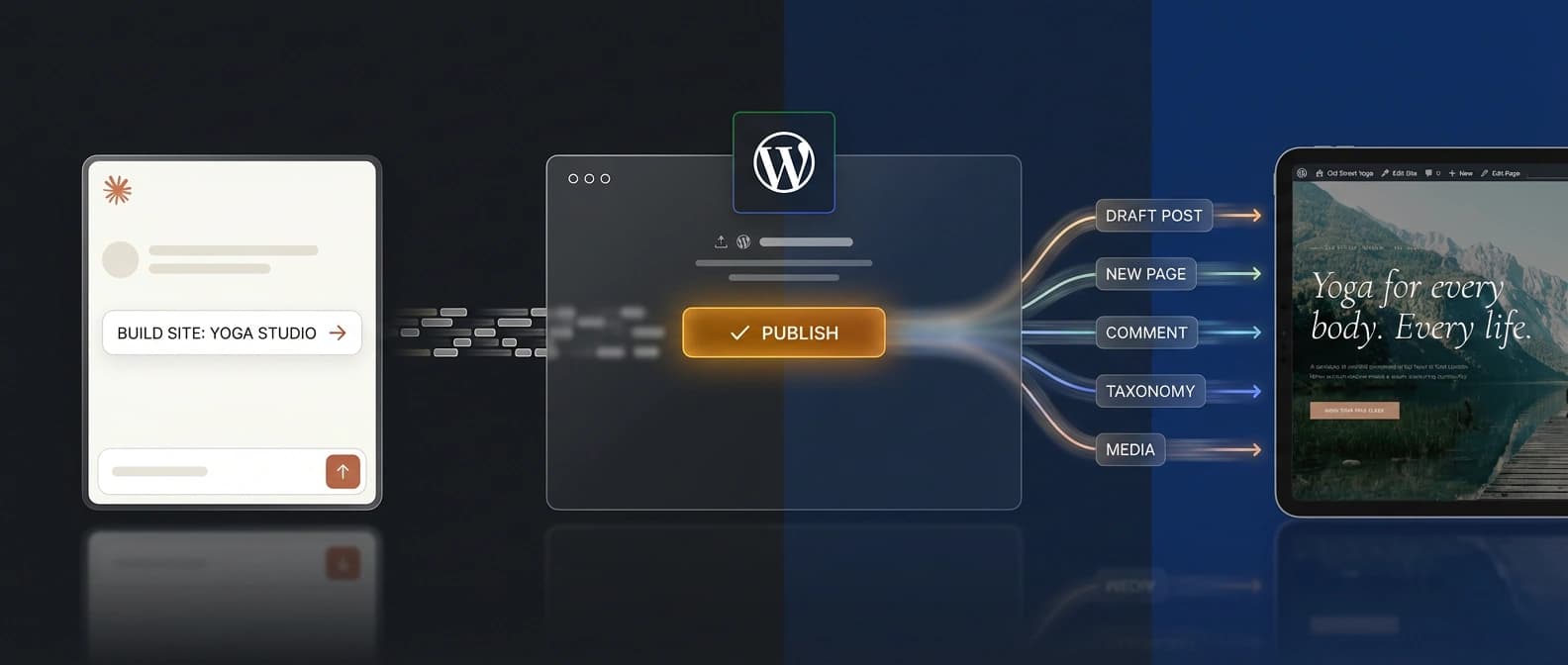
What changed on March 20 is more consequential. WordPress.com moved its MCP layer from read-only context into write-side action, which means connected agents can now create drafts, edit pages, moderate comments, change media metadata, and manage categories and tags on live WordPress.com sites. I think that is the moment MCP stops being a nice research bridge and starts looking like real publishing infrastructure.
That also means the old comfort blanket is gone. An agent that can only read your CMS is a curious intern. An agent that can write to it is holding the newsroom keys.
From read-only context to write-side control
Last October, WordPress.com launched MCP as a read-only way for agents to inspect site content, analytics, and settings. Useful, yes. Dangerous in the same way a clipboard is dangerous, which is to say not very. The March update is the step that matters.
In WordPress.com's launch post and tools reference, the company describes a unified content-authoring surface that lets agents discover available actions, inspect the schema for a chosen operation, and then execute that operation with user confirmation. The write path now covers six content types: posts, pages, comments, media metadata, categories, and tags.
That sounds abstract until you translate it into ordinary work. An agent can create a post or page as a draft, update existing content, reply to or moderate comments, revise media titles and alt text, and create, rename, or delete categories and tags. That is not just drafting help. That is a real operational surface with real side effects.
The implementation details make the story even clearer. The main tool, wpcom-mcp-content-authoring, uses a list, describe, and execute flow. Write actions require a user_confirmed parameter. New posts and pages default to draft. Updates to already published content go live immediately, and media metadata changes can update wherever the asset is already in use. Tiny detail. Big shift.
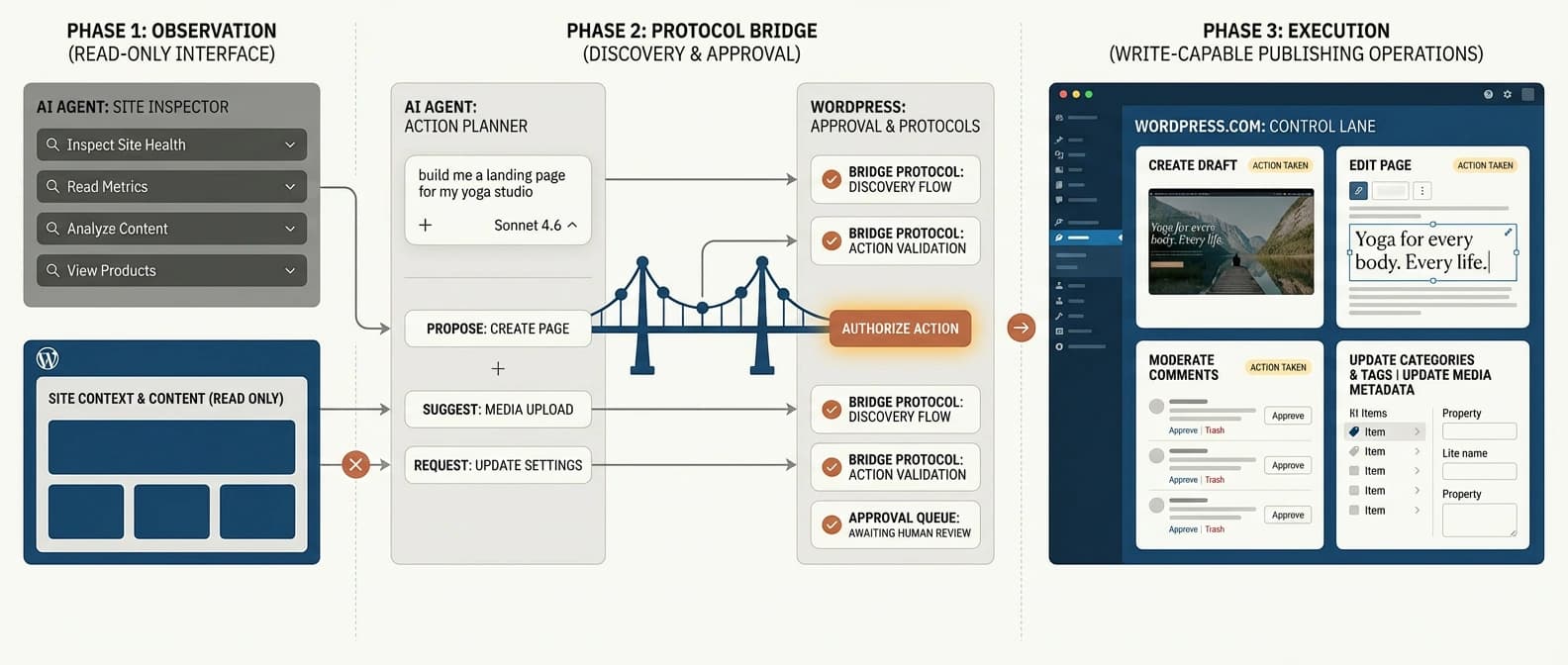
WordPress.com also pairs that write tool with a read-only site-editor context tool so an agent can inspect theme presets, styles, and allowed blocks before it starts rearranging the furniture. I appreciate that. Too many "brand-aware" AI demos still feel like a stranger promising to redecorate your house after one glance through the window.
Why this is really a CMS control-plane story
The obvious headline is content creation, but I think the more durable headline is control. WordPress.com has turned MCP from site introspection into site operation. That lines up with the broader shift we called out in AI's action-versus-answer battlefront: the strategic value is moving away from systems that merely explain what to do and toward systems that can actually do it.
The protocol angle matters too. WordPress.com is not trying to trap this inside one proprietary assistant. It is explicitly pitching the new write surface around MCP clients such as Claude, ChatGPT, Cursor, and OpenClaw. If you care about agent interoperability, or about compatibility layers like the one in OpenClaw's OpenAI-compatible gateway, this is exactly the kind of standard tool surface that can turn an AI demo into repeatable workflow.
There is an important scope caveat, though. This is about WordPress.com, Automattic's hosted platform, not the entire self-hosted WordPress universe. That distinction can disappear fast once the hype machine starts doing cartwheels, so I want to keep it nailed down.
What WordPress got right about approvals and guardrails
The guardrails are the part that keeps this launch from reading like pure product theater. WordPress.com says every change needs explicit approval, new posts and pages start as drafts, existing WordPress role permissions still apply, individual operations can be toggled on or off, and the Activity Log records what happened. The docs also spell out a sharp edge that feels very much like something learned the hard way: categories and tags do not go to trash, so permanent deletions require extra confirmation.
That does not eliminate risk. A person can still approve a dumb action. An agent can still make a mess faster than a human clicking through wp-admin with a coffee in one hand and regret in the other. But the difference between reckless and useful often comes down to whether someone bothered to design the checkpoints. WordPress.com did.
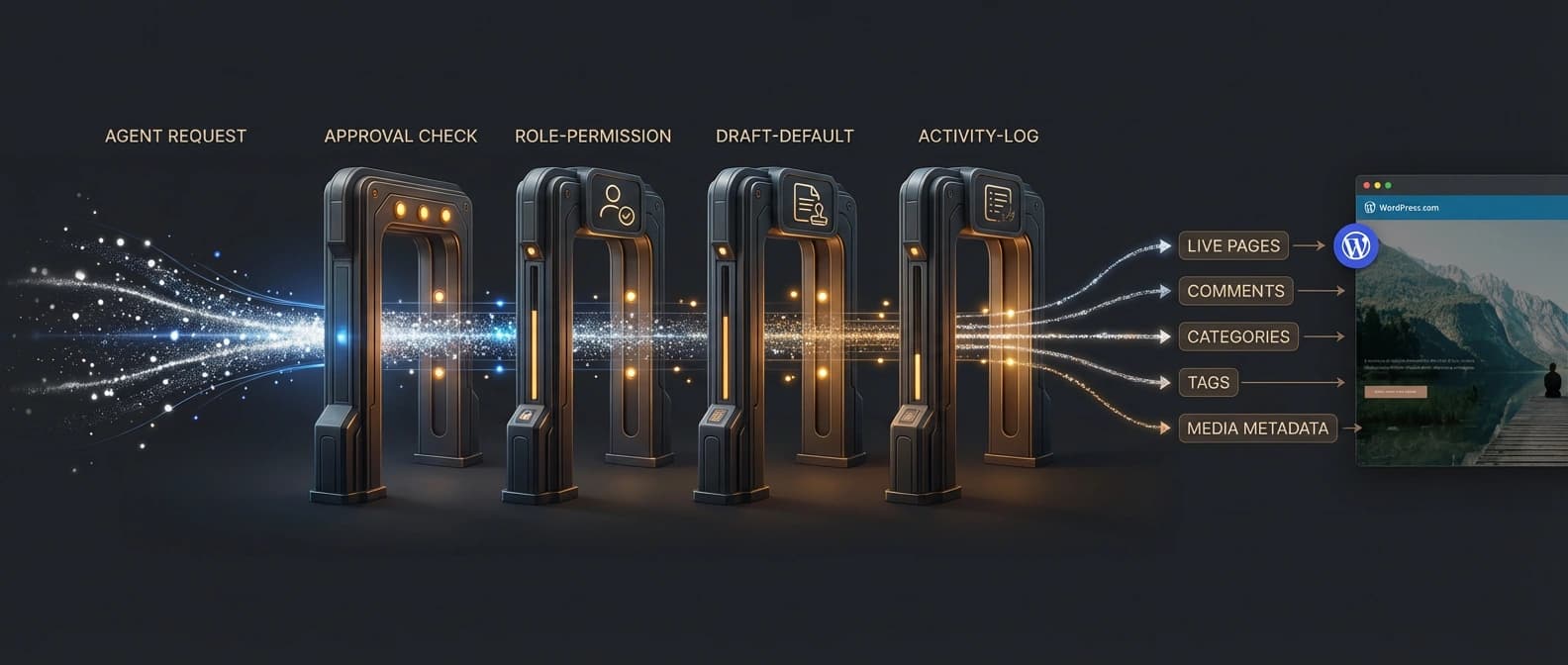
I also think this changes how we should talk about MCP. Once agents can cross from reading to editing, publishing, moderation, and taxonomy management, MCP is no longer just context plumbing. It is the pipe that now leads to the actual valves.
Why publishers should care before the content hose opens
The near-term question is whether this stays mostly human-supervised or becomes the base layer for a new publishing stack. Right now WordPress.com is keeping a firm hand on the brake, which is sensible and, frankly, refreshing. The web did not need another unattended content hose before breakfast.
Still, the direction is hard to miss. Once a major hosted CMS exposes creation, moderation, taxonomy control, and design-aware authoring through MCP, the rest of the stack starts to look reachable too: media systems, editorial workflows, SEO tooling, analytics, distribution, maybe even approval chains that live outside the dashboard.
I would not oversell this as the whole future arriving at once. But I do think WordPress.com just made a real category move. The publish button is no longer just a UI affordance inside a CMS. It is becoming part of a protocol surface that agents can operate, with enough constraints and visibility to make the shift feel real.
Source file
Public source trail
These links anchor the package to the underlying reporting trail. They are not a substitute for judgment, but they do show where the reporting starts.
Official launch post describing the move from read-only MCP access to write capabilities, including the 19 new abilities, six content types, draft defaults, approval flow, and named client support.
Technical source confirming the unified content authoring tool, the list-describe-execute interface, and the required user_confirmed parameter for write actions.
Baseline for the before-and-after comparison: the October 2025 launch was explicitly read-only and previewed write access as the next step.
Independent coverage that frames the launch in terms of hosted WordPress scale and broader web impact, while distinguishing WordPress.com from the larger WordPress ecosystem.
Use for attributable scale claims and executive quotes only; treat marketing language cautiously.

About the author
Talia Reed
Talia reports on product surfaces, developer tools, platform shifts, category shifts, and the distribution choices that determine whether AI features become durable workflows. She looks for the moment where a launch stops being a demo and becomes an ecosystem move.
- 34
- Apr 1, 2026
- New York
Archive signal
Reporting lens: Distribution is usually the story hiding inside the launch.. Signature: A feature matters when it changes someone else’s roadmap.
Article details
- Category
- AI Tools
- Last updated
- April 11, 2026
- Public sources
- 5 linked source notes
Byline
Covers product surfaces, tools, and the adoption moves that turn AI features into durable habits.