Claude Code plugins just spawned an aftermarket
Anthropic's official plugin surface is live, and GitHub is suddenly full of guides, wrappers, and team layers built around Claude Code instead of merely using it.

 ainewssilo.com
When developers start shipping software to manage the software that was supposed to simplify software, you are no longer looking at a feature. You are looking at an aftermarket.
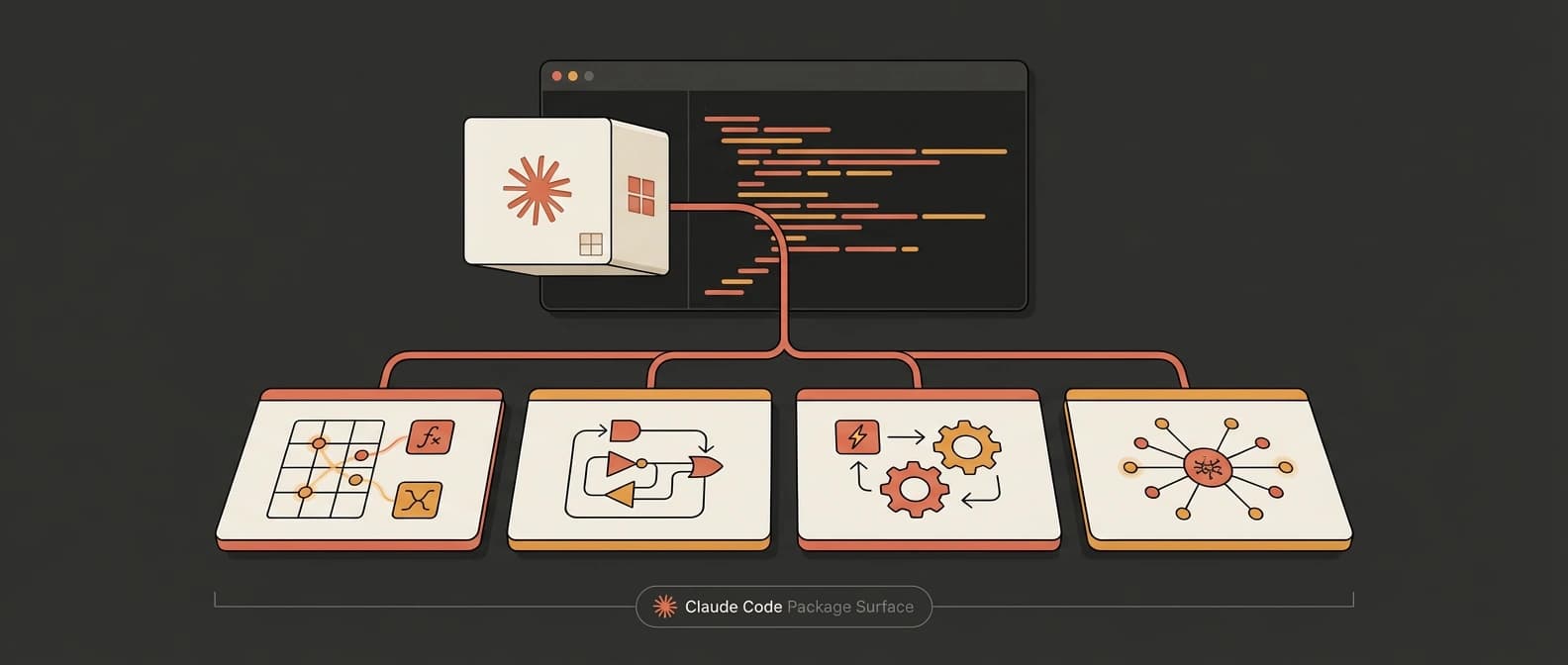
Anthropic now has a public plugin directory for Claude Code and Cowork, and I think that changes the conversation more than any single plugin inside it. The directory is not shy about what it is selling: one-click installs for bundles of tools, skills, and integrations. The official create-plugins docs are even blunter. Anthropic says plugins can package skills, agents, hooks, and MCP servers. That is not a cute customization menu. That is a platform sentence.
Then you open GitHub's daily trending board from March 31 and find a very particular kind of community energy around Claude Code. Not just people using it. People teaching it, wrapping it, orchestrating it, and generally building software around the software. The terminal, apparently, has become a shopping mall.
That does not prove a mature market. It does prove a new shape. And the shape matters.
Claude Code plugins changed the category
I keep coming back to one line in Anthropic's plugin docs: plugins extend Claude Code with skills, agents, hooks, and MCP servers. Read that again and you can feel the category getting wider under your feet. A plugin is no longer just a tiny bolt-on command. It can package behavior, automation, orchestration, and outside tool access in one installable unit.
The public directory makes that official surface visible. Anthropic describes plugins as bundles that roll multiple MCPs, skills, and tools into a single download, and it warns users that community plugins can load remote MCP servers, local MCP servers, and other local software. In other words, the company is already doing classic platform housekeeping: open the store, add a review badge, and then post the polite sign reminding everyone not to lick the supply chain.
That is new.
It also connects neatly to our recent piece on OpenAI's Codex plugin wedge into Claude Code. Once there is an official plugin surface, rivals, helpers, and opportunists all know where to attach themselves. A marketplace is not just a feature. It is an invitation.
GitHub trending suddenly looks like a Claude Code strip mall
The March 31 daily trending board is useful here because it surfaces the exact kind of projects now clustering around Claude Code. claude-howto and oh-my-claudecode both show up there, and neither one is merely a repo that happens to mention Claude Code in passing. They are aftermarket products.
claude-howto is the tutorial-industrial complex version of the story. The repo describes itself as a visual, example-driven guide to Claude Code, with copy-paste templates, plugin bundles, and a full learning path. Its README says the official docs describe features but do not show how to combine them into a workflow that saves hours. So the community built a textbook. Not metaphorically. An actual 10-module textbook with an 11-13 hour roadmap.
oh-my-claudecode sells the opposite comfort. Its tagline is basically, "Don't learn Claude Code. Just use OMC." The repo pitches teams-first multi-agent orchestration, marketplace installation, /setup, and a "zero learning curve." That line is funny because it is also revealing. If the category now needs a wrapper whose selling point is please do not learn the underlying tool, then the underlying tool has acquired enough surface area to support a minor consulting economy.
I do not mean that as a dunk on the builders. The builders are reacting rationally. Developers saw a capable tool, saw the growing complexity around skills, agents, hooks, teams, plugin namespaces, and MCP servers, then did what developers always do when a product becomes valuable and slightly annoying: they built organizers for the organizer drawer.
The Claude Code ecosystem now has both teachers and valets
The contrast between claude-howto and oh-my-claudecode is the tell.
One project says: here is the map, here are the diagrams, here are the copy-paste templates, please learn the system properly.
The other says: absolutely not, install this wrapper and let the system introduce itself later.
Those are opposite product instincts, but they only exist because the same underlying reality exists. Claude Code is no longer just one CLI that writes code. It is a bundle of habits, conventions, extension points, and orchestration choices that developers now think are worth documenting, abstracting, and packaging.
That logic is already visible in our recent coverage. Universal CLAUDE.md turned into a behavior patch because users wanted a community fix for Claude Code's manners.
Our piece on the AI coding-agent orchestration bottleneck tracked the rise of multi-agent control layers once one session stopped being enough.
And the Claude Code browser race showed the same expansion pressure on the browser side. Put those together and the pattern is hard to miss: Claude Code keeps generating side businesses.
That is what an ecosystem looks like before the consultants arrive with matching hoodies.

This platform shift is real, even if GitHub is having a moment
The caution matters here. A daily trending page is a weather vane, not a census. Repo stars are public attention, not procurement data. A loud README is still just a README, no matter how many times it promises zero friction, total autonomy, and emotional fulfillment by Q3.
So no, I would not claim that every dev team on Earth has standardized on Claude Code plugins because two community projects hit GitHub Trending on the same day. That would be unserious.
I would say the platform shift is real because the official Anthropic surface is now real. The plugin directory exists. The extension docs exist. The namespacing rules exist. The trust warnings exist. Anthropic Verified exists. Once the host platform starts defining packaging formats, safety review language, namespace behavior, and one-click install flows, the community no longer has to pretend it is just trading prompt snippets in a parking lot.
That is the threshold.
And it explains why so much of the recent builder energy is drifting away from raw model comparison and toward control layers. Teams care about how Claude Code behaves inside bigger workflows, how it shares skills, how it coordinates parallel workers, and how it plugs into outside systems.
We have already seen the trust side of that in Claude Code's session-limit gap. Platform growth makes that problem better for distribution and worse for governance. You get more power and more paperwork. Congratulations.
Claude Code teams are about to inherit the plugin problem
If I were running a team around Claude Code right now, I would read this moment less as hype and more as a preview of operational chores.
Official plugins are great news for distribution. They are also how you get plugin sprawl, wrapper overlap, version drift, naming collisions, and the small but meaningful question of which community bundle you are comfortable letting touch local tools and remote MCPs. Anthropic's own directory warning is pretty direct on that point: install plugins from developers you trust.
That is a platform sentence too.
The same-day HolyCode launch is useful as adjacent context here. It is not a Claude Code plugin, and nobody should pretend Anthropic endorsed it. But it does show the same appetite spreading across nearby coding-agent stacks: prepackaged workstations, orchestration baked in, headless browser support, and even pitches around Claude subscription access as part of a smoother environment story. The hunger is not for one more model. It is for fewer moving parts, even if people keep solving that by adding more moving parts in a nicer box.
Which is how aftermarkets work. First you buy the tool. Then you buy the rack for the tool. Then the organizer for the rack. Then somebody launches a premium rack organizer with a Discord.
The bottom line is simple. Claude Code has crossed into platform territory because Anthropic now has an official plugin surface and the community is responding like one exists. Guides are getting more elaborate. Wrappers are getting more ambitious. Teams-first orchestration is becoming its own pitch. The market may still be early, but it is no longer imaginary.
Anthropic did not build every storefront. It just opened the lease office.
Source file
Public source trail
These links anchor the package to the underlying reporting trail. They are not a substitute for judgment, but they do show where the reporting starts.
Establishes Claude Code's expanding official surface across terminal, IDE, desktop app, and browser, plus first-party support for agent teams and customization.
Confirms the live public plugin directory, one-click installation framing, Anthropic Verified badge language, and the warning that plugins can load remote MCP servers, local MCP servers, and other local tools.
Key source for the claim that plugins can package skills, agents, hooks, and MCP servers, which is the clearest sign that Claude Code now has an official extension surface.
Used only as a timing and attention signal showing that Claude Code-adjacent guide and wrapper projects were breaking out on the March 31 daily board. Not treated as adoption proof.
Repo positioning for the guide layer of the Claude Code ecosystem: visual tutorials, copy-paste templates, plugin bundles, and a multi-hour learning path.
Repo positioning for the wrapper-orchestration layer: teams-first execution, marketplace install flow, and the explicit 'zero learning curve' pitch.
Used for current repo metadata and star count, with normal caution that stars describe public attention rather than production adoption.
Used for current repo metadata and star count, again as attention context rather than a deployment metric.
Useful adjacent signal showing the same urge to prepackage AI coding environments, Claude subscription access, and orchestration into a managed wrapper.
Used as a same-day timing signal for the broader coding-agent workstation wrapper mood. Not used as evidence of product-market fit or Anthropic endorsement.

About the author
Talia Reed
Talia reports on product surfaces, developer tools, platform shifts, category shifts, and the distribution choices that determine whether AI features become durable workflows. She looks for the moment where a launch stops being a demo and becomes an ecosystem move.
- 34
- Apr 1, 2026
- New York
Archive signal
Reporting lens: Distribution is usually the story hiding inside the launch.. Signature: A feature matters when it changes someone else’s roadmap.
Article details
- Category
- AI Tools
- Last updated
- April 11, 2026
- Public sources
- 10 linked source notes
Byline
Covers product surfaces, tools, and the adoption moves that turn AI features into durable habits.