AI agent sandbox beats raw filesystem access
March 28's agent story was a boundary story: Stanford's jai, Product Hunt browser tools, and Reddit builder chatter all pointed toward sandboxes and tighter approvals.

 ainewssilo.com
The adult version of agentic coding is not more autonomy. It is more doors, more badges, and fewer chances to redecorate your home directory with `rm -rf`.
The hottest agent signal on March 28 was not a new benchmark, a new vibe-coding mascot, or another demo where an LLM orders tacos and accidentally provisions Kubernetes. It was a boundary story.
When I checked Hacker News, Stanford's jai pitch, "Go hard on agents, not on your filesystem," was sitting at the top of the March 28 front page with 489 points and 275 comments. That is a loud clue. The people building and using agents are suddenly less interested in giving models more raw machine power and more interested in one boring, glorious question: how do we keep these things useful without letting them rummage through the whole house?
That is the real AI agent sandbox shift.
It is not anti-agent. It is the first adult phase of agent tooling. We are moving from "give the model more autonomy" toward sandboxes, brokered browser seats, scoped worker roles, and approvals that mean something. Benchmark charts still get the applause. The permission boundary is where the engineering has started sweating.
AI agent sandbox tools went mainstream because YOLO mode aged badly
Stanford's jai matters because it frames containment as a workflow problem, not a PhD thesis. The pitch is simple: prefix your command, keep the current working directory writable, and put the rest of the home directory behind a copy-on-write overlay or hide it entirely depending on mode. No Dockerfiles. No long bubblewrap incantations. No ceremonial goat sacrifice to get a safer local run.
That simplicity is the whole point. The jai homepage says containment has to be easier than full-on YOLO mode or nobody will bother. That sounds obvious, but it is also the first honest local-agent product lesson in a while. Developers will tolerate friction when they are deploying a bank. They will not tolerate it when they are just trying to let a coding agent fix a React bug before lunch.
The more interesting part is the security model, which is refreshingly unsentimental. Casual mode mainly protects filesystem integrity, not confidentiality. It does not block network access. Granted directories are still fully writable. In other words, jai is not selling a magic force field. It is selling a smaller blast radius. Frankly, that is more credible than half the security copy on the internet.
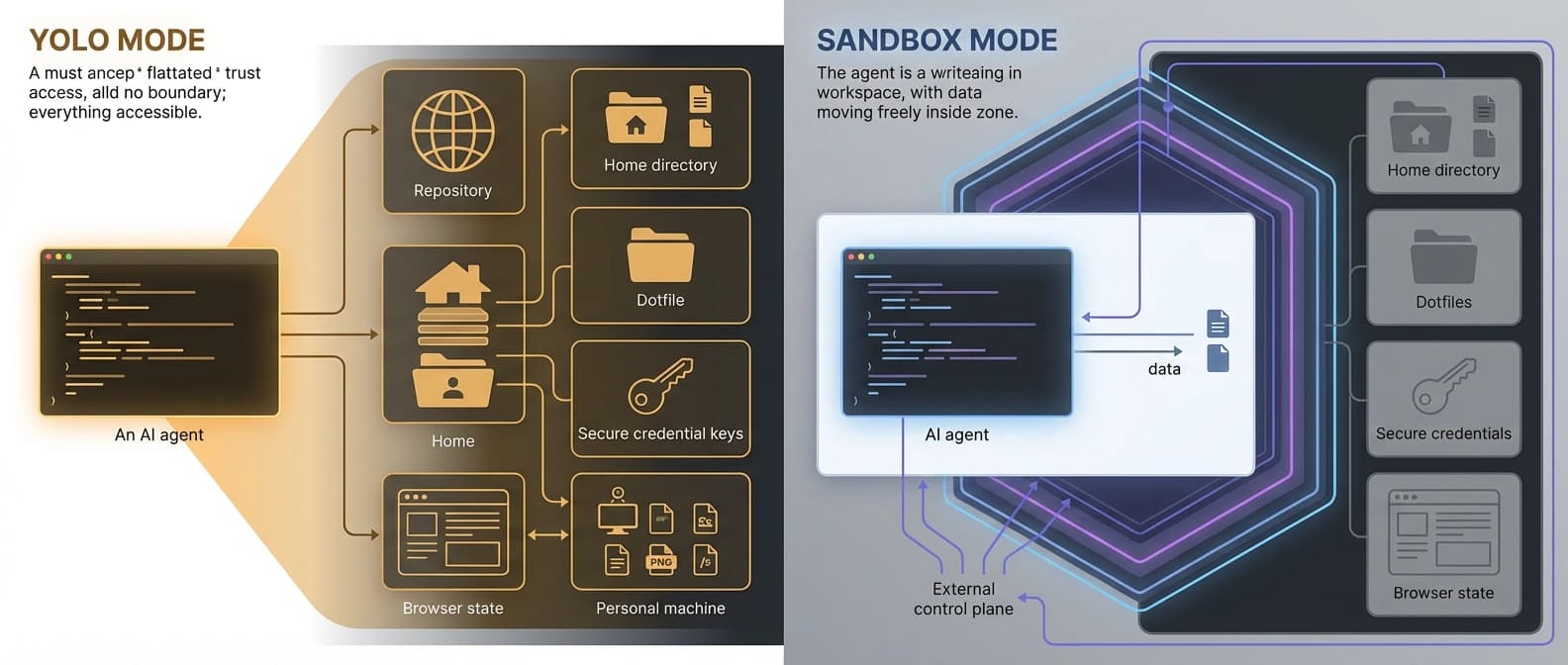
This is why the fight is shifting. The old dream was "let the agent operate my machine." The new, much smarter version is "let the agent operate this part of my machine, under these rules, and preferably not my tax folder." That is a less cinematic slogan. It is also how you keep your laptop from becoming a cautionary LinkedIn post.
AI coding agent browser control is rising for the same reason
At first glance, browser-control tools look like a different trend. They are not. They are an adjacent answer to the same problem.
Product Hunt's March 28 feed was carrying Expect, described as "Let agents test your code in a real browser," Domscribe, pitched as "Give your AI coding agent eyes on your running frontend," and Glance, framed as a real browser for Claude Code testing, screenshots, and automation. That does not prove all three launched today. It does show what builders want right now.
They do not just want more filesystem reach. They want a mediated operating surface.
A browser seat is useful because real work keeps escaping the terminal. The bug lives in the modal. The auth flow breaks in the browser. The CSS regression does not care that your CLI agent wrote beautiful TypeScript. We already touched that in Claude Code's browser race is heating up and Claude Code computer use and Dispatch. Once the job moves into the live app, the agent needs a way to see and act there.
But notice what these tools are really doing. They are not shouting, "Please grant unrestricted access to everything you own." They are saying, "Give the agent a browser lane, a harness, a structured view, a test surface." That is containment by interface. Different mechanism, same instinct.
One Reddit builder thread in r/LocalLLaMA makes the point from another angle. A developer describing a web-use harness argued that compressed rendered-DOM context plus tool calls worked better than flooding the model with raw page state. Again: smaller window, more useful control. Less buffet, more bento box.
Agent-to-agent access control is the next headache with a badge printer
The containment story also shows up once agents start delegating to other agents.
Another same-day Reddit thread asked the uncomfortable question directly: if a high-trust orchestrator delegates to lower-trust worker agents, how does a worker prove authority, and how do you stop it from pretending to be the boss? That is not an abstract governance seminar. It is the ugly plumbing behind real multi-agent systems.
The thread spelled it out in plain builder language: some agents should compress context, some should write to the database, some should absolutely not be allowed to cosplay as the orchestrator. I appreciate the honesty. Multi-agent architecture sounds glamorous right up until you realize you are basically running an office where every intern can forge the VP's badge.
This is where our earlier piece on the AI coding agent orchestration bottleneck starts to connect with runtime security. Coordination is hard enough. Coordination with real trust tiers is where the category stops being toy-like.
MCP tool call security is turning into runtime policy instead of vibes
The same directional shift is showing up around tool security too. Projects like VellaVeto are now openly framing themselves as an "agent interaction firewall," with policy checks on side-effecting tool calls, signed approvals for irreversible actions, session isolation, and audit trails.
Yes, some of that README language is marketing. Everything in agent infrastructure currently ships with at least three tablespoons of marketing. Still, the strategic move is real: put the permission logic outside the agent itself.
That is also why our earlier read on NVIDIA OpenShell matters. The market is inching toward the same principle from different directions. The last word on what an agent can touch should not live in the same place as the agent's own enthusiasm.
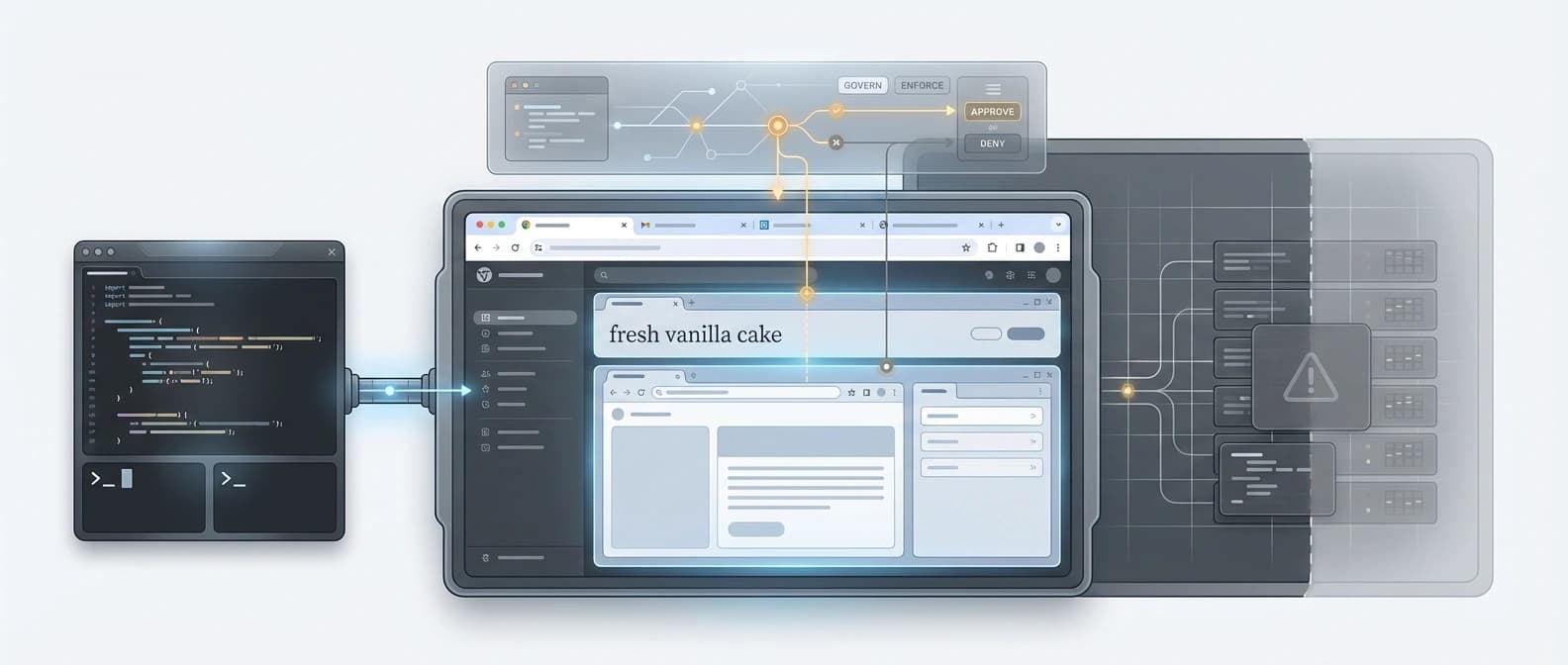
I keep coming back to that point because it feels like the part the benchmark crowd would most like to skip. It is easier to post a graph than to design an approval system that does not become a total productivity tax. But if agents are going to do more than autocomplete with extra drama, runtime policy is where the grown-up work lives.
Practical AI agent sandbox workflows now look narrower and better
So what changes for actual coding workflows?
Keep the repo writable. Keep the rest of the machine on a shorter leash. Give the agent a browser seat when the task genuinely needs one. Make approvals bound to specific actions instead of vague "sure, go ahead" permissions. Treat worker agents like workers, not tiny sovereign states. And stop treating MCP tools as harmless plugin confetti from the conference swag table.
The bottom line is not that autonomy is dead. It is that blind autonomy is getting demoted.
I think the most useful coding agent now looks less like a genius left alone with your laptop and more like a very fast junior operator inside a well-lit office with badge access, camera coverage, and one stubborn door they cannot kick open. That image is less romantic. Good. Romance is how your dotfiles end up in a crater.
If March 28 had a real lesson, it was this: the next agent race is not about giving models more of your computer. It is about deciding which doors stay locked, which ones open on request, and which ones lead to a browser instead of your entire life.
Source file
Public source trail
These links anchor the package to the underlying reporting trail. They are not a substitute for judgment, but they do show where the reporting starts.
Primary source for jai's one-command containment pitch, its working-directory model, and the headline claim that safer local agent use has to be easier than full container setup.
Critical caveat source: casual mode mainly protects filesystem integrity, not confidentiality, and jai does not restrict network access.
On 2026-03-28 the feed surfaced Expect, Domscribe, and Glance with descriptions centered on real-browser testing, browser eyes for coding agents, and browser automation.
Direct page fetch was blocked from this environment, so the article only relies on the Product Hunt feed language: 'Let agents test your code in a real browser.'
Direct page fetch was blocked from this environment, so the article only relies on the Product Hunt feed language: 'Give your AI coding agent eyes on your running frontend.'
Direct page fetch was blocked from this environment, so the article only relies on the Product Hunt feed language: 'Real browser for Claude Code Test, Screenshot, Automate.'
Timing signal showing Stanford's jai at the top of the March 28 front page when checked, with strong comment volume around the filesystem-access problem.
Builder chatter showing active work on compressed rendered-DOM context and interactive browser tooling for agent use.
Useful signal that builder attention is moving toward delegated authority, trust tiers, and preventing worker-agent escalation.
Supports the runtime-policy angle with a current open-source project whose README frames it as an 'agent interaction firewall' that evaluates side-effecting calls against policy and approvals.

About the author
Talia Reed
Talia reports on product surfaces, developer tools, platform shifts, category shifts, and the distribution choices that determine whether AI features become durable workflows. She looks for the moment where a launch stops being a demo and becomes an ecosystem move.
- 34
- Apr 1, 2026
- New York
Archive signal
Reporting lens: Distribution is usually the story hiding inside the launch.. Signature: A feature matters when it changes someone else’s roadmap.
Article details
- Category
- AI Tools
- Last updated
- April 11, 2026
- Public sources
- 10 linked source notes
Byline
Covers product surfaces, tools, and the adoption moves that turn AI features into durable habits.