Claude Code's browser race is heating up
Fresh Product Hunt activity, a late-week HN maker post, and new browser-control docs point to the same shift: Claude Code is growing a browser layer.
 ainewssilo.com
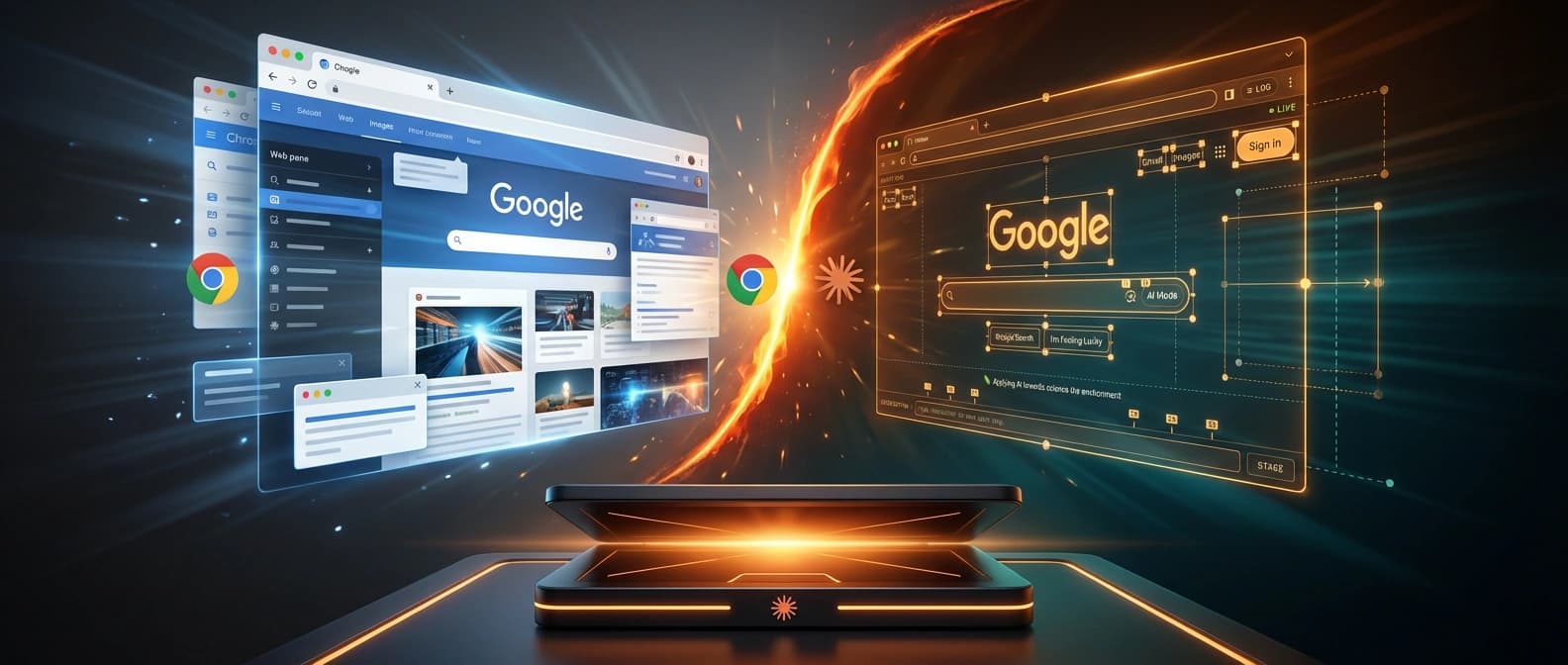
The next Claude Code fight is not about who writes the smartest patch. It is about who controls the browser where the real work keeps hiding.
The AI coding-agent conversation has spent months circling the same furniture. Which model writes the cleaner patch? Which CLI feels less haunted? Which agent can survive a 2,000-line refactor without wandering into the shed and eating a rake?
That is still a real contest. It is just not the only one anymore.
This week, the more interesting movement around Claude Code has been happening one layer out, in the browser and control stack wrapped around it. Anthropic opened the door earlier in the week with Dispatch and computer use. Since then, fresh Product Hunt activity, a late-night Hacker News maker post, and browser-control infrastructure docs have all pointed at the same idea: people do not just want a coding agent that edits files in a terminal. They want one that can see the app, click through the weird bits, stay attached to real sessions, and keep operating after the code leaves localhost fantasyland.
That does not prove a mature market. It does prove a live one.
Claude Code browser tools are leaving the terminal
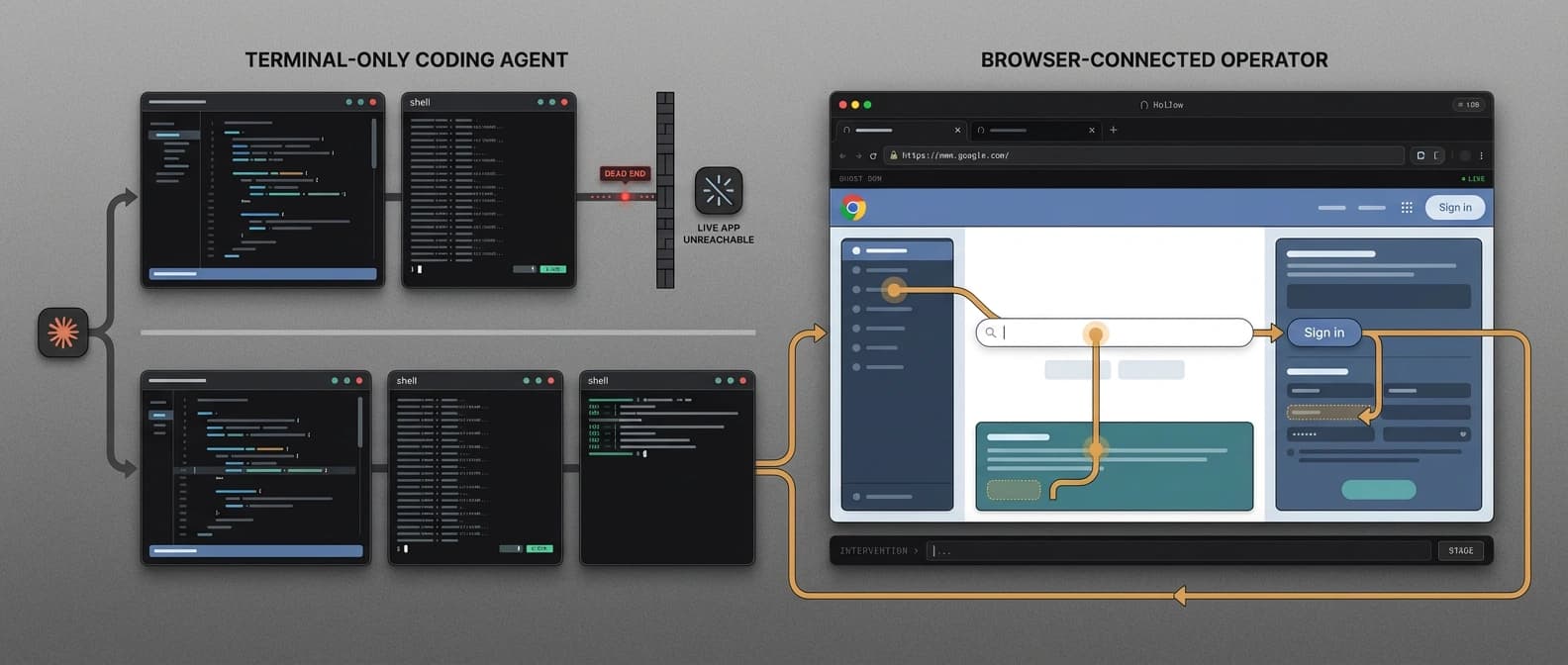
The terminal-first coding agent is already useful. It can read the repo, edit files, run tests, and explain what broke. But the moment the job spills into an actual web app, the agent usually runs into the same old wall. It does not know what the page looks like, whether the modal is covering the button, or why the login flow has decided to become a piece of performance art.
That is the gap these new browser-adjacent tools are trying to close.
Anthropic's own Dispatch and computer-use push is the first-party backdrop here. That launch matters because it moves Claude from "help me write the thing" toward "help me operate the machine that runs the thing." But the fresh energy this week is not just first-party. It is third parties rushing to add the missing eyes, hands, and browser state.
Product Hunt's fresh Glance entry is a good example. The listing positions Glance as an open-source MCP server that gives Claude Code a real Chromium browser for screenshots, clicking, form filling, automation, and test flows. That is a very different pitch from "here is another agent shell." It says the terminal is not enough. The agent needs a browser seat.
You can see the same category pressure in infrastructure docs too. Browserless now documents a Claude Code path that routes Playwright MCP over remote CDP, with managed browsers, proxies, stealth layers, and optional CAPTCHA solving. That is not a cute demo. That is browser automation getting fitted for production clothes, or at least for a crisp blazer and a suspiciously expensive badge.
Glance and Hollow show two different bets on the Claude Code browser layer
The most useful thing about this week's crop is that it is not all the same product wearing different gradients.
Glance looks like the straightforward answer: give Claude Code a real browser, give it a broad tool surface, and let the agent behave more like a QA operator or implementation assistant that can actually inspect what is happening on the page.
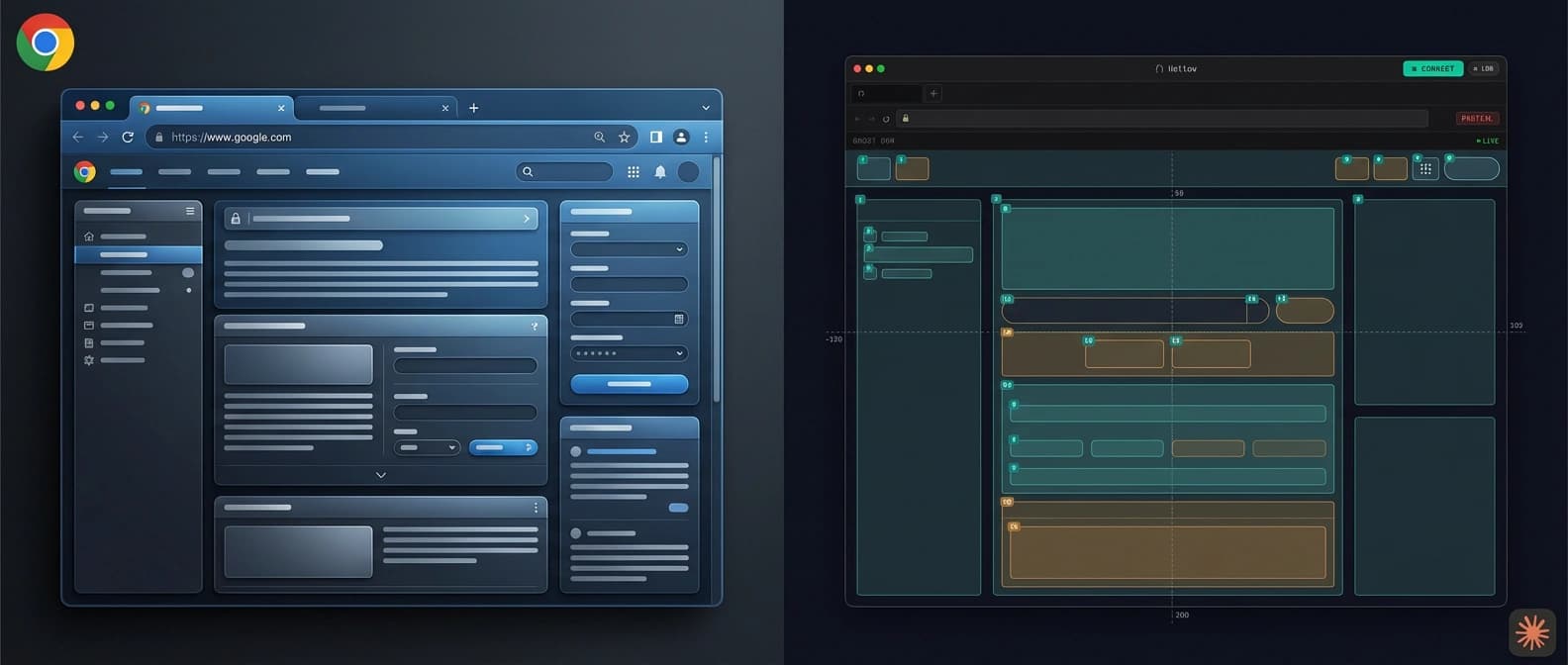
Hollow, which showed up in a late 2026-03-27 UTC Show HN post, takes a more opinionated route. Its thesis is that full pixel rendering is wasteful for many agent tasks. Instead of treating the browser as a screenshot machine, Hollow tries to preserve layout, structure, and actionability while dropping the heavy human-facing rendering layer. The company describes this as web perception built for agents, not humans.
That distinction matters. One bet says the agent needs a real, fully rendered browser because modern web apps are messy and visual truth matters. The other says the agent mostly needs structured spatial understanding, not a lovingly painted rectangle of pixels. In other words, one tool hands the agent a browser. The other hands it the browser's skeleton and says, "Trust me, this is the useful part."
Those are different technical philosophies, and that is exactly why this feels like a subcategory forming instead of random launch confetti. Once builders start arguing about which layer to abstract, you are no longer looking at a single feature. You are looking at a stack.
Anthropic opened the door, but the ecosystem is building the hallway
It is worth separating the first-party and third-party pieces cleanly, because they are not doing the same job.
Anthropic created the opening. Dispatch and Claude Code computer use expanded the permission boundary from terminal actions toward real machine actions. That changed the imagination of the category. Suddenly the question was not just whether Claude could write the code, but whether it could also drive the environment around the code.
Third parties are now building outward from that opening. Some are trying to give Claude Code a real browser. Some are trying to provide remote browsers over CDP. Some are trying to make the browser cheaper, faster, or more serverless for agent loops. Some are solving the ugly operational details that show up the minute you stop recording demos and start chasing real workflows, the exact problem we touched in our earlier piece on the AI coding agent orchestration bottleneck.
This is also where the competition around Claude Code gets more interesting. The next differentiator may not be raw model quality alone. It may be which ecosystem can attach the best browser control, runtime continuity, permissions, and operator ergonomics around that model. That is part of why adjacent pressure from lower-cost and open-ish stacks, including the GLM-5.1 and OpenClaw wedge, matters. Once the core coding-agent behavior starts to converge, the surrounding control layer becomes the prize.
The short version: Anthropic built the doorway; everyone else heard construction sounds and showed up with power tools.
Browser automation for Claude Code gets useful right where it gets risky
Of course, the minute an agent can see and act in a browser, the blast radius expands too.
A terminal can do plenty of damage, but a browser-connected agent can inherit sessions, cookies, app state, private dashboards, and messy real-world workflows that were never designed for a cheerful autonomous helper. Browserless openly pitches managed infrastructure with stealth and CAPTCHA solving. That may be practical for some workflows. It is also a reminder that the category is drifting from "help me run tests" toward "help me operate live surfaces on the real web," which is a bigger sentence than the launch copy usually admits.
That is why the risk story should stay in frame without swallowing the whole article. The browser layer is useful precisely because it gets closer to reality. It is risky for the same reason. The permission question does not go away once the agent leaves the terminal; it gets louder. We already argued in AI action, not answers, is the new battlefront that action loops only get durable when the trust boundary is explicit. That applies here too. An agent that can click around production tools is not just a smarter autocomplete with a nice attitude.
So yes, this week looks exciting. It also looks like the point where teams will need better approval flows, clearer browser isolation, and fewer magical demos that quietly rely on a founder's very lucky cookie jar.
The real test for Claude Code browser automation is habit, not hype
The strongest read on this week's signal cluster is not that the market is solved. It is that the market has moved.
A month ago, the hot Claude Code conversation was still mostly about terminal workflows, pricing pain, and agent orchestration. Now the energy is drifting toward real browsers, remote browsers, structured browser perception, and ways to keep agents attached to live apps after the code has been written. That is a real change in surface area.
The winners here will not be the tools with the flashiest launch video. They will be the ones that survive the boring stuff: auth, waiting states, CAPTCHAs, layout glitches, permissions, flaky sessions, and the eternal corporate SaaS pop-up that appears exactly when your demo needs one clean click. Browser automation becomes a workflow layer when it handles that mess without turning every task into a rescue mission.
That is why this cluster matters. Glance, Hollow, Anthropic's computer-use push, and the broader CDP-and-MCP tooling around Claude Code all point in the same direction. The new fight is moving outward from the terminal and into the browser where the actual software business still lives.
If that sounds obvious, good. Markets often look obvious right before they get expensive.
Source file
Public source trail
These links anchor the package to the underlying reporting trail. They are not a substitute for judgment, but they do show where the reporting starts.
Establishes the first-party trigger for this story: Anthropic's Dispatch flow that sends tasks from phone or desktop into Cowork or Claude Code on the user's machine.
Confirms Claude Code's computer-use path, permission model, and how browser-connected control now extends beyond a terminal-only workflow.
Brave Search indexed the Product Hunt listing on 2026-03-28 with the title "Glance : Real browser for Claude Code Test, Screenshot, Automate" and the description that Glance is an open-source MCP server giving Claude Code a real Chromium browser with 30 tools. Direct page fetch is blocked from this environment, so the article body sticks to that indexed listing language rather than adding unsupported detail.
Hollow's own launch page explains the product thesis: keep layout and actionability, drop full pixel rendering, and make browser perception fit serverless agent loops.
Useful timing signal showing relevant maker activity late on 2026-03-27 UTC rolling into 2026-03-28.
Shows the browser-control stack broadening into remote CDP infrastructure, including managed browsers, proxies, stealth, and CAPTCHA solving for agent workflows.

About the author
Talia Reed
Talia reports on product surfaces, developer tools, platform shifts, category shifts, and the distribution choices that determine whether AI features become durable workflows. She looks for the moment where a launch stops being a demo and becomes an ecosystem move.
- 34
- Apr 1, 2026
- New York
Archive signal
Reporting lens: Distribution is usually the story hiding inside the launch.. Signature: A feature matters when it changes someone else’s roadmap.
Article details
- Category
- AI Tools
- Last updated
- April 11, 2026
- Public sources
- 6 linked source notes
Byline
Covers product surfaces, tools, and the adoption moves that turn AI features into durable habits.