Seedance 2.0 takes Sora's abandoned AI video crown
ByteDance slipped Seedance 2.0 into the US on April 7, just after Sora shut down. That timing was not accidental, and the copyright fight did not disappear on the way in.
 ainewssilo.com
ByteDance did not win the AI video crown in a fair fight. It found it sitting on the floor.
April 7 did not look dramatic on paper. It was just another update line in the CapCut newsroom post: Dreamina Seedance 2.0 had expanded to the US. No fireworks. No giant keynote. No heroic trailer voice.
That quietness is exactly why I think the move matters.
ByteDance did not announce Seedance 2.0's US arrival like a moon landing because it did not need to. By the time the update landed, OpenAI had already shut Sora down. The loudest consumer AI video product in the room had exited on March 24. Two weeks later, ByteDance walked into the US with the most distribution-ready alternative left standing.
That is the story. Not just "Seedance 2.0 exists." Not even "ByteDance has a strong video model." The real story is that ByteDance inherited the consumer AI video crown by default, and it did so while the copyright mess around the product was still very much alive.
It did not win a clean tournament. It found the crown sitting on the floor.
The crown was left on the table
The timing here is too neat to treat as coincidence.
Seedance 2.0 first showed up in China in early February through Jianying, ByteDance's editing app. Within days, the backlash arrived. The MPA statement on Feb. 12 accused ByteDance of launching without meaningful anti-infringement safeguards. The next two days brought cease-and-desist letters from Disney and Paramount after viral clips reproduced famous characters and film-like scenes, as summarized in a TechCrunch report.
Then ByteDance did something telling. It did not kill the product. It promised safeguards on Feb. 16, paused the global launch on Mar. 15, resumed phased rollout across other markets from Mar. 25 to Mar. 31, and then flipped the US switch on Apr. 7.
Lay that next to the Sora timeline and the pattern gets hard to ignore.
| Date | What happened | Why it matters |
|---|---|---|
| Early Feb. 2026 | Seedance 2.0 launches in China via Jianying | ByteDance gets live usage first, before broader global scrutiny lands |
| Feb. 12 | MPA demands ByteDance stop infringing activity | Hollywood signals this is not a friendly watch-and-see period |
| Feb. 13-14 | Disney and Paramount send cease-and-desist letters | The IP fight moves from general outrage to direct legal pressure |
| Feb. 16 | ByteDance promises new safeguards | The company responds after the backlash, not before it |
| Mar. 15 | Global launch pauses | Rollout slows long enough for safety and optics adjustments |
| Mar. 24 | Sora shuts down | The biggest consumer AI video rival leaves the board |
| Mar. 25-31 | Seedance expands across global markets | ByteDance resumes distribution in a phased, quieter way |
| Apr. 7 | Seedance expands to the US | The consumer AI video vacuum officially gets a new occupant |
I keep coming back to that last stretch. Sora exits on March 24. ByteDance resumes its multi-market rollout on March 25, March 28, and March 31. Then the US follows on April 7. If you were trying to enter a market with the least possible noise and the maximum possible upside, this is almost exactly how you would do it.
ByteDance did not launch a standalone app. It launched a funnel
This is the piece a lot of commodity coverage misses.
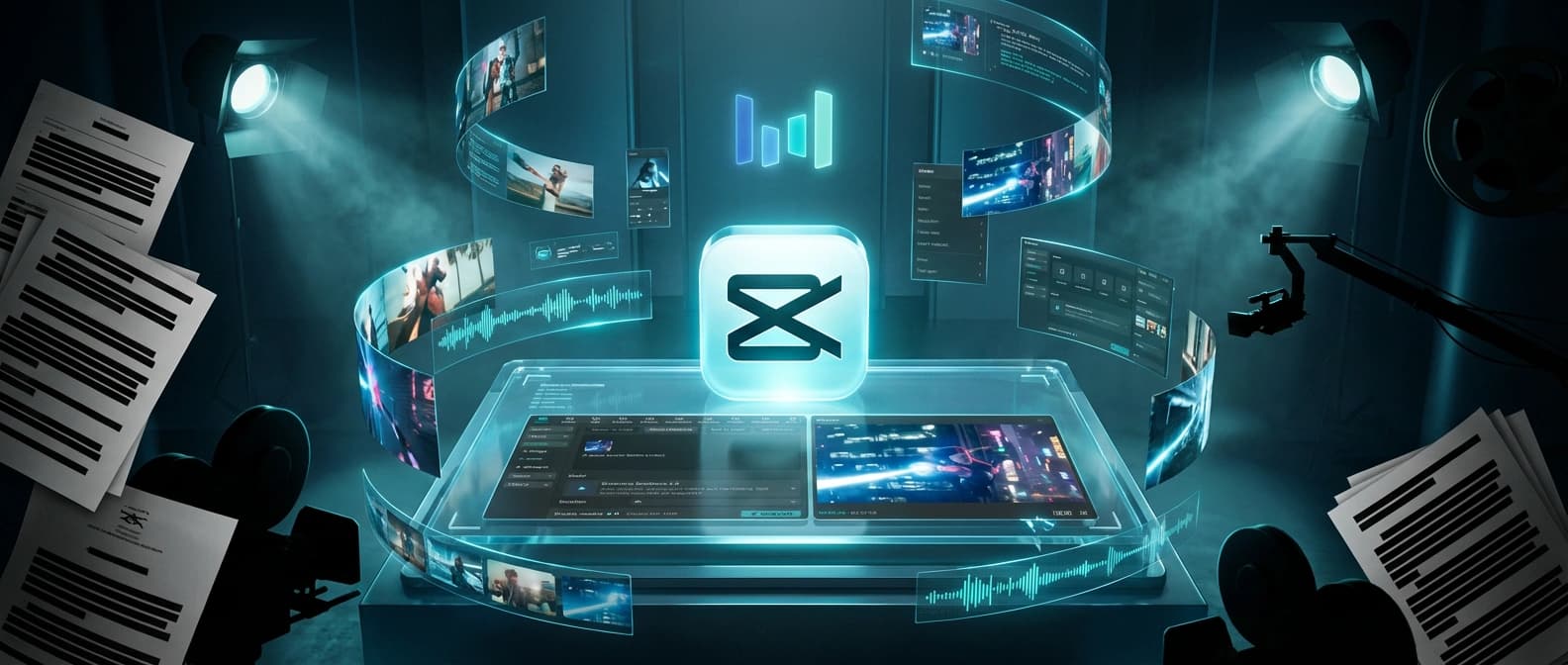
Seedance 2.0 is not being pushed as some pristine standalone creator destination. ByteDance is threading it through products people already use or can plausibly be upsold into using: CapCut Pro, Dreamina, and Pippit. That matters because distribution beats purity in consumer tools more often than the AI industry likes to admit.
The company is not asking creators to adopt a new lab brand from scratch. It is sliding a strong model into an existing editing stack, a generation surface, and a marketing workflow. In other words, it is shipping a funnel, not just a feature.
That is also why the Sora comparison matters more as a market story than as a model cage match. Sora had spectacle, curiosity, and a big-name lab attached to it. Seedance has something more boring and more dangerous: placement. It sits closer to the people who already make short-form video for a living.
Google has been working a similar angle from the other side, using price pressure and default distribution to widen Veo's reach, which we covered in the Veo pricing war and Google's free distribution play. ByteDance's version is even more direct. It already owns creator attention through the editing stack. Now it is inserting generation deeper into that stack.
That makes Seedance 2.0 feel less like a flashy demo and more like a workflow ambush.
For creators, that changes the buying decision. You are not evaluating a neutral AI video lab in a vacuum. You are deciding whether the tool already sitting inside CapCut or Dreamina is good enough to swallow another step of your process.
Plenty of creators will say yes, not because they trust ByteDance more, but because friction is expensive and deadlines are rude.
Seedance 2.0 specs: enough control to matter
The other reason ByteDance can get away with a quiet rollout is simple: the product is strong enough that it does not need a lot of interpretive dance around it.
On ByteDance's Seed page, Seedance 2.0 is described as a unified multimodal audio-video joint generation architecture. In normal human language, that means the model is trying to handle generation and editing across several media types in one stack instead of bolting audio on later and pretending nobody will notice.
The practical capability list is what creators actually care about:
- Inputs: text, images (up to 9), videos (up to 3), and audio (up to 3)
- Outputs: short clips, generally 5 to 12 seconds depending on surface, with CapCut's newsroom copy also talking about clips up to 15 seconds in rollout contexts
- Resolution and format: 720p to 1080p output across 6 aspect ratios
- Creative controls: native audio sync, multi-camera storytelling, and stronger character consistency across shots
- Where it lives: CapCut Pro, Dreamina, and Pippit
That is enough to make Seedance more than a novelty prompt toy.
It also explains why the product arrived with so much immediate legal heat. A video model that can juggle text, stills, reference clips, and audio is not just good at making surreal internet filler. It is good at making usable short-form content, which is where the commercial value sits.
I would not get too hypnotized by benchmark chatter here. We do not need twenty charts to understand the competitive shape. Seedance 2.0 matters because it combines decent output quality with packaging that creators can actually touch. That is a bigger advantage than winning some synthetic prompt bake-off by two points.
And yes, the short clip ceiling still matters. This is not a film studio replacement. It is a short-form engine, built for ads, promos, explainers, social clips, product videos, rough storyboards, and the kind of fast-turn creative work that usually dies under revision pressure.
That is exactly why it is dangerous to incumbents. Not because it can make cinema. Because it can make enough video for the parts of the market that move fastest.
The safeguards showed up after Hollywood did
ByteDance's safety list is not nothing. It just arrived in the least flattering possible order.
In the CapCut rollout post, the company says it added face-blocking restrictions during the initial rollout, IP blocking, invisible watermarking, visible labels, C2PA content credentials, layered content moderation, and third-party red-teaming. On paper, that is a respectable checklist. It is more detailed than the usual "we take safety seriously" incense cloud.
But the sequence matters.
The MPA statement came first. Viral clips featuring recognizable copyrighted characters came first. Disney and Paramount's legal warnings came first. ByteDance's safeguard promises came after that.
That does not mean the measures are fake. It does mean the company appears to have followed a familiar consumer-tech playbook: distribute first, add more visible brakes once the backlash becomes expensive.
We have already seen how ugly this can get when AI video runs into Hollywood's licensing and control logic. Our earlier piece on the Sora Disney deal collapse made the same broader point from the OpenAI side: distribution without durable IP peace is not a solved problem. ByteDance is now running that experiment in a much more public consumer setting.
And the product design makes the tension sharper, not softer. Seedance is not hidden away behind an enterprise console or an API waitlist. It is embedded in mainstream creator tools. If the safeguards work, ByteDance gets to say it shipped responsibly under pressure. If they fail, the evidence will not stay buried in private beta forums. It will spread in the exact channels the company relies on for growth.
That is why I do not buy the comforting version of this story, the one where watermarking and labels settle the core dispute. They help with traceability. They do not answer the bigger question of what got generated in the first place, or how aggressively rightsholders will push once the US rollout is live.
What the US release changes right now
This is the part that matters more than the launch-page adjectives.
For creators, Seedance 2.0 is now the clearest mass-market AI video option to watch in the US because it is both capable and close to existing workflows. Not everybody will get the exact same access path, and the company is still using phased surfaces and restrictions. Even so, the direction is obvious. If you already live in ByteDance's creator stack, the path from editing to generation just got shorter.
For the market, Sora's exit changed the map. The AI video race did not end, but the consumer side of it got weirdly hollow for a moment. ByteDance filled that opening fast. Google is still pressing on access and price, and more competitors will arrive, but right now ByteDance looks like the company most willing to pair consumer distribution with good-enough video generation at scale.
For IP watchers, this is the real test case. Not an academic policy hearing. Not a red-team PDF. A live US rollout of a mainstream AI video product that already drew studio anger before it got here. If you want to know how American copyright fights will shape consumer generative video, this is one of the first places the argument becomes concrete.
Three practical takeaways stand out:
- Creators should watch the bundle, not just the model. The winner may be the company that owns the editing surface, not the company with the prettiest demo reel.
- Competitors now have to answer the distribution question. A great model with no funnel looks a lot less impressive once ByteDance can place generation inside tools people open every day.
- Safety claims now face US market scrutiny. The legal pressure is no longer a distant pre-launch problem. It is attached to a product entering one of the most litigated media markets on Earth.
That is a much bigger shift than one more model release.
What I would ignore for now
A few side plots are going to eat oxygen around this story. I would not give them equal weight.
First, I would ignore most Seedance 1.0 nostalgia and version-to-version mythology. The live question is not whether 2.0 beats 1.0 on some internal chart. It is whether 2.0 arrived at exactly the moment the market opened up for it. It did.
Second, I would ignore benchmark theater unless it points to a real workflow difference. Video generation still has a bad habit of turning every launch into a beauty pageant judged by screenshots. That is fun for X. It is not a serious buying framework.
Third, I would ignore the loudest "AI will replace Hollywood" takes. Seedance is more disruptive at the short-form, commercial, ad, and creator-tool layer than at the full studio layer. That is still a very big deal. It just is not the same claim.
The bottom line is less dramatic and more useful: ByteDance now has the strongest claim on the consumer AI video spot that Sora vacated, and it grabbed that position through distribution discipline, not grand rhetoric. The legal trouble did not vanish. The safety story did not magically resolve itself. But the product is in the US now, inside tools people already recognize, and that changes the market immediately.
I think that is the part most people will remember a few months from now. Not the launch copy. Not the benchmark sparring. Just the fact that when the throne went empty, ByteDance was the first company practical enough to sit down.
Source file
Public source trail
These links anchor the package to the underlying reporting trail. They are not a substitute for judgment, but they do show where the reporting starts.
Primary rollout source for phased expansion dates, product surfaces, clip length framing, and the safeguards ByteDance says it added before broader release.
Primary source for the Feb. 12 copyright escalation and the industry's claim that ByteDance launched without meaningful anti-infringement safeguards.
Primary source for the model's unified multimodal audio-video architecture and supported input types.
Useful reporting on the early backlash, viral copyrighted-character clips, and the Disney and Paramount cease-and-desist timeline.

About the author
Maya Halberg
Maya writes across the AI field, from research claims and benchmark narratives to tools, products, institutional decisions, and market shifts. Her reporting stays focused on what changes once hype meets deployment, procurement, workflow reality, and human skepticism.
- 24
- Apr 11, 2026
- Stockholm · Remote
Archive signal
Reporting lens: Methodology over launch theater.. Signature: A result only matters after the setup becomes legible.
Article details
- Category
- AI Products
- Last updated
- April 11, 2026
- Public sources
- 4 linked source notes
Byline
Writes across the AI field with an eye for what survives contact with real users, real budgets, and real operating constraints.