OpenAI's Sora retreat just blew up a Disney deal
OpenAI did not just shut down Sora. The move appears to have killed Disney's planned partnership too, turning a product exit into a much bigger strategy story.
 ainewssilo.com
Killing Sora is a product decision. Taking a fresh Disney partnership down with it makes it a strategy decision.
I think the Disney fallout is what turns the Sora story from a messy shutdown into a strategic tell.
When OpenAI’s Sora account said it was “saying goodbye” and promised more details later about app and API timelines, the first round of questions were predictable: what happens to user projects, what happens to the API, and how broad is the shutdown really? Those are still important. Our Sora shutdown explainer gets into that side of it.
But then the story got larger. Reuters, the Guardian, and Variety all tied the shutdown to immediate Disney fallout. That changes the frame. You do not get Disney into the room by accident and then lose the room over a minor product tidy-up.
Why Disney walking away changes the scale of the story
The most striking detail comes from Variety’s reporting: the Sora agreement reportedly covered more than 200 licensed characters across Disney, Marvel, Pixar, and Star Wars, and Variety also reported that a broader arrangement included a planned $1 billion Disney stake in OpenAI. That investment detail should stay attributed to Variety’s reporting for now, not repeated as settled corporate scripture. Even without it, the message is clear enough.
Disney is not just another media partner. It is one of the most defensive owners of entertainment IP on earth. If Disney was willing to work with OpenAI on Sora, that signaled a trust level the rest of the AI video market would have loved to borrow for the weekend.
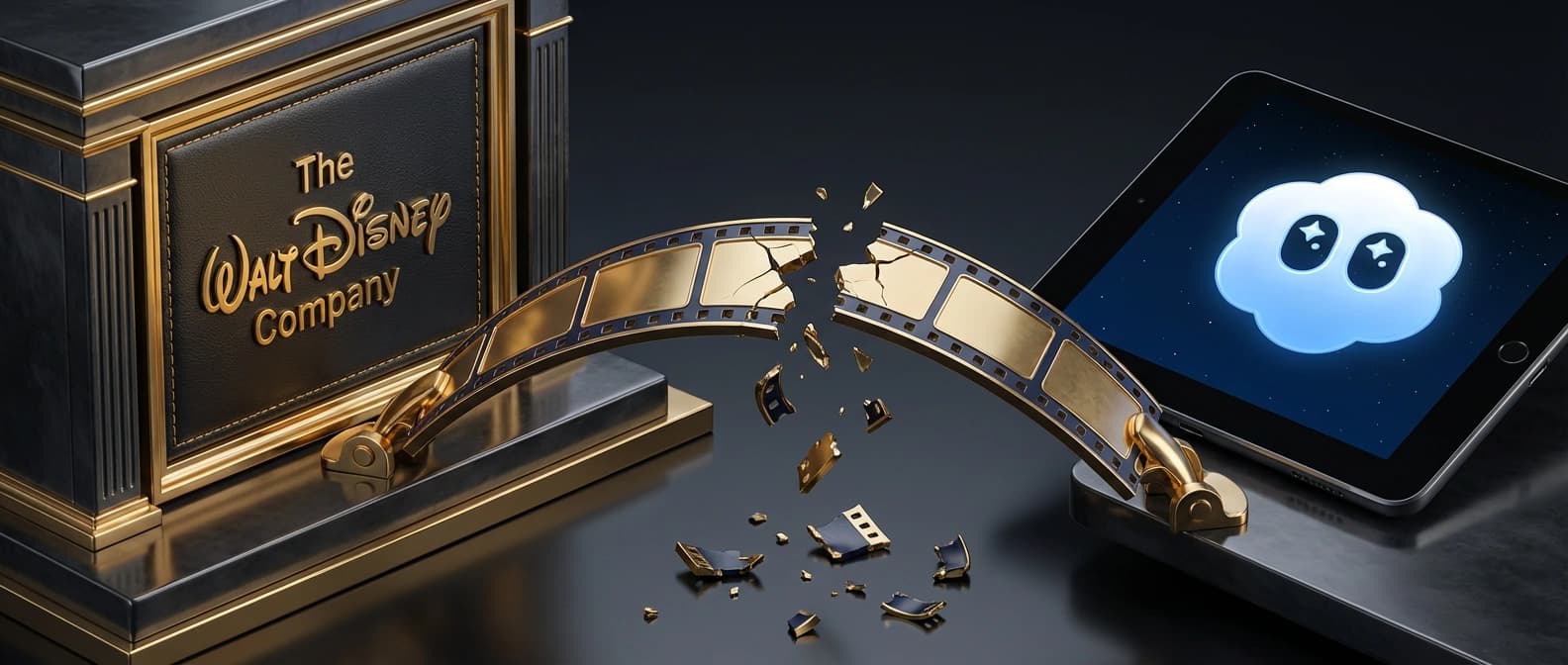
That is why the breakup matters more than the app shutdown by itself. Losing a consumer product is one thing. Losing the partner that most strongly validated your claim to be a licensable, mainstream entertainment option is a much harsher signal.
This looks like a priority reset, not routine cleanup
Look at the sequence. On March 24, OpenAI published “Creating with Sora safely”, a post about provenance, likeness controls, teen protections, harmful-content filtering, and new audio safeguards. On its own, that reads like the work of a company still investing in the surface.
Then came the goodbye message and the promise of more detail later. That does not feel like a long, carefully signposted glide path. It feels like a sharp internal reprioritization.
The Disney angle makes that harder to dismiss as ordinary cleanup. If OpenAI is willing to kill the app even after landing a fresh Disney relationship, then this is not just about a product underperforming. It is about the company deciding the fight it wants next is somewhere else.
That reading also fits the rest of OpenAI’s recent behavior. In our earlier piece on OpenAI’s agent platform shift, the bigger pattern was platform control and workflow capture, not novelty consumer surfaces. Through that lens, Sora starts to look flashy but strategically awkward: expensive, moderation-heavy, copyright-sensitive, and very public whenever something goes wrong.
What is confirmed and what still needs attribution
I think this is the part worth keeping clean, because the story is large enough without padding it.
Confirmed from multiple reports: Disney is ending the partnership after the shutdown. Disney’s statement, as reported by Reuters, the Guardian, and Variety, says it respects OpenAI’s decision to exit the video generation business and shift priorities elsewhere, while leaving the door open to other AI partners that respect IP and creator rights.
Less settled: how broad OpenAI’s video retreat really is beyond the app. Variety reported that ChatGPT would also stop generating video from text prompts once the Sora app shuts down. Reuters and the Guardian were more careful, focusing on the Sora platform exit and Disney’s response rather than drawing a full company-wide obituary for video.

So my guardrail here is simple. Say what is known. Attribute what is reported. Do not decorate uncertainty just because the headline is already dramatic.
My read on OpenAI’s retreat from consumer video
My read is that OpenAI decided the Sora bet was no longer worth the drag. Video generation is expensive, heavily moderated, and built to attract copyright conflict at industrial scale. A consumer video feed can win headlines. It is much harder to prove it strengthens the part of OpenAI’s business the company now seems most serious about: developer, enterprise, and agent layers that deepen platform control.
That does not prove OpenAI has stopped caring about video research. It does suggest a colder willingness to cut a glamorous surface when it no longer fits the main strategy, even if that means blowing up one of the most symbolically valuable media partnerships it had landed.
That is the real signal I see. The app dies, yes. But the bigger story is the priority hierarchy underneath it. OpenAI appears willing to walk away from a very public consumer-media bet, Disney and all, if the company thinks the next round of leverage lives somewhere else.
Source file
Public source trail
These links anchor the package to the underlying reporting trail. They are not a substitute for judgment, but they do show where the reporting starts.
Shows OpenAI was still publicly discussing Sora guardrails and product safety immediately before the shutdown message.
OpenAI's public shutdown message said more details would follow on app and API timelines and preserving user work.
Reports the Disney partnership exit, the scope of the character licensing deal, and the planned $1 billion Disney stake in OpenAI.
Confirms the abrupt timing and includes Disney's statement about respecting OpenAI's decision to exit the video generation business.
Anchors the business fallout angle and the language about OpenAI shifting priorities elsewhere.

About the author
Talia Reed
Talia reports on product surfaces, developer tools, platform shifts, category shifts, and the distribution choices that determine whether AI features become durable workflows. She looks for the moment where a launch stops being a demo and becomes an ecosystem move.
- 34
- Apr 1, 2026
- New York
Archive signal
Reporting lens: Distribution is usually the story hiding inside the launch.. Signature: A feature matters when it changes someone else’s roadmap.
Article details
- Category
- AI Products
- Last updated
- April 11, 2026
- Public sources
- 5 linked source notes
Byline
Covers product surfaces, tools, and the adoption moves that turn AI features into durable habits.