Gemini notebooks pull NotebookLM into the app
Google's new Gemini notebooks sync with NotebookLM and turn chats, files, and instructions into a shared workspace built for longer-running work.
 ainewssilo.com
The interesting part is not that Gemini got folders. It is that Google gave the same notebook a life in both Gemini and NotebookLM.
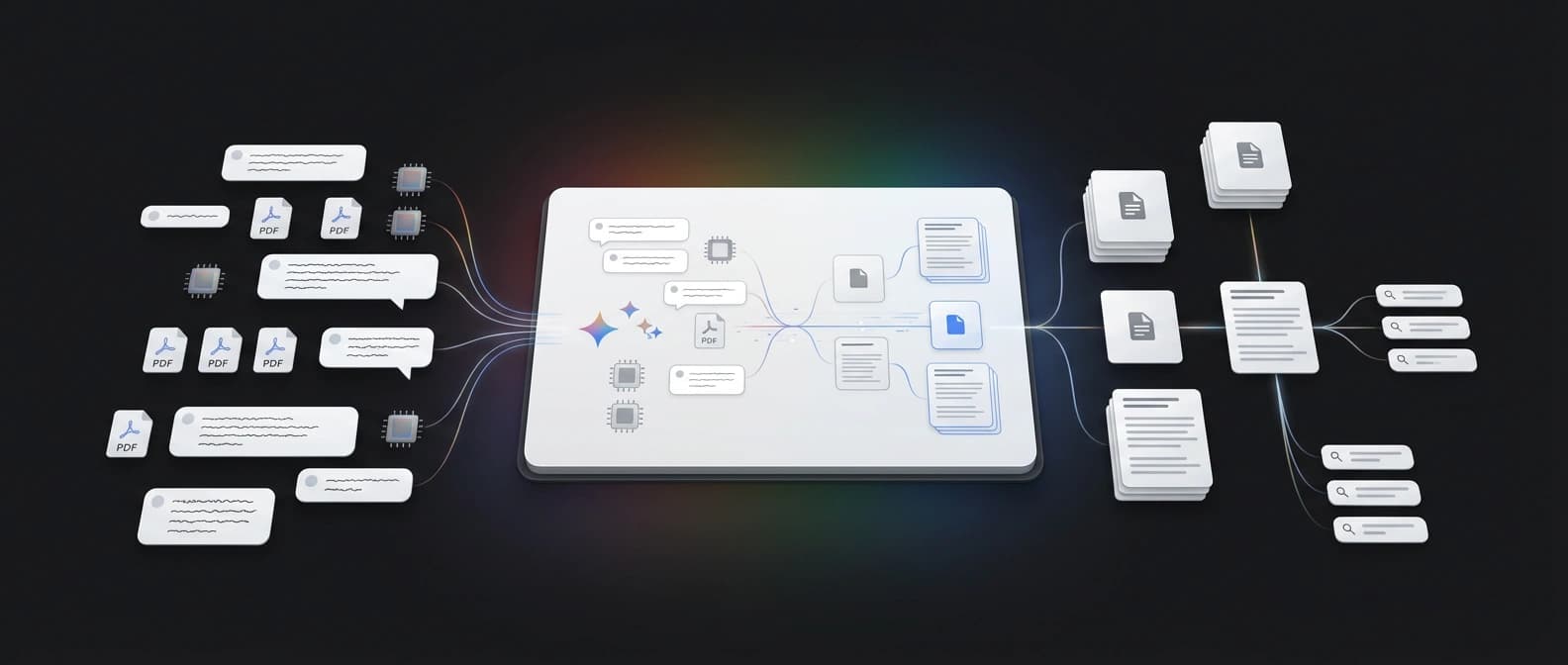
Google announced Gemini notebooks on April 8, and the headline feature is more important than it first sounds. Web access is rolling out this week to Google AI Ultra, Pro, and Plus subscribers, with mobile, more European countries, and free-user access promised in the coming weeks. On paper, notebooks look simple: a place inside Gemini to organize chats and files. In practice, they do something Google has been inching toward for months. They give Gemini a persistent project layer that also lives inside NotebookLM.
That is the actual change. A notebook can hold past chats, uploaded documents, project-specific instructions, and shared source context. Google says anything you add in one app appears in the other, which means the same research container can start in Gemini and continue in NotebookLM without making you rebuild the work from scratch. It is not a full merger. NotebookLM is still its own product. But it is absolutely a structural shift, because Gemini is no longer just a place where you ask a question and watch the thread sink into the sidebar abyss.
I keep coming back to that last point. Google did not announce a new flagship model here. It announced a container. That may sound modest, but containers decide where work lives, and where work lives usually decides which product wins.
Gemini notebooks are the missing middle between chat and project
The easiest way to understand Gemini notebooks is to stop thinking about them as saved chats. Google describes them in its launch post as personal knowledge bases shared across products, starting in Gemini. That wording matters. A saved thread remembers what was said. A notebook remembers what the work is about.
Inside a notebook, users can move older Gemini conversations into one place, upload documents and PDFs, and add custom instructions that apply to that project instead of floating around as vague account-level preferences. Gemini can then use those sources together with its tools and web search when it responds. In other words, the context is no longer trapped inside one chat tab. It becomes the working surface.
That solves a very ordinary problem that most AI chat apps never really fixed. Long-running work does not behave like one neat conversation. A real project sprawls. You ask for a draft. Then a comparison. Then a revision after you add three PDFs. Then a tighter version for a different audience. A week later you want the whole thing back, plus the files, plus the instructions that made the model useful in the first place. Chat threads are fine for one-off questions. They are terrible at being a project home.
Google has been circling this continuity problem for a while. Our earlier piece on Gemini import as a lock-in play argued that Google was already trying to lower switching costs by pulling memories and archived chats into Gemini. Notebooks take the next step. Instead of merely importing old context, Google is giving that context a durable room to live in.
That room matters more than the UI label. If you can keep the chats, the files, the instructions, and the sources together, Gemini starts behaving less like a clever answer machine and more like a workspace. That is a much bigger category move.
A notebook does the job chat threads never could
The product pitch is tidy, but the workflow change is the real story. The old chat model assumes each interaction is disposable. You ask, the assistant answers, and the app politely pretends the thread history on the left counts as knowledge management. It does not. It is just storage with better typography.
A notebook is different because it treats the project as the unit that matters. Once chats, source documents, and instructions live inside the same container, the assistant is working from a defined corpus instead of whatever happened to be said in the last seven prompts. That is much closer to how real knowledge work behaves.
Think about the difference in practice:
- A disposable chat helps you brainstorm.
- A notebook helps you keep the brief, the evidence, the draft history, and the next question in one place.
- Notebook sync means the same project can move between broad assistant work in Gemini and deeper source-based synthesis in NotebookLM.
That middle bullet is the important one. Most assistant apps still force users to choose between fast chat and structured research. Google is trying to narrow that gap by making the notebook itself portable across both surfaces.
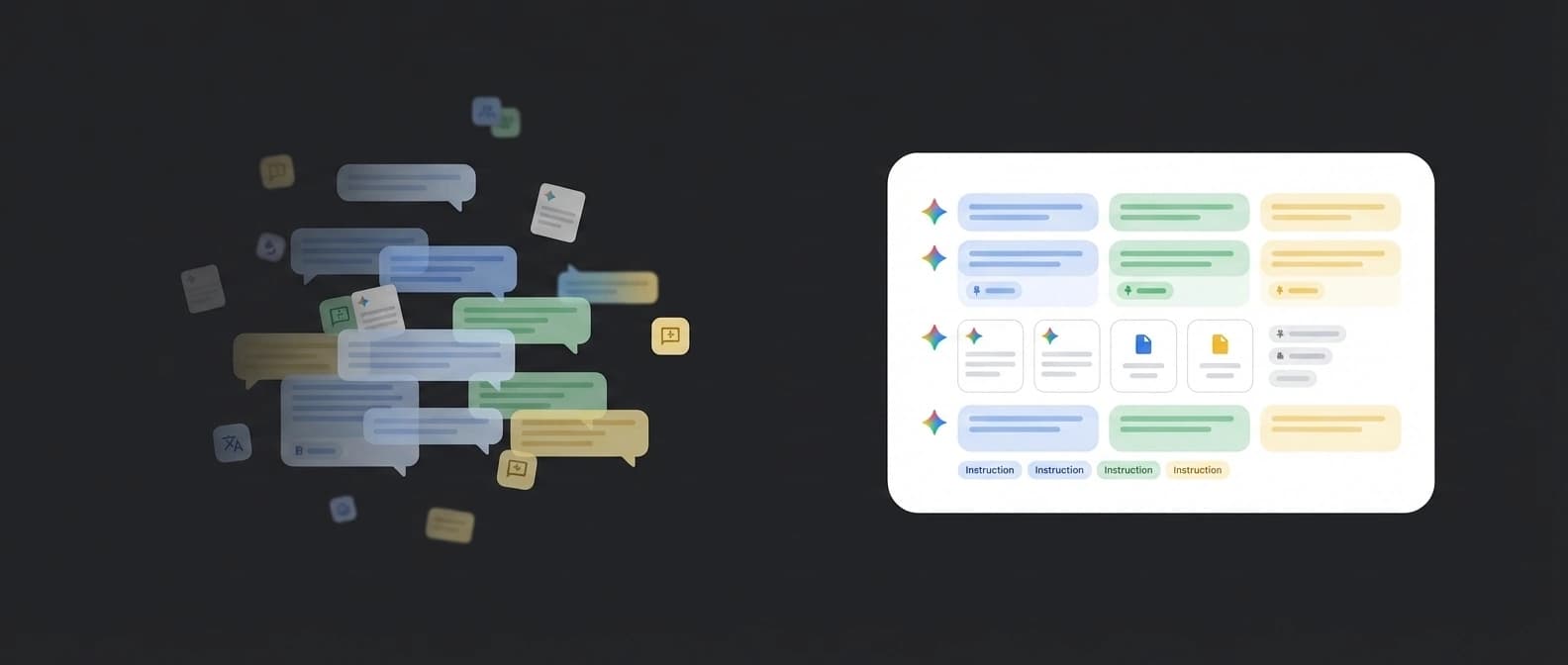
This also explains why the feature lands now. Gemini has been accumulating more tools and more surfaces, while NotebookLM has been turning source-grounded work into a product people actually return to. Put those together and the missing piece is obvious: a shared object that can travel between the chat app and the research app. Notebooks are that object.
If you zoom out, this fits the same pattern we described in Gemini 3 as Google's agent stack. The company keeps building toward systems that do not just answer well once. They hold enough context to stay useful over time. The humble notebook icon is doing more strategic work here than another benchmark chart ever could.
The source caps tell you what Google thinks this product is for
Google's Help doc is more revealing than the marketing copy because it shows how differently notebooks scale by plan. The numbers are not decoration. They tell you whether Google sees this as light note-taking or as a serious project vault.
| Plan | Notebooks per user | Sources per notebook | Access timing |
|---|---|---|---|
| Standard / free | 100 | 50 | Broader Gemini rollout in the coming weeks |
| Google AI Plus | 200 | 100 | Web rollout this week |
| Google AI Pro | 500 | 300 | Web rollout this week |
| Google AI Ultra | 500 | 600 | Web rollout this week |

Those source limits are the giveaway. A 50-source cap is enough for a class project, a compact research folder, or a serious purchase decision. A 600-source cap is something else. That is Google saying the notebook is supposed to carry large, ongoing, messy work.
The notebook limits reinforce the same idea. One hundred notebooks already implies regular use. Five hundred notebooks says Google expects some people to treat this as a standing working environment, not a novelty feature they tap twice and forget.
There are still important caveats. Google says notebooks in Gemini are not currently available for users under 18, Workspace accounts, or Education accounts. The first rollout is web-first. Mobile, more European countries, and free users are coming later. So no, this is not yet the universal Google knowledge layer. It is an early commercial rollout with clear tiering and clear exclusions.
Even so, the tier design tells us what the company wants. Google is not shipping a prettier folder for abandoned prompts. It is creating a context container that gets materially more powerful as you move up the subscription ladder. That is classic product packaging, but it is also product strategy. The more of your working context lives inside a notebook, the less attractive disposable chats start to feel.
NotebookLM is still the specialist, which keeps this from being a full merger story
This is the part worth saying plainly, because launch-week coverage will be tempted to overcook it. Gemini notebooks do not mean Gemini and NotebookLM have become one app. What Google actually announced is a shared notebook layer and a tighter handoff between products.
That distinction matters because NotebookLM still keeps its own identity. Google explicitly points to features such as Video Overviews and Infographics as reasons you might open the same notebook in NotebookLM even if you started it in Gemini. The Help material also shows a much broader set of NotebookLM-specific usage limits and premium features around reports, quizzes, flashcards, deep research, and sharing behavior. Gemini is getting the project container. NotebookLM still looks like the deeper source-work specialist.
That is why the cleaner mental model is not "NotebookLM moved into Gemini." It is "the notebook became a shared asset." The same set of sources can now feed broader assistant work in Gemini and more explicitly research-shaped work in NotebookLM.
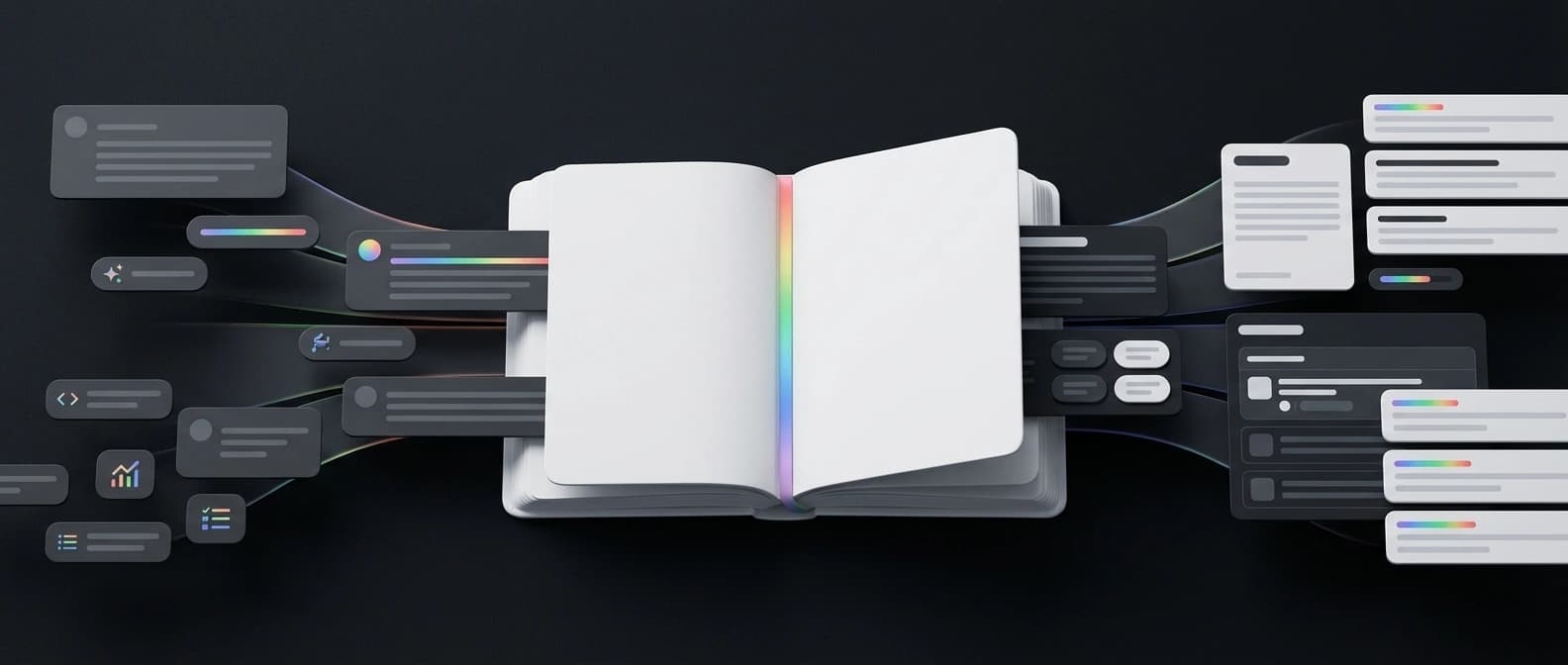
Honestly, that makes the move more interesting, not less. Full mergers are easy to announce and messy to use. Shared layers are harder to explain, but often more powerful. If Google can keep the notebook consistent across both surfaces, it gets the benefits of continuity without flattening the products into one awkward mega-app.
Google's shared notebook layer fits the rest of its stack
The notebooks announcement also lines up with a broader Google habit. Across product launches, Google keeps trying to own the layer around the model, not just the model itself.
We have already seen that in Google AI Studio's full-stack push, where the strategic play was distribution and workflow, not raw intelligence. We saw it again in Google's Gemini tooling update as a control-plane move, where the company kept tightening the surrounding system that makes models useful in practice.
Gemini notebooks bring that same instinct to the consumer and prosumer side. If the app that answers your question also owns the files, the instructions, the project history, and the source bundle, Google does not need every single model win to feel indispensable. It just needs the work to stay put.
That is the deeper link between Gemini and NotebookLM. Google is shrinking the distance between assistant chat and research workspace, because that distance is where users used to slip away. One product was good for broad interaction. The other was good for source-grounded synthesis. A shared notebook makes the path between them frictionless enough that leaving the stack becomes a bigger decision.
And yes, there is a lock-in angle here. There was one when Gemini started importing histories. There is one now when a notebook becomes the durable home for sources, instructions, and draft context. But it is not lock-in through some sinister secret mechanism. It is lock-in through convenience, continuity, and fewer context resets. That is usually how the effective kind works.
The real competitor is disposable chat
I do not think the main rival here is a specific model. It is the entire design assumption that assistant apps should behave like endless, forgettable threads.
Disposable chat was fine when AI tools were mostly demo surfaces. It is much worse once people try to run actual projects through them. At that point you need a place where context can stay organized, where files and instructions can survive, and where the next session does not feel like starting from zero with a slightly smug autocomplete.
Gemini notebooks are Google's clearest admission yet that chat alone is too flimsy for longer-running work. The announcement matters because it changes the product shape, not because it changes the leaderboard. If the notebook sync works reliably, users get a more practical workflow. Google gets a stronger grip on where that workflow lives. Those two outcomes are not contradictory. They are the whole business model.
So the bottom line is fairly simple. This is not a full Gemini and NotebookLM merger. It is the first visible step toward a shared knowledge layer between them. Google is betting that the future assistant is not just the place where you ask the question. It is the place where the project stays.
That is a smarter bet than another splashy model demo, and probably a more durable one too.
Source file
Public source trail
These links anchor the package to the underlying reporting trail. They are not a substitute for judgment, but they do show where the reporting starts.
Core launch post covering synced notebooks, rollout timing, notebook behavior, and the Gemini to NotebookLM workflow.
Help documentation covering plan tiers, source limits, notebook caps, and related feature differences.
Main product surface for the app now gaining notebooks.
Main product surface for the research app that now shares synced notebooks with Gemini.

About the author
Maya Halberg
Maya writes across the AI field, from research claims and benchmark narratives to tools, products, institutional decisions, and market shifts. Her reporting stays focused on what changes once hype meets deployment, procurement, workflow reality, and human skepticism.
- 24
- Apr 11, 2026
- Stockholm · Remote
Archive signal
Reporting lens: Methodology over launch theater.. Signature: A result only matters after the setup becomes legible.
Article details
- Category
- AI Products
- Last updated
- April 11, 2026
- Public sources
- 4 linked source notes
Byline
Writes across the AI field with an eye for what survives contact with real users, real budgets, and real operating constraints.