GitHub Copilot SDK exports GitHub's agent runtime
GitHub's Copilot SDK public preview is not just another toolkit. It exports the agent runtime behind Copilot CLI and cloud agent into apps.
 ainewssilo.com
The real launch is not "GitHub has an SDK." It is "GitHub is exporting the runtime it already uses to run agents."
Every agent platform launch now arrives wearing roughly the same fake mustache: a chat box, a few tools, and a promise that this one definitely understands workflows. So the lazy way to frame GitHub's April 2 release is, "GitHub shipped another SDK." Technically true. Not very useful.
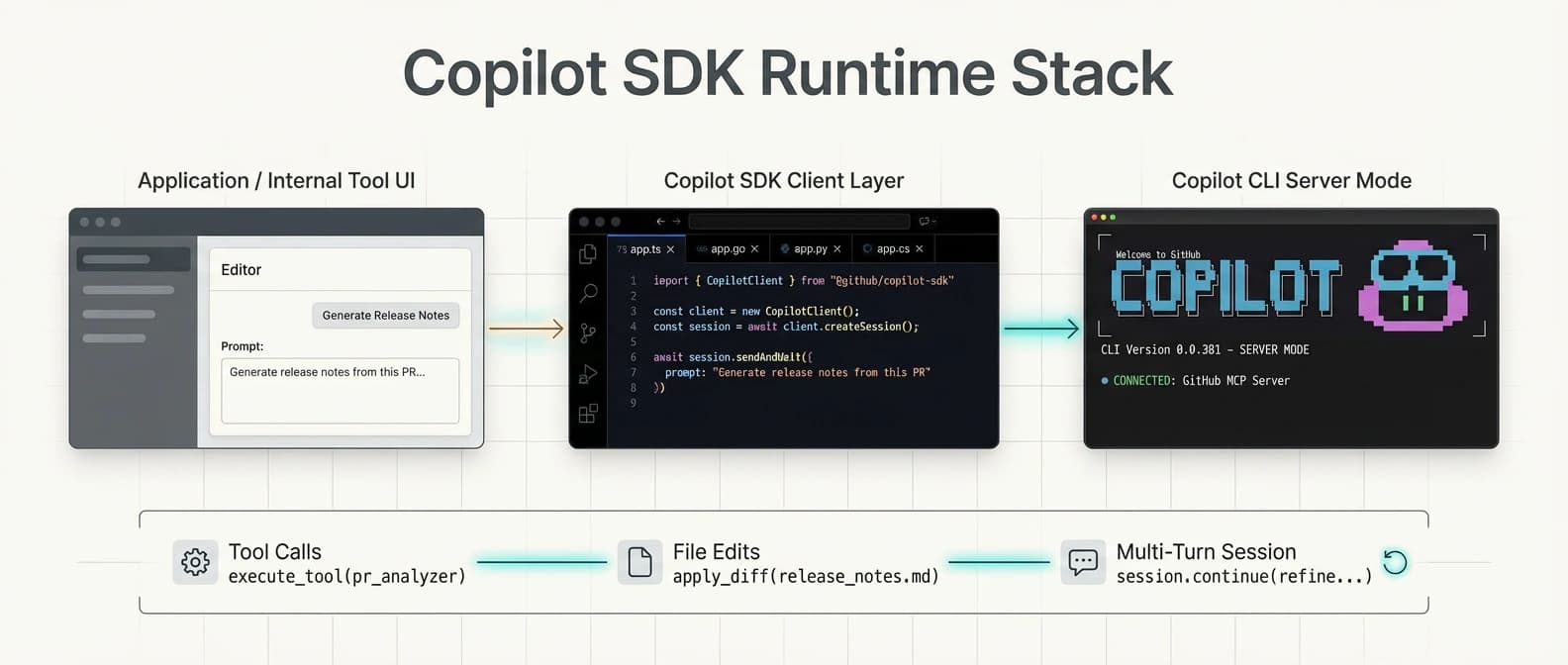
The sharper read is that GitHub Copilot SDK public preview exports the production agent runtime behind Copilot CLI and Copilot cloud agent into embeddable app infrastructure. GitHub says that directly in its April 2 public-preview changelog: the SDK exposes the same runtime that powers those products, including tool invocation, streaming, file operations, and multi-turn sessions. That is a very different product story from "here are some bindings, good luck with the rest of the plumbing."
I think that distinction is the whole story.
GitHub Copilot SDK is the runtime leaving the building
GitHub did not invent this idea on April 2. The company already framed the SDK in a January 22 technical-preview post as the same execution loop behind Copilot CLI. That earlier post keeps us honest. This is not a first-ever launch. It is GitHub taking a capability it already used internally, widening the audience, and putting a public-preview stamp on it.
April 2 is still the more important moment. Public preview makes the claim legible to a much broader set of developers, adds Java to bring the SDK to five languages, and comes with fresher docs that show GitHub intends this to be more than a terminal trick with a nice repo header.
The key sentence from GitHub's changelog is the one that says developers get the same "production-tested agent runtime" behind Copilot CLI and Copilot cloud agent. That phrase carries weight because GitHub is not talking about one-off demos. It is talking about the software loop it already trusts in user-facing products.
If this were only a chat wrapper, the launch would be ordinary. The market already has enough wrappers to build a small decorative fence. What GitHub is exporting instead is behavior: planning, tool calling, file editing, commands, streaming, and long-lived sessions. Calling that "just another SDK" is like calling a restaurant kitchen "just a stove."
Copilot CLI is the hidden control plane
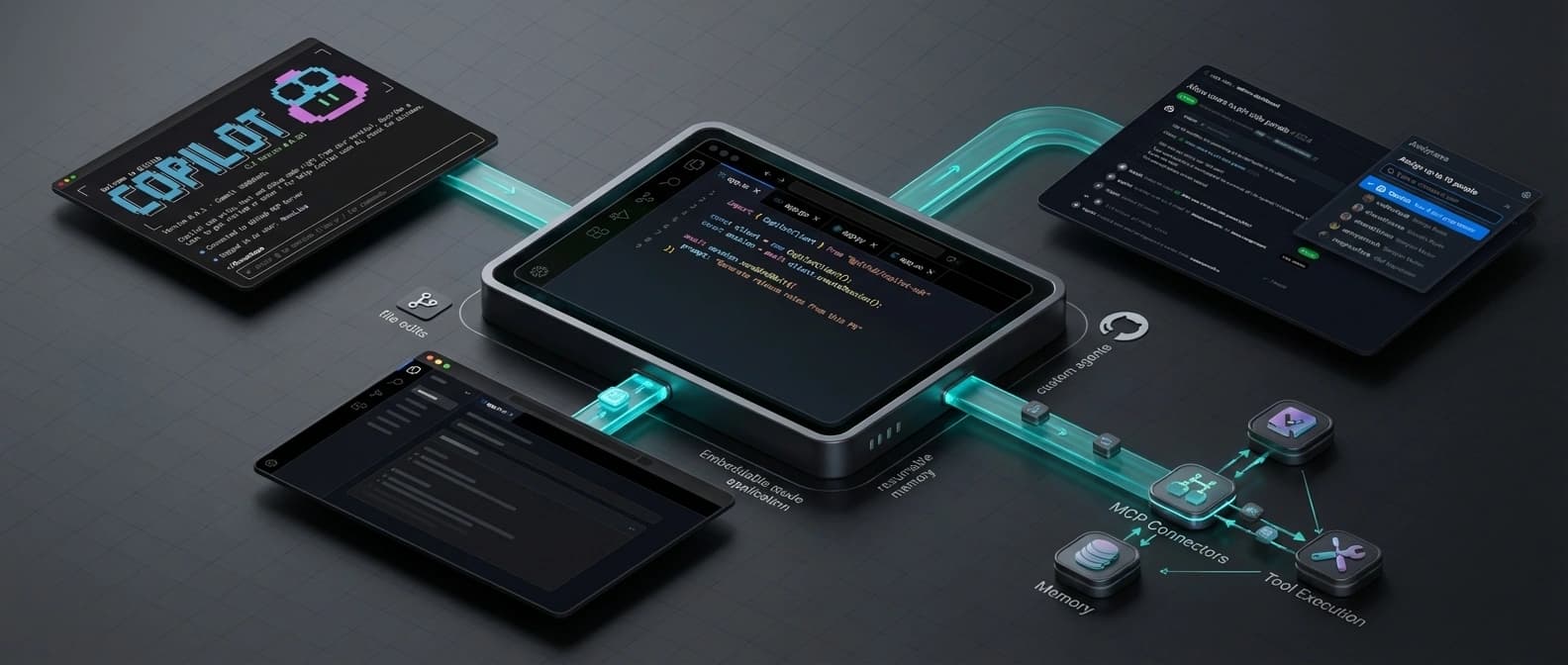
The repo README makes the architecture even clearer. GitHub says all SDKs communicate with the Copilot CLI server via JSON-RPC, with the SDK managing the CLI lifecycle automatically. For Node.js, Python, and .NET, the CLI is bundled. In plain English, the SDK is not a separate brain. It is a programmable doorway into GitHub's existing agent engine.
Two things follow from that.
First, developers get a lot of the annoying work pre-solved. GitHub's January post says building agentic workflows from scratch means managing context across turns, orchestrating tools and commands, integrating MCP servers, and thinking through permissions and failure modes before you even reach your actual product logic. That diagnosis feels painfully accurate. Half the agent market currently sells you a dream and a bag of extension cords.
Second, GitHub gets one runtime story across the terminal, GitHub.com surfaces, and outside apps. That is the platform signal. When the same loop shows up everywhere, the company starts looking less like a maker of assistant UIs and more like a provider of developer-agent plumbing.
The useful bits sit outside the chat box
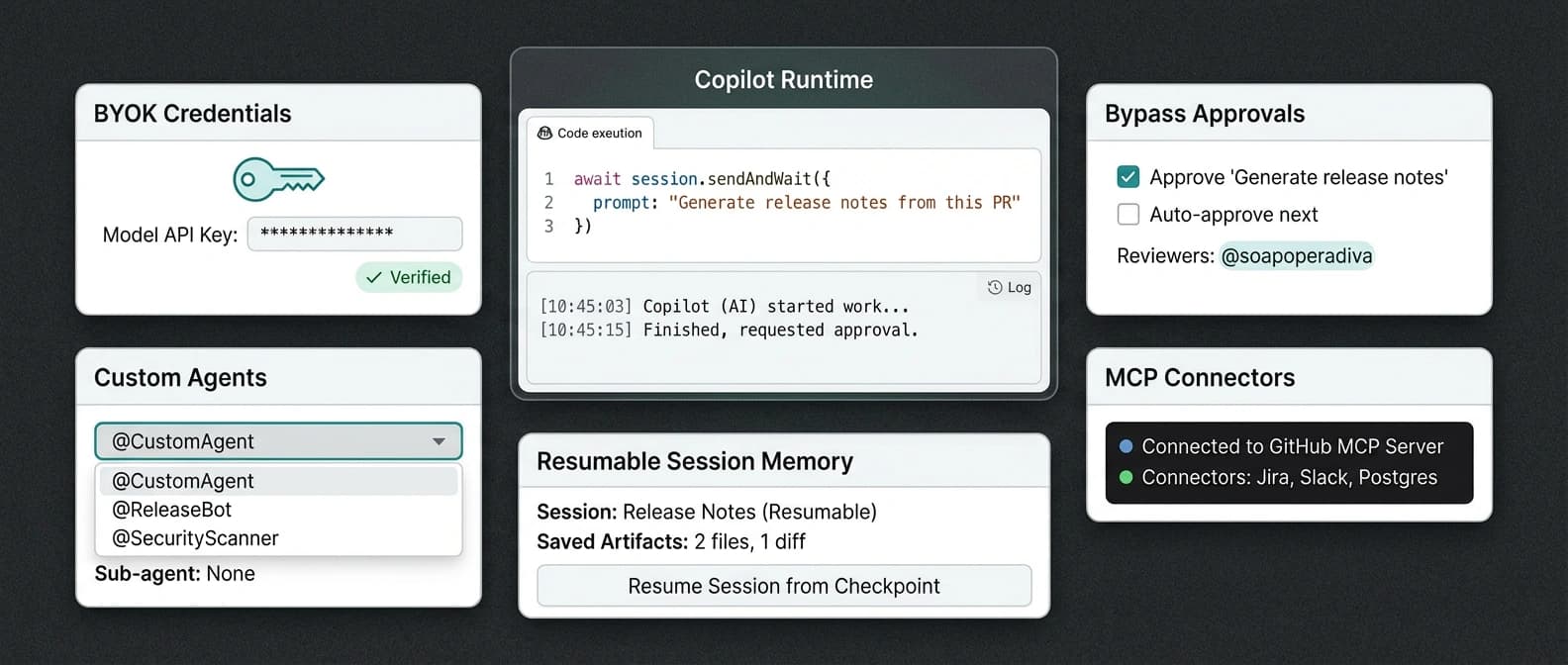
GitHub's April 2 changelog lists the headline capabilities: custom tools and agents, prompt customization, streaming responses, blob attachments, OpenTelemetry support, a permission framework, and BYOK for OpenAI, Azure AI Foundry, or Anthropic. The GitHub Docs pages make the more interesting point. This thing is surrounded by the control surfaces teams actually end up caring about after the demo applause dies down.
The custom agents docs say you can define specialized agents with scoped prompts, restricted tool sets, and optional MCP servers, then let the runtime delegate work to them as isolated sub-agents inside one session. That is not a generic chat-app feature. That is workflow structure.
The MCP docs show support for both local and remote MCP servers, which matters because GitHub is clearly betting that the agent runtime should plug into the growing tool ecosystem instead of pretending everything interesting happens inside one blessed product box.
Then there is session persistence. GitHub's session persistence docs say the SDK can save conversation history, tool-call results, planning state, and created artifacts to disk, then resume across restarts or new client instances. That is the sort of detail that sounds boring until you have watched agents lose their minds after a restart and re-discover the same repo like a very confident goldfish.
BYOK and permissions are the enterprise tell
The repo README says a Copilot subscription is required unless you use BYOK, and the April 2 changelog says the public preview is available to Copilot subscribers including Copilot Free and BYOK for enterprises. That broadens the potential audience beyond people who merely want another toy app with a chatbot tucked into the corner.
GitHub also says the SDK includes a permission framework with approval handlers and read-only tool options. That matters because an agent runtime that can edit files and run commands without any control story is not infrastructure. It is a future postmortem.
At the same time, GitHub repeatedly labels the SDK public preview, and the repo FAQ says it may not yet be suitable for production use. That caveat should stay in bold mental marker, even if it is less exciting than the launch graphics. Preview software is where vendors admit the plane flies, while quietly asking you not to schedule a wedding on it yet.
GitHub is acting more like a platform layer
What makes the April 2 launch interesting is not that every company should suddenly rebuild its app around Copilot. It is that GitHub is assembling a stack that stretches from terminal agent, to cloud agent, to embeddable runtime.
That lines up neatly with other GitHub moves we have been tracking. The company's recent Copilot cloud agent guardrails story was about making agent work governable inside serious repos. GitHub Squad's repo-native multi-agent work pushed shared memory and role separation deeper into the repository itself. Now the SDK takes the runtime underneath those ideas and offers it to outside applications.
I keep coming back to the same conclusion: GitHub is trying to become part assistant brand, part agent substrate. That is a stronger position than being the company with a handy terminal sidekick.
It also puts GitHub in the same broader strategic lane we discussed in OpenAI's agent stack as a distribution play and the newer conversation around Microsoft's Agent Framework shift. The game is moving toward who owns the workflow layer, not only who owns a model endpoint.
GitHub's advantage is that it is not starting from a blank slide deck. It already has the terminal surface, the repository surface, the auth context, and the developer audience. Exporting the runtime behind those surfaces is a logical move. Slightly boring. Very dangerous, in the competitive sense. Nobody puts "now with more reusable operational plumbing" on a launch T-shirt, but that is often the line that changes the market.
The caveat is obvious. Public preview is not GA, and a CLI-centered architecture is not the same thing as some neutral, fully hosted agent layer for the whole world. Still, the direction is hard to miss. GitHub is turning Copilot from a branded assistant into something closer to app infrastructure. That is the bigger story. The SDK package name is almost the least interesting part.
Source file
Public source trail
These links anchor the package to the underlying reporting trail. They are not a substitute for judgment, but they do show where the reporting starts.
Canonical April 2 public-preview announcement for the SDK, including the same-runtime claim, public-preview status, language support, permissions, BYOK, streaming, and OpenTelemetry.
January 22 technical-preview framing that explains the SDK as the same execution loop behind Copilot CLI, useful for avoiding a false first-ever launch angle.
Primary repo source for architecture, bundled CLI behavior, JSON-RPC link to Copilot CLI server, authentication modes, BYOK support, and the public preview caveat.
Feature index proving that session persistence, custom agents, MCP, skills, hooks, and event streaming are first-class parts of the SDK.
Documents scoped tools, isolated sub-agent execution, and runtime-managed delegation inside a single session.
Documents pause-resume behavior, persisted planning state and artifacts, and the requirement to re-provide BYOK credentials on resume.

About the author
Idris Vale
Idris writes about the institutional machinery around AI, but the lens is broader than policy alone: procurement frameworks, public-sector buying rules, platform leverage, compliance burdens, workflow risk, and the market structure hiding beneath product or infrastructure headlines. The through-line is practical power, not abstract theater.
- 23
- Apr 10, 2026
- Brussels · London corridor
Archive signal
Reporting lens: Follow the buying process, not just the bill text.. Signature: Policy turns real when someone has to buy the system.
Article details
- Category
- AI Tools
- Last updated
- April 11, 2026
- Public sources
- 6 linked source notes
Byline
Tracks the institutions, incentives, and market structure that quietly decide which AI systems get deployed and why.