Congress gets its first AI data center moratorium bill
Sanders and Ocasio-Cortez want a federal pause on new AI data centers, tying compute buildouts to power prices, local consent, and tougher safeguards.
 ainewssilo.com
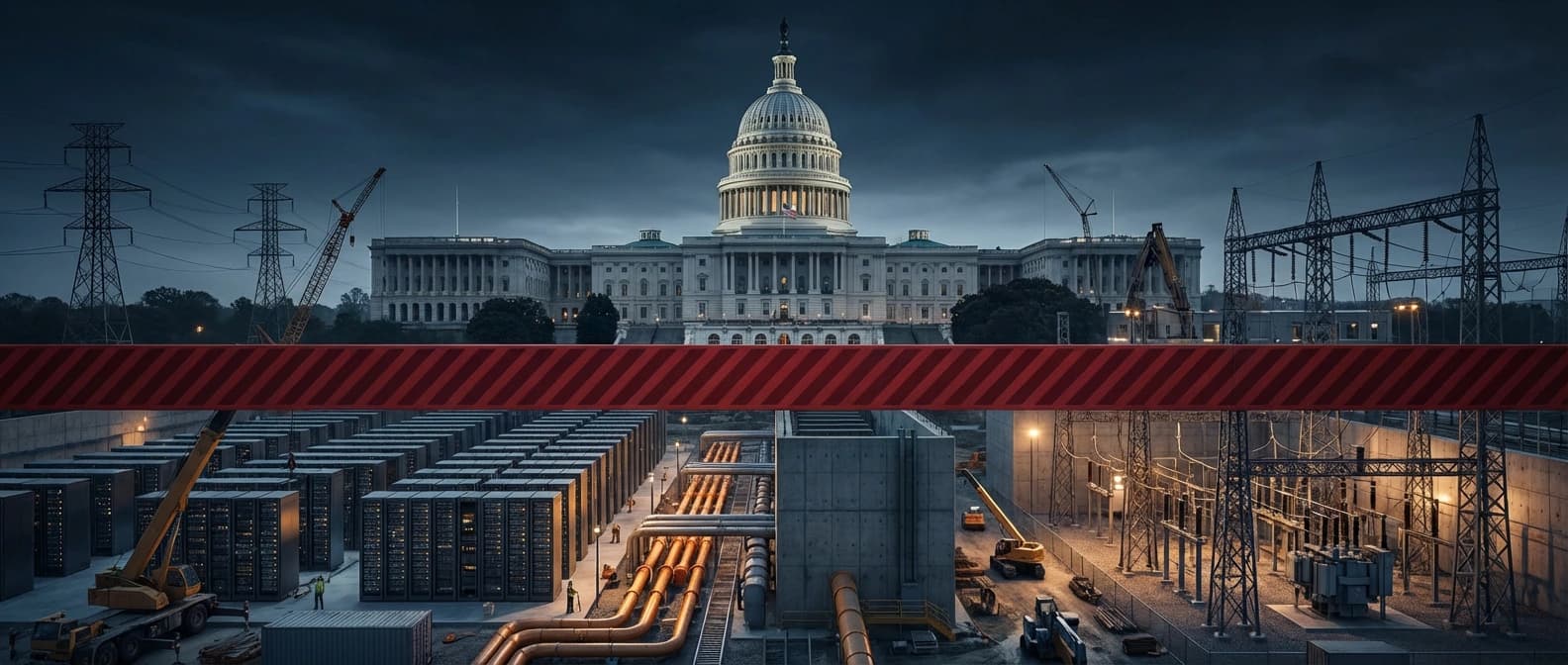
This is the rare AI bill that goes past model talk and straight for the substations, cooling loops, and construction permits.
The most interesting part of the new Artificial Intelligence Data Center Moratorium Act is not that it looks likely to pass. It does not.
The interesting part is that Congress has finally produced a bill that treats AI's physical buildout as the fight. Not the chatbot outputs. Not the vague frontier rhetoric. The substations, the cooling loops, the permits, the utility bills, and the communities getting told this is all happening for the future whether they like it or not.
I think that shift matters. For years, "the cloud" has been a very convenient phrase for people who would rather not picture concrete, water demand, and power lines. Turns out the cloud has an address. And sometimes a zoning meeting.
What the data center moratorium bill would actually pause
The bill text is more specific than the headline implies. It defines an AI data center as a site used to develop or operate AI models at scale, or a facility above a power threshold that looks a lot like the new hyperscale AI buildout. In the Senate text, that means facilities with a maximum rated power capacity or peak load above 20 megawatts that are also designed for very high rack power or liquid cooling.
That threshold is important because it shows the target is not every ordinary server room in America. The target is the new class of dense AI campuses that have become political flashpoints precisely because they are large, power-hungry, and expensive to fold into local grids.
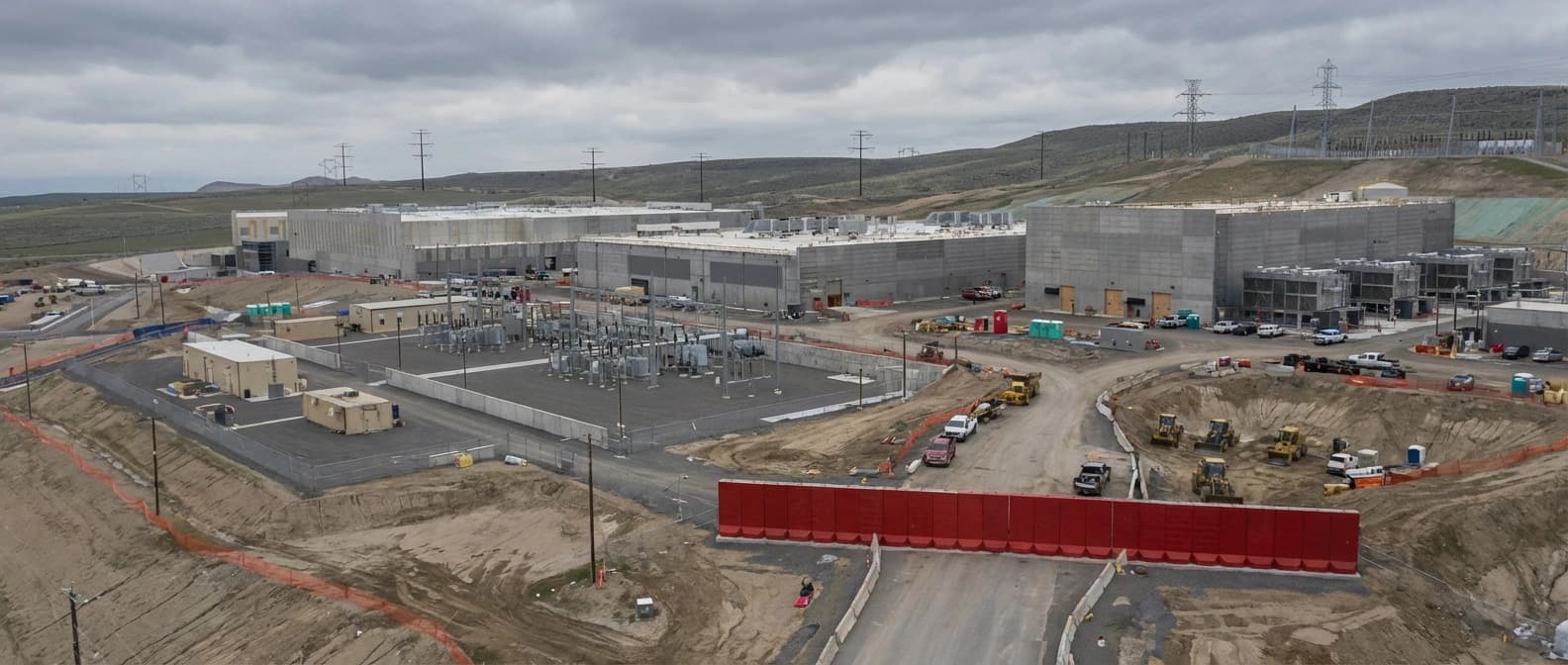
The moratorium would block construction or upgrading of those facilities until Congress passes laws that do several things at once. The bill says the federal government should review and approve AI products before release. It says the gains from AI and robotics should benefit workers rather than only company owners. And it says any future AI data center should not raise consumer utility bills, should not harm the environment, should face community approval, should receive no government subsidy, and should create union jobs with prevailing wages and registered apprenticeships.
That is a big, messy bundle on purpose. It mixes AI governance, labor rules, ratepayer protection, environmental conditions, local consent, and industrial policy into one instrument. You do not have to think it is politically viable to see what it is trying to do: drag the AI debate out of the marketing cloud and back onto the ground.
Why the threshold and reporting requirements matter
The bill also tells the Department of Energy to publish quarterly public reports on AI data centers. The reporting list is long and revealing: water use, energy use, greenhouse-gas emissions, wastewater and thermal output, cooling chemicals, noise, wages, jobs, land and utility agreements, and certifications that no federal, state, or local subsidies were used.
That reporting requirement may end up having more afterlife than the moratorium itself. Once lawmakers start demanding regular public accounting around infrastructure effects, those asks get easier to reuse later in narrower bills, state rules, utility cases, and local permitting fights. Policy language migrates. It rarely travels alone.
The bill also reaches outward through export controls on computing infrastructure hardware for AI end uses in countries without comparable safeguards. So even though the headline reads as a domestic construction pause, the text is also trying to shape the external compute race. This is one reason I do not read the bill as a one-note stunt. It is more like an opening bid written in several policy dialects at once.
Why this matters even if the bill dies on arrival
AP reported the bill is unlikely to advance, which feels like the safest bet on the board. Many lawmakers in both parties are still far closer to growth-first AI politics, especially once China enters the sentence. Senator John Fetterman reportedly dismissed the proposal as a surrender flag to China. The Data Center Coalition said a moratorium would slow critical services, kill jobs, and raise costs.
All true as political context. Still, a bill does not need a fast path to matter. Sometimes the important signal is simply what lawmakers now feel comfortable targeting.
For a long time, the industrial base of AI was treated like backstage scenery. That posture is getting harder to maintain. AP notes that communities across the country have already pushed back against data centers over electricity prices, pollution, and water use. The U.S. Energy Information Administration says electricity consumption hit a record in 2024 and is forecast to rise again in 2025 and 2026. AP, citing International Energy Agency figures, reports that a typical AI-focused data center can consume as much electricity as 100,000 households.
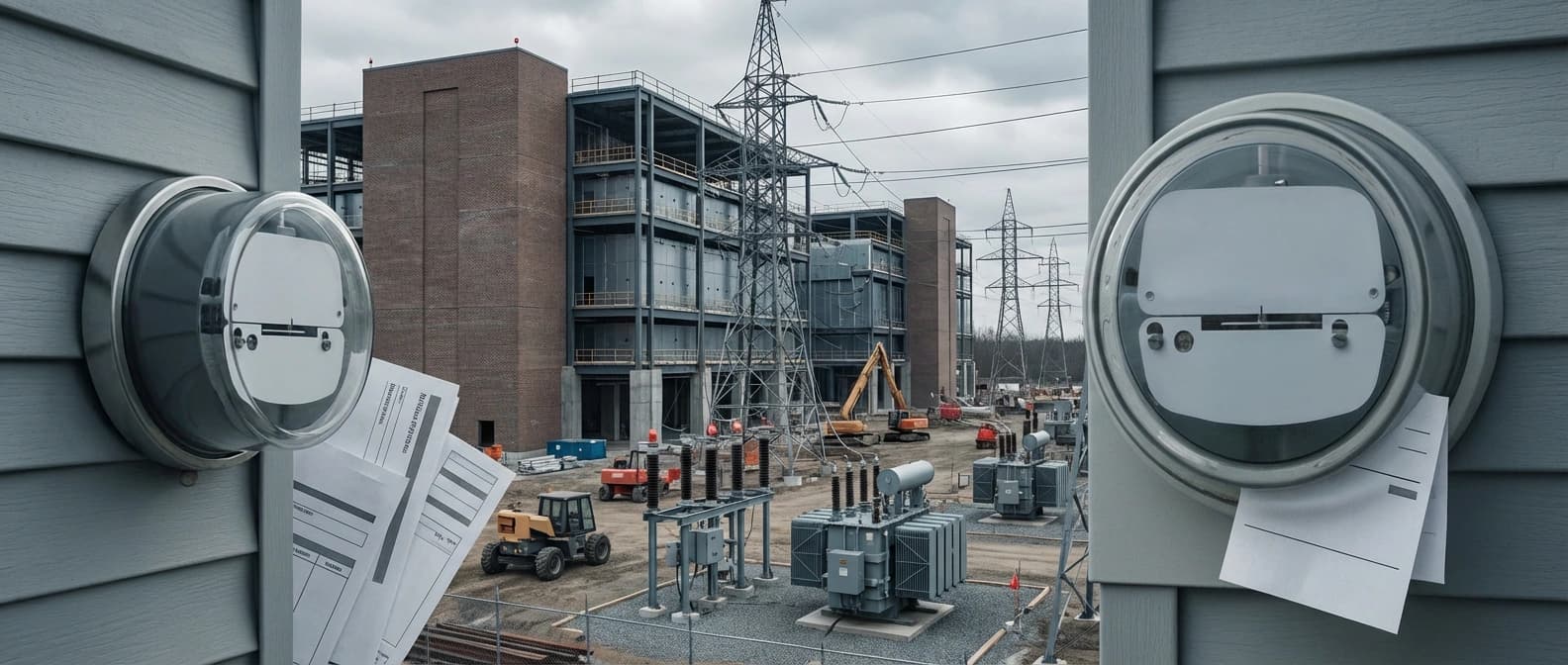
That is the part I do not think the industry can joke away with another "innovation" press release. Once residents start asking who pays for the substation upgrade, who gets the water, who approves the land use, and why public incentives are underwriting private compute expansion, the politics change shape. Fast.
The new AI fight is over infrastructure, not slogans
This is also where the story links back to the rest of the archive. We have already seen AI turn into a procurement fight in Europe's public-sector buying battle.
We have also seen it become a sovereignty fight in Microsoft Foundry Local's sovereign stack.
The economic version shows up in open-weight inference.
And the physical-network version shows up in telecom-style AI grid infrastructure. The moratorium bill is not separate from those pressures. It is a political response to them.
My read is simple. Congress may not be ready to freeze the AI buildout. But it has now put a marker down on something the industry would rather keep fuzzy: AI is not just a model question or a speech question. It is also a construction question, a utility question, a labor question, and a local political question.
That framing will outlast this bill, even if the bill itself goes nowhere.
Source file
Public source trail
These links anchor the package to the underlying reporting trail. They are not a substitute for judgment, but they do show where the reporting starts.
Official announcement and sponsor framing for the proposal.
Direct bill text for the moratorium threshold, conditions, reporting requirements, and export controls.
Best source in the pack for political viability, opposition, and grid-cost context.
Useful outside summary of the bill's threshold and broader regulatory opening bid.
Anchors the electricity-demand backdrop with official data rather than hypey forecast language.

About the author
Idris Vale
Idris writes about the institutional machinery around AI, but the lens is broader than policy alone: procurement frameworks, public-sector buying rules, platform leverage, compliance burdens, workflow risk, and the market structure hiding beneath product or infrastructure headlines. The through-line is practical power, not abstract theater.
- 23
- Apr 10, 2026
- Brussels · London corridor
Archive signal
Reporting lens: Follow the buying process, not just the bill text.. Signature: Policy turns real when someone has to buy the system.
Article details
- Category
- AI Policy
- Last updated
- April 11, 2026
- Public sources
- 5 linked source notes
Byline
Tracks the institutions, incentives, and market structure that quietly decide which AI systems get deployed and why.