Mistral's $830M debt makes Europe AI infra real
Mistral’s $830 million debt financing is not another headline. It puts Nvidia-backed compute near Paris and makes Europe’s sovereign-AI story look physical.

 ainewssilo.com
Europe has spent years talking about sovereign AI. Banks financing 13,800 GPUs is what the phrase looks like when it finally has to touch concrete.
Europe has spent the last year talking about sovereign AI like it was a moral virtue and a conference panel theme. Fine. But at some point sovereignty has to look like transformers, cooling loops, and a very large electricity bill.
That is why Mistral’s new financing matters.
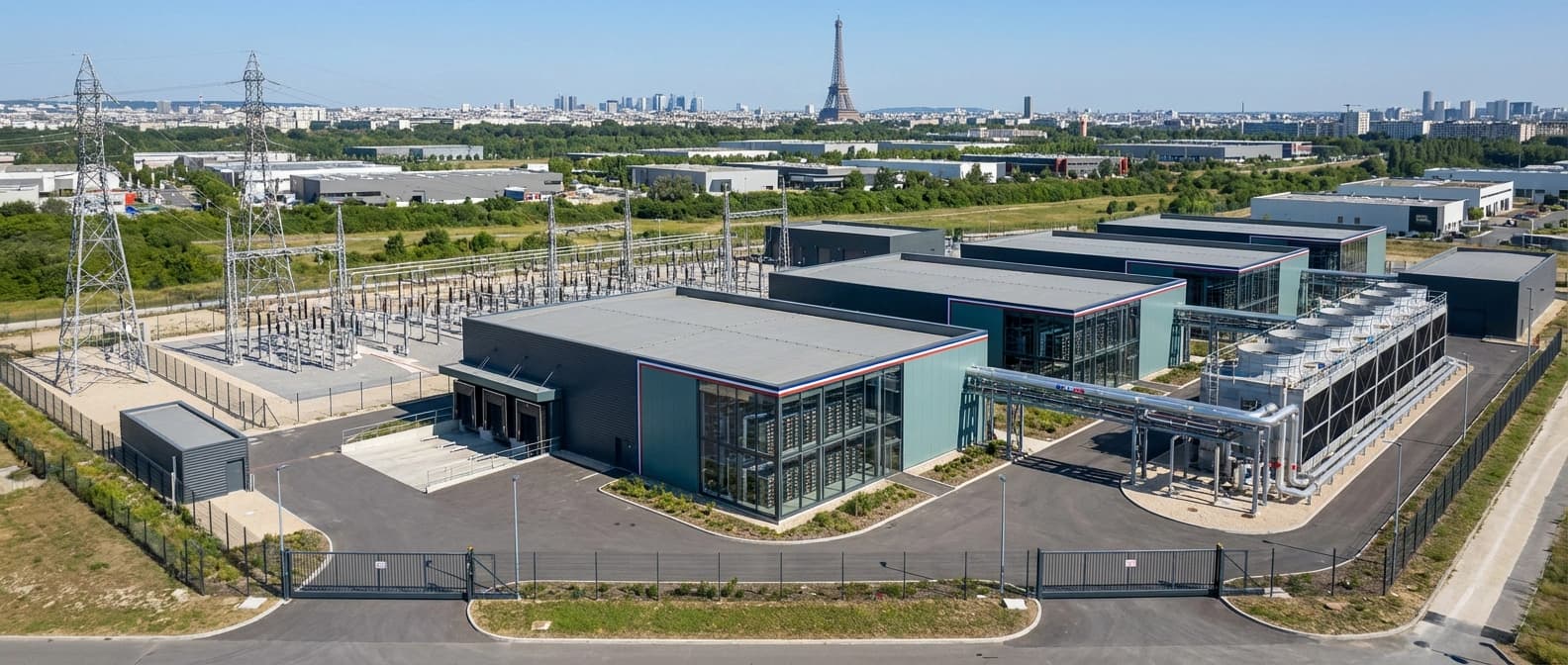
According to Reuters and CNBC, the French company has secured $830 million in debt financing for a data center near Paris. CNBC reports the site will run on 13,800 Nvidia GB300 GPUs and deliver 44 megawatts of capacity, while Reuters says the Bruyères-le-Châtel facility is expected to become operational in Q2 2026. That is not a vibes-based sovereignty strategy. That is a construction project.
Mistral AI data center financing is debt, not startup confetti
The first thing worth noticing is the capital structure. This is debt financing, not another equity round dressed up as proof that investors remain spiritually aligned with the future. Debt is less glamorous. It is also a lot harder to fake.
When a startup raises equity, the market is paying for optionality, narrative, and maybe a few heroic spreadsheets. When banks support debt for infrastructure, they are implicitly treating the asset like something that should produce real usage and real cash flows. CNBC says the transaction was backed by seven banks, including Bpifrance, BNP Paribas, Crédit Agricole CIB, HSBC, La Banque Postale, MUFG, and Natixis CIB. Nobody assembles that list because they got emotional about a demo.
That does not mean Mistral has solved the economics of sovereign AI in one move. It does mean Europe’s AI build-out is starting to look financeable in infrastructure terms, not just narratable in startup terms. I keep coming back to that distinction. Venture money buys ambition. Debt usually wants a timetable.
The Mistral Paris data center specs make sovereign AI harder to dismiss
The second thing that matters is that the site has actual numbers attached to it. CNBC says the near-Paris cluster will support both training and inference. That alone is important. A lot of “sovereign AI” talk quietly means access to somebody else’s cloud region with a patriotic press release taped on top.
This is different. Reuters and CNBC describe a named site with a hardware plan, an operating target, and a role in Mistral’s own model lifecycle. CNBC also says Mistral wants to reach 200 MW of capacity across Europe by the end of 2027. Put that next to the company’s February 1.2 billion euro Sweden infrastructure push, first reported by CNBC, and the pattern is pretty clear: Mistral is trying to build regional compute, not merely rent it.
That matters for the same reason Microsoft’s Foundry Local sovereign stack mattered. Sovereign AI stops sounding abstract when someone can point to the boundary, the hardware, and the operating model. Europe has been heavy on declarations. Owning more of the racks is the part where the speechwriters lose control and the infrastructure people take over.
Why Nvidia GB300 GPUs matter for Mistral’s Europe position
No, 13,800 Nvidia GB300 GPUs do not suddenly put Mistral on equal footing with the biggest U.S. hyperscaler projects. Anyone trying to tell you otherwise is selling optimism by the crate. But scale is not the only issue here. Control is.
A model company that depends entirely on third-party cloud capacity has less room to shape margins, latency, data locality, and product packaging. A model company that owns or tightly controls part of its compute base can start making different choices. It can decide which workloads stay close to European customers, which enterprise deals need stricter locality guarantees, and how training and inference capacity get allocated when demand spikes.
This is where open-weight inference economics becomes relevant. The more flexible the model layer gets, the more valuable it becomes to control where the model actually runs. Renting everything can work, but it leaves the vendor paying room-service prices forever. Owning some of the kitchen changes the menu.
Mistral is moving from model vendor toward infrastructure operator
I do not think the real story is “Mistral raised a lot of money.” European AI companies raise money. U.S. labs raise even sillier amounts of money. That scoreboard never ends well for everyone else.
The more interesting read is that Mistral is slowly assembling a vertical stack. Its Mistral Compute page already pitches a European-hosted AI cloud with bare metal, managed clusters, and APIs. Its Forge announcement pushes enterprise model customization and tighter control over how institutional knowledge gets encoded into models. We already argued in our Forge analysis that Mistral wants customers to think less like API renters and more like model owners.
Add this Paris-area site and the idea gets sharper. Mistral is not only selling models. It is trying to control more of the stack beneath them: training, inference, deployment options, and regional infrastructure. That is my analysis, not the company’s formal doctrine, but it fits the evidence unusually well.

Europe sovereign AI gets more believable when someone owns the compute
This still has limits. One near-Paris site does not solve Europe’s power constraints, supply bottlenecks, procurement friction, or software dependency on U.S. platforms. It does not magically erase the gap between Mistral and giant American labs. And because this is debt, not free money from the optimism fairy, the infrastructure has to earn its keep.
But it does change the texture of the debate.
For months, Europe’s sovereign-AI pitch has often sounded like a policy memo trying very hard to pass as industrial strategy. Mistral’s debt deal makes the argument more physical. Reuters says the site will support model training. CNBC says it will also deliver inference services. Mistral says demand is coming from governments, enterprises, and research institutions that want customized AI environments rather than total dependence on third-party clouds. Those outcomes still need to be proved in the market. They should not be taken on faith.
Still, the underlying move is real enough. Like Europe’s broader procurement fight and NVIDIA’s push to turn infrastructure footprints into sellable inference layers in telecom AI grids, this is a story about control becoming commercial.
That is why I think the headline undersells it. The debt round is interesting. The racks are the story. Mistral looks less like a European lab asking for strategic sympathy and more like a company trying to own enough compute to matter. For sovereign AI in Europe, that is a meaningful shift. Not a final victory lap. Just a welcome break from brochureware.
Source file
Public source trail
These links anchor the package to the underlying reporting trail. They are not a substitute for judgment, but they do show where the reporting starts.
Core reporting for the debt structure, Bruyères-le-Châtel location, and the Q2 2026 operating target.
Best source for the hard infrastructure numbers including 13,800 Nvidia GB300 GPUs, 44 MW capacity, seven-bank support, and the 200 MW Europe goal.
Useful same-day confirmation and context on Mistral’s earlier plans to use non-equity financing for infrastructure.
Shows Mistral’s public pitch for a European-hosted AI cloud spanning bare metal, managed clusters, and APIs.
Earlier context for the Sweden infrastructure push and Mistral’s broader 200 MW Europe build-out story.
Useful product context for the argument that Mistral is pushing toward a more vertically controlled stack across model customization and deployment.

About the author
Lena Ortiz
Lena tracks the economics and mechanics behind AI systems, from serving architecture and open-weight deployment to developer tooling, platform shifts, product decisions, and the operational tradeoffs that shape what teams actually run. Her reporting is aimed at builders and operators deciding what to trust, adopt, and maintain.
- 24
- Apr 10, 2026
- Berlin
Archive signal
Reporting lens: Operating leverage beats ideological posturing.. Signature: If the cost curve moves, the product strategy moves with it.
Article details
- Category
- AI Infrastructure
- Last updated
- April 11, 2026
- Lead illustration
- Debt is the headline, but the bigger shift is that Mistral is trying to own more of the European AI stack instead of renting all of it.
- Public sources
- 6 linked source notes
Byline
Covers the economics, tooling, and operating realities that shape how AI gets built, shipped, and run.