Meta built AI glasses for people who wear glasses
Meta's new Ray-Ban Blayzer and Scriber frames start at $499, support nearly all prescriptions, and attack the wearability problem that kept AI glasses from becoming all-day devices.

 ainewssilo.com
The big upgrade is not another assistant trick. It is that Meta finally designed AI glasses around the radical idea that many humans would like to see.
Most smart-glasses launches act like the hard part is squeezing more AI into your face. Meta's March 31 announcement is more interesting because it tackles a much dumber problem: a lot of the people who might buy AI glasses already wear glasses.
That sounds obvious. It also took an absurdly long time. I have been waiting for one of these companies to admit that prescription wearers are not a weird edge case.
Meta's new prescription-ready Ray-Ban frames, Blayzer and Scriber, are not full AR glasses. They are Meta's existing camera-and-audio AI glasses redesigned for the boring, decisive part of adoption: can you actually see through them, can you fit them properly, and will they stay on your face longer than a demo table session? If the answer is no, the rest of the feature list is just garnish on a gadget that lives in a drawer.
Meta prescription AI glasses start at $499 with U.S. preorders live now
In its launch post, Meta says the new Ray-Ban Meta Blayzer Optics (Gen 2) and Ray-Ban Meta Scriber Optics (Gen 2) support nearly all prescriptions and start at $499. U.S. preorders are live now on Meta and Ray-Ban storefronts, while optical retail begins April 14 in the U.S. and select international markets.
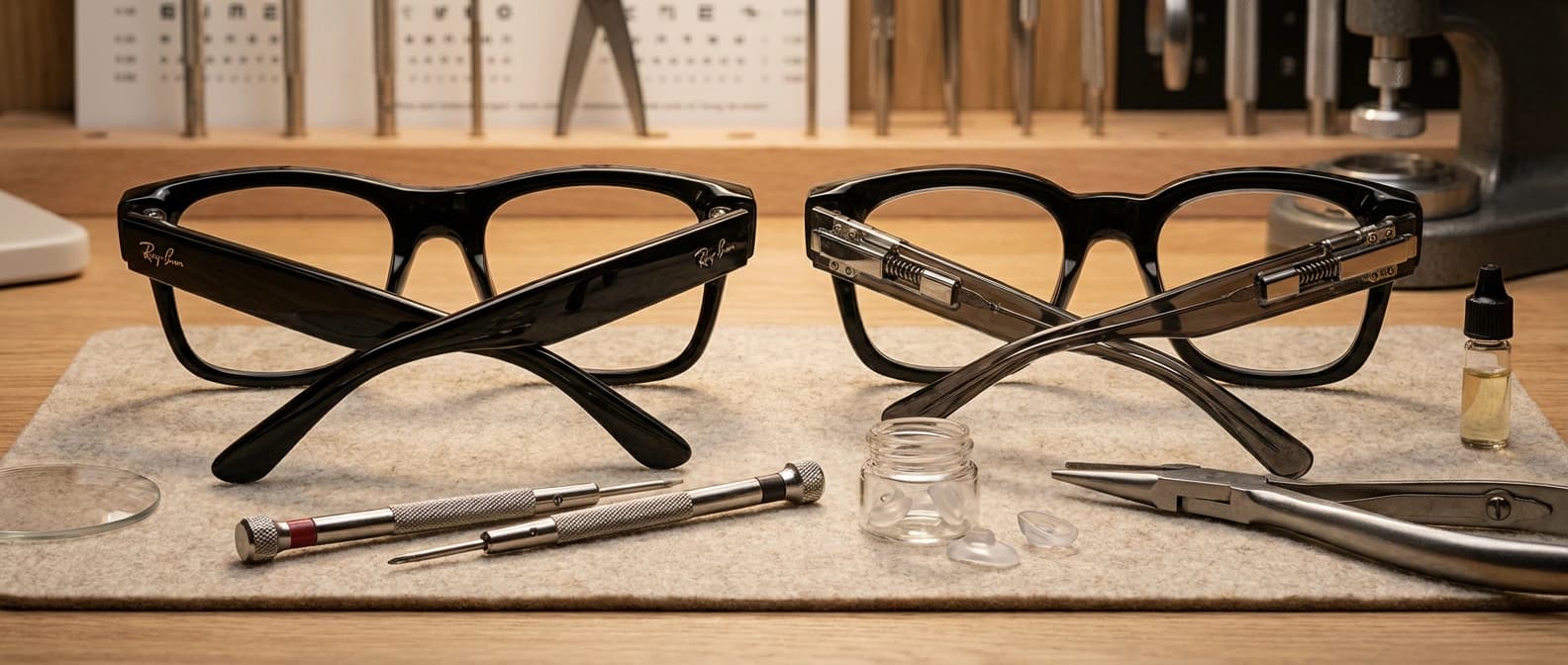
Blayzer is the more rectangular frame and comes in Standard and Large sizes. Scriber is rounder. Both are built around fit adjustments that sound almost comically unsexy compared with the usual AI launch glitter: overextension hinges, interchangeable nose pads, and optician-adjustable temple tips. But this is the point. Selling smart glasses without taking prescription wearers seriously was like opening a car company and forgetting seats. You can call it innovation if you want. Your back will still file a complaint.
I keep coming back to that fit language because it reveals what Meta thinks the next battle is. Not just assistant features. Habit.
Blayzer and Scriber matter because daily wear beats demo wear
The graveyard of smart glasses is full of products that were technically clever and socially exhausting. They looked futuristic in the keynote, then spent the rest of their lives being too awkward, too limited, or too easy to leave at home. Prescription support is not a side quest around that problem. It is the front door.
For millions of people, glasses are not an accessory category. They are how the day works. If you ask those users to swap into a non-prescription gadget pair every time they want AI help, you are not building an all-day device. You are building a novelty item with a charging cable.
That is why Meta's move feels more important than another round of assistant demos. We already know the industry wants AI systems that do things in context, not just talk about them, which is the same broader shift we covered in AI action, not answers. Glasses have always been a tempting surface for that vision because they sit where the world is. But the product only works if the wearer can forget the hardware and get on with being a person.
This is also where Meta's bigger strategy shows through. The company has been spending heavily to make the AI economics underneath these products less painful, as we noted in Meta's custom silicon inference power play. Better inference economics matter. So does the thing you actually put on your face. A cheaper brain in an uncomfortable frame is still an uncomfortable frame. Brutal, but true.
Meta's new AI extras are real, but they are not the main event
Meta also used the announcement to preview more software. Nutrition tracking is coming soon for people 18 and over in the U.S., letting users log meals hands-free with a voice prompt or a quick photo. WhatsApp summaries and recall are also coming to Meta's Early Access Program soon. Meta says those WhatsApp interactions are processed on-device and remain private with end-to-end encryption.
Those features may prove useful. They may also become the sort of thing people show off twice and then forget, like the exercise bike that turns into a very expensive shirt rack. The bigger story is still the hardware fit. Without daily wear, there is no real assistant habit to build on top of. With daily wear, even modest features become more meaningful because the device is present when life is messy, hurried, and inconvenient. That is why the optical-shop fitting scene matters more than another voice-demo sizzle reel: it visualizes whether these frames can graduate from gadget to habit.
That is the same consumer logic behind Google's recent Gemini import push: the winning AI product is often the one that slips into routine with the least friction, not the one with the loudest demo clip.
Can Meta's prescription AI glasses become the first mainstreamable step?
I would not oversell this. $499 is still a real price. Smart glasses still carry privacy baggage. And "support nearly all prescriptions" is not the same as universal optical coverage. If your face, lenses, or tolerance for wearing cameras are all unusually particular, the future is not obliged to fit on schedule.
Still, this looks like one of Meta's smartest smart-glasses decisions so far because it stops treating vision correction like an edge case. That is a bigger unlock than it sounds. The company did not solve everything. It solved the part previous launches kept trying to skip.
That matters because mainstream wearable AI will probably arrive through products that feel normal first and magical second. A device that can summarize WhatsApp but cannot replace your everyday glasses is a tech demo. A device that people are willing to wear from breakfast through the last annoying errand of the day has a chance to become infrastructure.
And yes, that is a less glamorous story than holograms and sci-fi mood boards. It is also the story that gets products out of the drawer and onto actual faces, which is where consumer hardware either becomes real or becomes a future garage sale curiosity.
Source file
Public source trail
These links anchor the package to the underlying reporting trail. They are not a substitute for judgment, but they do show where the reporting starts.
Launch post covering the Blayzer and Scriber styles, support for nearly all prescriptions, the $499 starting price, fit hardware, preorder timing, and upcoming software features.
Canonical prescription collection page referenced by Meta for current shopping and product context.
Brand storefront for Ray-Ban Meta product context and current frame-line positioning.
Outside confirmation on naming, price floor, and April 14 retail timing.
Helpful outside framing on fit details, comfort language, and the broader wearability pitch.

About the author
Idris Vale
Idris writes about the institutional machinery around AI, but the lens is broader than policy alone: procurement frameworks, public-sector buying rules, platform leverage, compliance burdens, workflow risk, and the market structure hiding beneath product or infrastructure headlines. The through-line is practical power, not abstract theater.
- 23
- Apr 10, 2026
- Brussels · London corridor
Archive signal
Reporting lens: Follow the buying process, not just the bill text.. Signature: Policy turns real when someone has to buy the system.
Article details
- Category
- AI Products
- Last updated
- April 11, 2026
- Public sources
- 5 linked source notes
Byline
Tracks the institutions, incentives, and market structure that quietly decide which AI systems get deployed and why.