Reuters says DeepSeek V4 will run on Huawei chips
Reuters says DeepSeek V4 will run on Huawei chips. If true, the bigger story is China moving a flagship AI cycle onto a homegrown silicon and software stack.
 ainewssilo.com
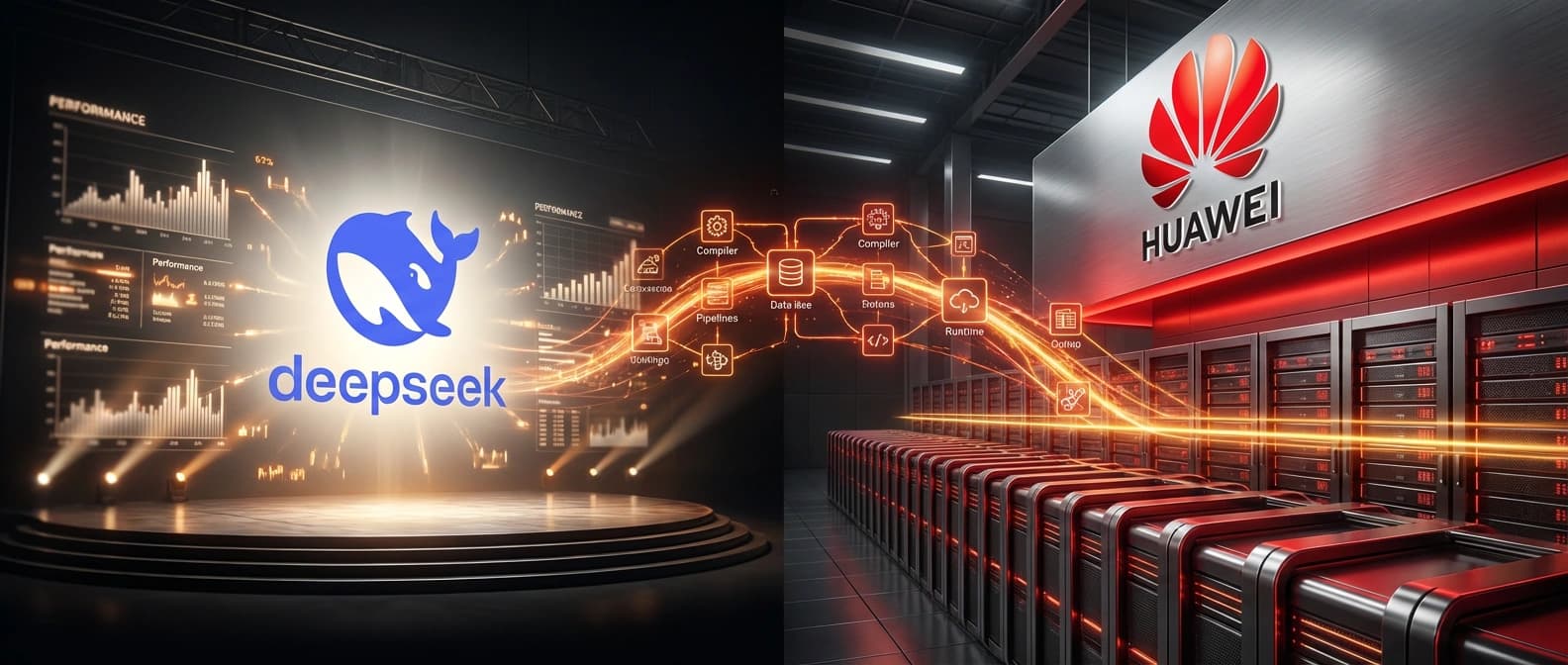
If DeepSeek V4 really lands on Huawei silicon, the bigger change is not the model name. It is the stack underneath it.
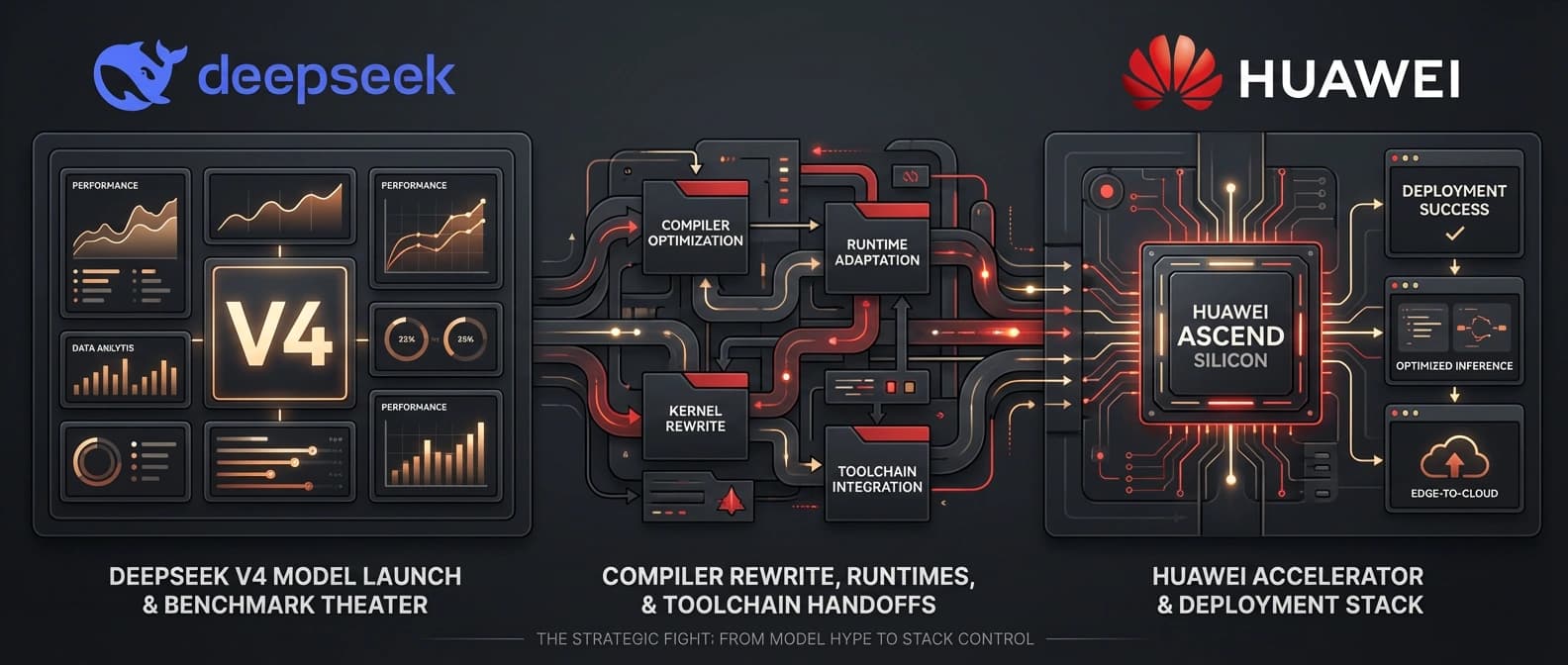
The Reuters line that matters is simple: DeepSeek's next flagship model, V4, will run on Huawei chips, according to The Information. It sounds like another model-launch breadcrumb. I think the bigger story is underneath it. If this report holds, China is trying to move a flagship model cycle onto a domestic AI stack, silicon, toolchains, runtime, and all. Benchmark drama still gets better lighting than software plumbing, but the plumbing is where leverage lives.
Reuters also reported that DeepSeek has spent recent months working with Huawei and Cambricon to rewrite parts of the model's underlying code, and that domestic suppliers got earlier optimization access than U.S. chipmakers. That detail matters more than the launch timing gossip. Nobody ports a major model onto a new stack for cardio. You do it because dependence on someone else's hardware and software stack has become too expensive, too risky, or both.
DeepSeek V4 on Huawei chips changes the question
For years, serious AI compute has effectively required an Nvidia ticket and a CUDA passport. The chip mattered, of course, but the real lock-in sat higher up the stack. Framework support, compiler maturity, performance tooling, developer habit, vendor relationships, and a giant pile of code that already assumed Nvidia was the default all made CUDA the comfortable option. Comfortable options tend to bill by the month.
That is why the Reuters framing matters more than the usual "new model soon" noise. If DeepSeek V4 is being tuned for Huawei silicon, the move is not only about replacing one accelerator with another. It is about proving that a Chinese model lab can do serious work on a stack that does not begin and end with Nvidia. That is the claim that would actually change procurement behavior.
We have been circling pieces of this logic elsewhere on the site. Open-weight model inference economics for lean teams looked at why owning more of the stack can change cost and control. Meta's custom silicon push is an inference power play made a similar point from a different direction: if the workload is strategic enough, companies eventually stop treating hardware as a rented afterthought.
Huawei's annual report reads like a full-stack sales pitch
Huawei's own 2025 annual report makes the backdrop unusually explicit. In the official report, Huawei says it continued to "go open source and open system" while building a computing foundation around Kunpeng and Ascend. It says its 384-NPU SuperPoD has been deployed at scale, that the Ascend ecosystem now has 4 million developers, that Huawei worked with more than 9,800 partners, and that those partners have jointly incubated more than 26,000 industry solutions. That is a stack brochure wearing a shareholder tie.
The same report says Huawei has gone open source and open system with Ascend CANN and the Mind software series, and the company's annual-report news release says Huawei will keep building ecosystems around Ascend, Kunpeng, and HarmonyOS. In plain English, Huawei is telling investors and developers the same thing: we do not want to sell you a chip and wave goodbye. We want to be the operating environment.
That distinction matters because silicon alone rarely breaks an incumbent platform. Silicon with a workable software ladder can. Without it, the hardware is just an impressive rectangle full of unrealized ambition. I have seen too many infrastructure stories get trapped at the chip-spec layer, as if more TOPS automatically solve everything. They do not. The model has to compile. The cluster has to stay upright. The engineers have to stop swearing at the toolchain long enough to ship.
Beating CUDA habit matters more than one benchmark win
If Huawei is serious about becoming the base layer for China's next model wave, it has to do more than deliver enough accelerators. It has to make Ascend usable enough that teams stop treating Nvidia compatibility as the only adult choice in the room. That is the real contest.
The annual report language suggests Huawei understands this. Open source and open system are not just feel-good phrases here. They are an admission that CUDA's biggest strength is not a pretty chip brochure. It is developer muscle memory. If Huawei can get more labs, clouds, and enterprise teams building against CANN and related tooling, then the company is no longer fighting only on raw hardware performance. It is fighting for habit. Habit is sticky. Annoyingly sticky.
That is also why the Reuters note about code rewriting matters so much. Porting model code is expensive, fiddly, and exactly the sort of work companies avoid unless the payoff could be strategic. If DeepSeek is doing that work now, and doing it with Huawei close to the metal, the story is less "new model incoming" and more "new stack being rehearsed in public." The benchmark chart still gets the confetti. The software layer gets the leverage.

Why this matters for Nvidia before V4 even ships
None of this means Nvidia is suddenly in trouble everywhere. CUDA is still the safest default in serious AI, and there is a large gap between one report and a durable market shift. It does mean Nvidia's China story looks a bit less permanent if domestic labs and buyers decide the smarter long game is to optimize around homegrown infrastructure.
That is the deeper threat. Not an overnight collapse, just a gradual loss of inevitability. Once a flagship model cycle, a big cloud deployment, or a wave of enterprise buyers starts treating Huawei plus Ascend software as credible enough, the center of gravity moves. Then the question is not "can Huawei match Nvidia on every benchmark tomorrow?" It is "can Huawei become good enough across enough of the stack to keep strategic workloads at home?" That is the consequential test.
You can already see adjacent versions of that logic in pieces like NVIDIA AI grids turn telcos into inference resellers and DeepSeek outage shows AI's uptime race is here. The model may grab the headline, but the business keeps drifting back to infrastructure control, operating reliability, and who gets paid every time inference happens. Glamorous? Not always. Important? Painfully so.
My read on where China's AI stack is heading
I would still keep the fact pattern tight. The DeepSeek-on-Huawei claim is report-based. Huawei and DeepSeek had not publicly confirmed it when Reuters filed. That caveat belongs in the story, not buried under the rug with the marketing confetti.
Still, the directional read feels pretty clear. Huawei is telling the market it wants a full AI ecosystem around Ascend. Reuters says DeepSeek V4 is being prepared to run on Huawei chips. Reuters also says model code is being rewritten with domestic chip partners in the loop. Put those together and the sharper interpretation is hard to miss: the next serious contest is not only about who ships the flashiest model. It is about who owns the silicon, the runtime, the tooling, and the developer habits underneath it.
If that shift sticks, CUDA may stop being the only passport into serious AI compute. That would not make Nvidia disappear, and it would not make Huawei's software stack magically painless by next Tuesday. It would mean the center of the China AI story has moved one layer down, from headline model launches to stack control. I think that is the real story here. It is less theatrical than a benchmark screenshot. It is also a lot more durable.
Source file
Public source trail
These links anchor the package to the underlying reporting trail. They are not a substitute for judgment, but they do show where the reporting starts.
Official source for Huawei's open-source, open-system, Ascend, CANN, and developer-ecosystem claims.
Official news release that reinforces Huawei's shareholder-facing language around Ascend, Kunpeng, HarmonyOS, and AI ecosystem building.
Core report establishing the DeepSeek V4 on Huawei claim and the detail that DeepSeek worked with Huawei and Cambricon on code changes.
Accessible Reuters mirror used to verify the report wording and attribution.

About the author
Idris Vale
Idris writes about the institutional machinery around AI, but the lens is broader than policy alone: procurement frameworks, public-sector buying rules, platform leverage, compliance burdens, workflow risk, and the market structure hiding beneath product or infrastructure headlines. The through-line is practical power, not abstract theater.
- 23
- Apr 10, 2026
- Brussels · London corridor
Archive signal
Reporting lens: Follow the buying process, not just the bill text.. Signature: Policy turns real when someone has to buy the system.
Article details
- Category
- AI Infrastructure
- Last updated
- April 11, 2026
- Public sources
- 4 linked source notes
Byline
Tracks the institutions, incentives, and market structure that quietly decide which AI systems get deployed and why.