AWS puts frontier agents on security and ops duty
AWS has tied its frontier-agents pitch to two GA products: one for autonomous penetration testing, one for incident response across AWS and beyond.

 ainewssilo.com
AWS is not pitching a better chatbot here. It is pitching an agent that takes the shift nobody wants.
On March 31, AWS published one launch post and two general-availability follow-ups around a term it clearly wants the market to repeat: frontier agents. That was not routine blog housekeeping. It was category planting.
AWS is trying to move agentic AI away from the familiar chat-assistant frame and toward something closer to an always-on specialist with a defined shift. To make that pitch concrete, it made two products generally available at the same time: AWS Security Agent for autonomous penetration testing and AWS DevOps Agent for incident investigation and prevention across AWS, multicloud, and on-prem environments.
I think that is the smartest part of the rollout. AWS attached the label to two painful jobs teams already understand and already budget for: finding holes before attackers do, and figuring out why production is on fire before dinner gets cold.
AWS frontier agents are AWS's attempt to escape chatbot gravity
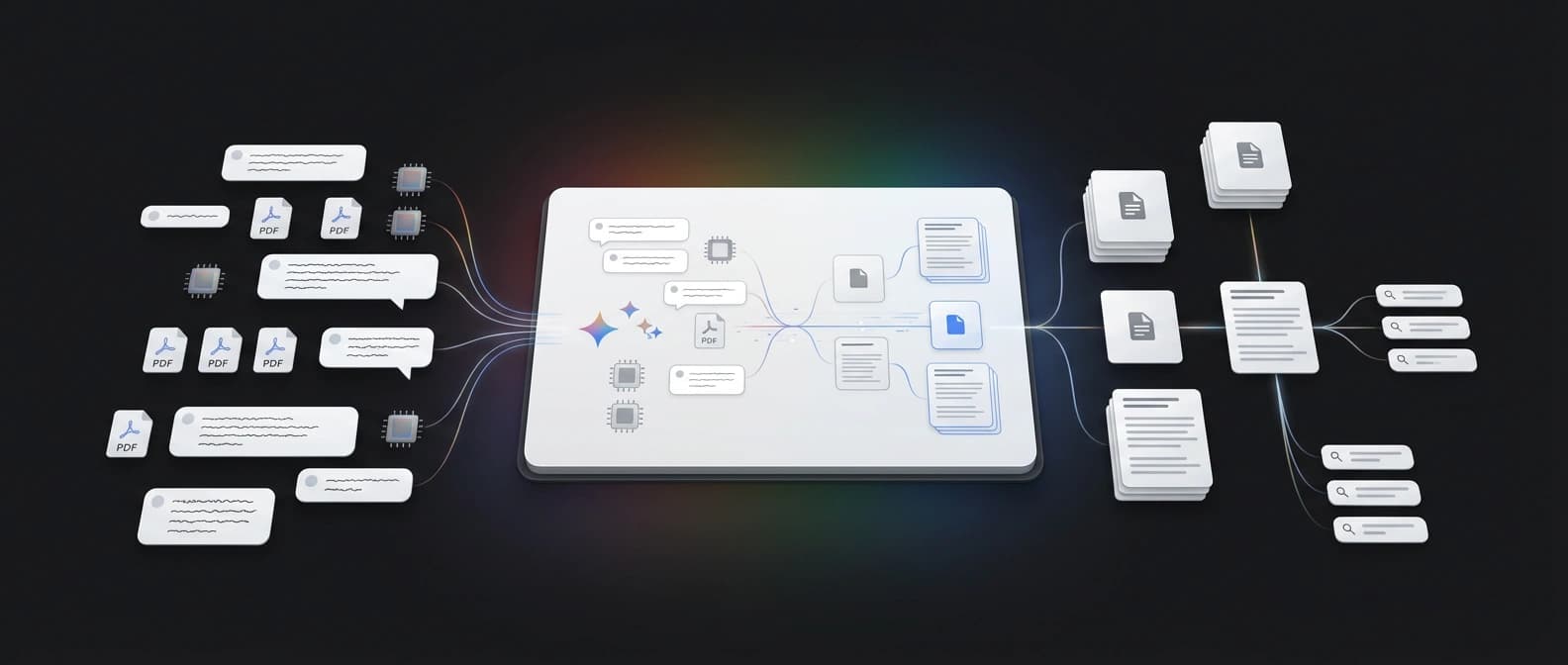
In the main launch post, AWS defines frontier agents by three traits: they work independently across multiple steps, they scale to handle many tasks at once, and they run persistently for hours or days without constant human steering. That is a meaningful distinction from the familiar assistant pattern, where the model waits politely for the next prompt and mostly lives inside a text box.
Calling something “frontier” does not automatically create a new category, just as writing “farmhouse” on frozen pizza does not make it artisanal. But AWS is drawing the line in a more convincing place than most vendors do. The company is arguing that the category is not about a prettier interface. It is about workflow ownership.
That matters because the rest of the market is moving the same way. We have already seen platform vendors try to turn agents into first-class software primitives in our coverage of OpenAI's agents platform shift and Microsoft's broader agent-framework reset. AWS is taking the cloud-vendor version of that bet: fewer abstract promises, more “here is the ugly operational job this thing is supposed to own.”
GA also changes the tone. AWS will sell these products to you today. It does not mean every security team or SRE group will trust them in production by Friday.
AWS Security Agent sells autonomous penetration testing, not another scanner
Security Agent is the sharper of the two category examples because the workflow is so specific. According to the AWS Security Blog and the product page, the agent ingests source code, architecture diagrams, API specs, threat models, and other application context, then probes for weaknesses, attempts exploit chains, and writes up confirmed findings with reproduction steps and severity detail.
The most useful detail in AWS's own material is that the product is not framed as a louder SAST or DAST scanner. It is framed as a system that connects findings into attack chains. The Security Blog walks through an example where a medium-severity stored XSS issue can lead to session hijack and then to database credential exfiltration through an admin endpoint that other tools might never flag as part of the same risk story. That is the real product thesis. The vulnerability is not just the isolated bug. The chain is the vulnerability.

AWS also leans hard on deployment reality. Security Agent is pitched for AWS, Azure, GCP, other cloud environments, and on-prem apps. It supports authenticated testing, multiple user roles, and domain-ownership checks before testing starts. In other words, AWS is trying to turn pentesting from an occasional specialist engagement into something teams can run more like a service.
That is a big promise, so the numbers matter. AWS says preview customers compressed testing timelines by more than 90 percent in some cases, and the launch post says customers reported timelines going from weeks to hours. The GA Security Blog, meanwhile, sometimes describes the shift as weeks to days, while also saying validated findings can arrive within hours. That discrepancy does not kill the story, but it is a polite reminder that launch metrics and operating reality are not always the same species.
Still, the customer quotes are directionally interesting. HENNGE said it cut typical testing duration by more than 90 percent. Bamboo Health said Security Agent surfaced findings other tools had missed. Those are AWS-sourced claims, so they belong in the “promising but not independently settled” bucket. Even so, the product idea is easy to understand: if AWS can make autonomous pentesting reliable enough, it moves security testing from a calendar event to a continuous capability. That is a much more serious claim than “our assistant can summarize a dashboard.”
AWS DevOps Agent goes after MTTR across AWS, multicloud, and on-prem
If Security Agent targets scheduled pain, DevOps Agent targets the unscheduled kind, which is usually the one that ruins your evening.
The GA post and product page describe AWS DevOps Agent as an always-available operations teammate that investigates incidents, recommends mitigation, and tries to prevent repeat failures. It correlates telemetry, code, and deployment data across observability tools, repositories, CI/CD systems, runbooks, and collaboration platforms.
AWS's strongest differentiator here is breadth. The agent is not limited to AWS-native environments. GA adds Azure support, on-prem investigation through MCP-connected systems, more private connectivity options, PagerDuty and Grafana support, code indexing, learned skills, and custom skills that let teams encode their own procedures. The pitch is not just “ask questions about ops.” The pitch is “hand the agent the whole messy estate and let it work the incident.”

Again, the proof so far is mostly AWS-selected customer evidence. Preview users reportedly saw up to 75 percent lower MTTR, 80 percent faster investigations, 94 percent root-cause accuracy, and 3 to 5 times faster incident resolution. Western Governors University told AWS it cut one investigation from an estimated two hours to 28 minutes. Zenchef described a 20 to 30 minute investigation that would have taken 1 to 2 hours manually. Useful signal. Not settled science.
What makes DevOps Agent interesting is that AWS is not only selling triage speed. It is selling workflow continuity across the entire incident lifecycle: alert intake, duplicate detection, investigation, root-cause analysis, mitigation planning, and preventive recommendations afterward. That is a category move. Copilots help. Frontier agents, in AWS's version, are supposed to keep going.
Frontier agents vs AI assistants comes down to workflow ownership
This is where the category pitch either holds together or falls apart.
Assistants usually wait for a user, answer a question, maybe call a tool, then hand control back. Both AWS products still include conversational surfaces, especially DevOps Agent's on-demand SRE tasks. Nobody in 2026 can resist shipping a text box. But the story AWS wants buyers to remember is larger than chat. These agents are supposed to accumulate context, act across multiple systems, keep running over time, and produce an operational outcome rather than a nice paragraph.
That makes AWS's pitch more concrete than some of the softer agent branding floating around the market. It also makes the risks more concrete. If you claim a system owns pentesting or incident response loops, buyers will ask much harsher questions about false positives, permissions, reproducibility, and rollback than they ever would for a summarization bot.
What AWS still has to prove before frontier agents become a real category
AWS has absolutely done something more substantial than stapling “agentic” onto a generic assistant. But there is still a long way from GA to broad production trust.
Security Agent has to prove that validated exploit chains stay accurate outside cherry-picked examples, that remediation guidance is useful, and that “continuous pentesting” does not turn into an expensive machine for generating very confident noise. DevOps Agent has to prove that its root-cause analysis remains reliable across messy real estates, not just polished reference accounts and design-partner stories.
I keep coming back to the governance layer. The more autonomy these systems get, the more the boring questions matter: who approves actions, what the agent can touch, how findings are verified, and how teams keep the system from becoming another privileged black box. That is the same broader control problem we have been tracking in pieces like Nvidia's security-control-plane push for agents and the newer wave of AI supply-chain defense tooling. The fancy part gets the keynote. The permission model gets the 2 a.m. blame.
Still, AWS has chosen a better proving ground than most. It picked two workflows with real budgets, obvious pain, and stopwatch metrics that buyers can actually test. If the products work, “frontier agents” becomes a phrase people can explain in one sentence. If they do not, the term can keep “single pane of glass” company in the brochure graveyard.
That is why this launch matters. Not because AWS said a dramatic new phrase out loud, but because it attached that phrase to autonomous penetration testing and autonomous incident response, then invited operators to judge the results.
Source file
Public source trail
These links anchor the package to the underlying reporting trail. They are not a substitute for judgment, but they do show where the reporting starts.
Main launch post defining frontier agents and tying the category pitch to the GA release of AWS Security Agent and AWS DevOps Agent.
Detailed GA walkthrough for Security Agent, including workflow, multicloud support, authenticated testing, and customer claims.
Detailed GA post covering DevOps Agent integrations, multicloud and on-prem support, customer references, and new GA capabilities.
Frontier agents overview page used to confirm AWS's top-level category framing.
Product page covering on-demand penetration testing, design reviews, code analysis, and customer positioning.
Product page covering incident response, prevention, integrations, and customer positioning across AWS, multicloud, and on-prem.

About the author
Idris Vale
Idris writes about the institutional machinery around AI, but the lens is broader than policy alone: procurement frameworks, public-sector buying rules, platform leverage, compliance burdens, workflow risk, and the market structure hiding beneath product or infrastructure headlines. The through-line is practical power, not abstract theater.
- 23
- Apr 10, 2026
- Brussels · London corridor
Archive signal
Reporting lens: Follow the buying process, not just the bill text.. Signature: Policy turns real when someone has to buy the system.
Article details
- Category
- AI Products
- Last updated
- April 11, 2026
- Public sources
- 6 linked source notes
Byline
Tracks the institutions, incentives, and market structure that quietly decide which AI systems get deployed and why.