Intel’s $949 Arc Pro B70 targets local AI builders
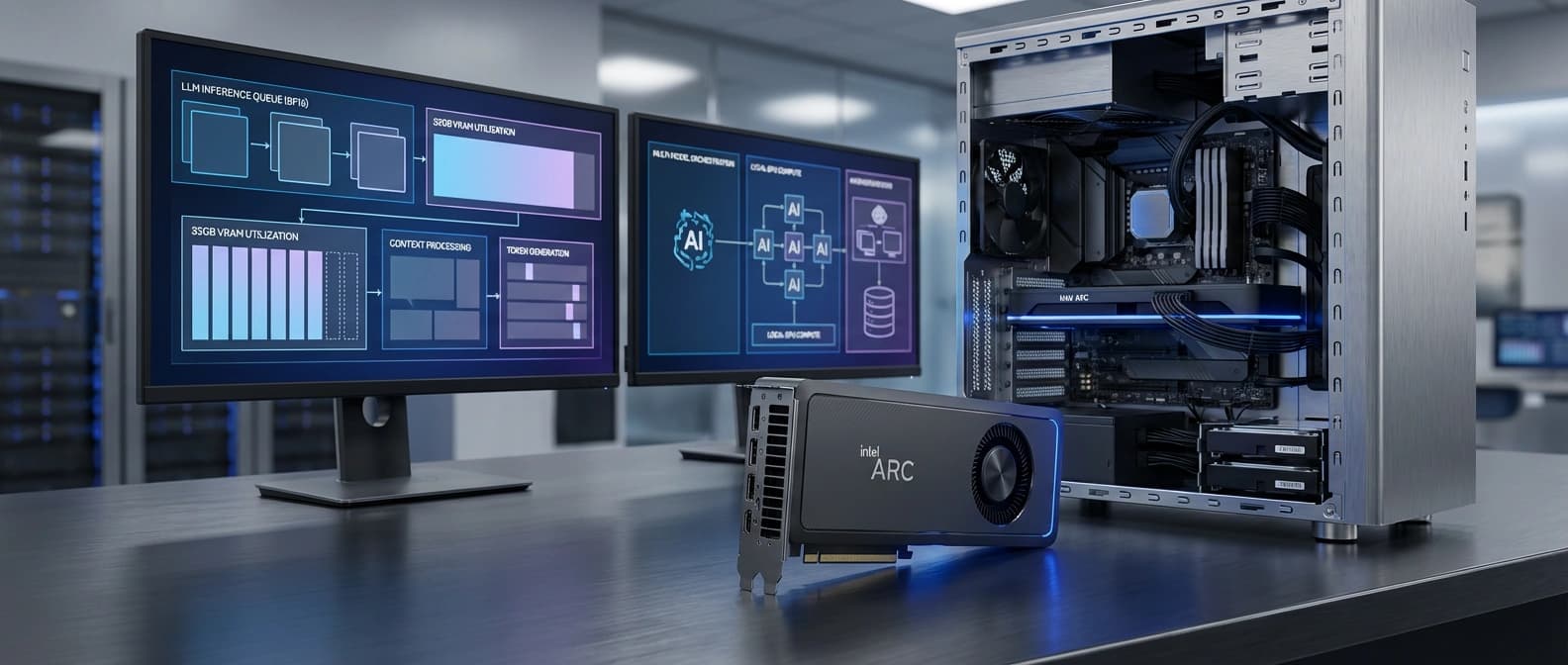
Intel just launched a 32GB workstation GPU at $949. If its own numbers hold up, that could make local AI inference a lot cheaper than it has been.
 ainewssilo.com
The interesting number is not 32GB on its own. It is 32GB at $949, because local AI budgets usually snap on memory pricing before they snap on ambition.
I think Intel picked the right number to lead with, and it is not some heroic benchmark chart. It is 32GB at $949.
That number matters because local AI budgets usually hit a VRAM wall before they hit a philosophical wall. Plenty of people can justify a strong CPU, decent system RAM, and fast storage. The painful line item is often the GPU memory needed to hold bigger quantized models, longer context windows, or multiple concurrent jobs without the whole setup spilling into slower memory and turning sulky.
So when Intel launches the Arc Pro B70 at a $949 suggested price with 32GB of GDDR6, I do not read it as “Intel has finally solved everything.” I read it as a direct swing at one of the market’s most annoying dead zones.
Why 32GB at $949 is the whole point
Intel is pitching the Arc Pro B70 as a workstation and AI inference card on Xe2, with up to 32 Xe cores and 32GB of VRAM. The company says availability starts March 25 through Intel and partners including ARKN, ASRock, Gunnir, Maxsun, and Sparkle, with partner pricing varying by configuration. There is also a lower-tier B65, but the B70 is the cleaner story because it is the one with the obvious memory-per-dollar argument.

That argument is not glamorous, but it is real. In local inference work, memory is trunk space. If the model does not fit, you are not having a deep philosophical debate about architecture. You are standing in the driveway wondering why the suitcase will not close.
That is why the B70 lands on an actual pain point. Workstation-class VRAM has rarely been priced for people who are serious builders but not procurement departments in slacks.
Intel is selling relief from the VRAM dead zone
Intel leans hard on that in its comparisons with Nvidia’s RTX Pro 4000 Blackwell. The company says the B70 can offer up to 2.2x larger context windows, up to 6.2x faster responses in multi-user or multi-agent workloads, and up to 2x tokens per dollar versus that card. Intel’s own footnotes say the tokens-per-dollar comparison uses the B70’s $949 MSRP against an average RTX Pro 4000 street price of $1,775.94 across several retailers.
Those are interesting numbers. They are also Intel’s numbers.
I do not treat launch-day comparisons like stone tablets. But I do take them as evidence of where Intel sees the opening. The opening is not “beat Nvidia at everything.” It is “give local AI builders enough memory at a price that makes the spreadsheet stop looking rude.” That is a smarter attack line.
It also fits a broader market drift toward local and sovereign deployment, the same current we have already seen in pieces like Microsoft’s local sovereign AI stack and the wider argument around open-weight inference economics. Intel is not inventing that demand. It is trying to land a card where the demand already hurts.
What buyers should keep in mind before ordering one
There are a few things I would keep very boring and very clear.
First, do not treat Intel’s Nvidia comparisons as settled fact. They are vendor-supplied claims built around specific configs and specific runs. Independent testing still matters. A lot.
Second, do not read “32GB” as a guarantee that every local AI stack suddenly becomes effortless. Toolchains matter. Framework support matters. Quantization choices matter. The card can be attractively priced and still be the wrong fit for the exact software path you trust.
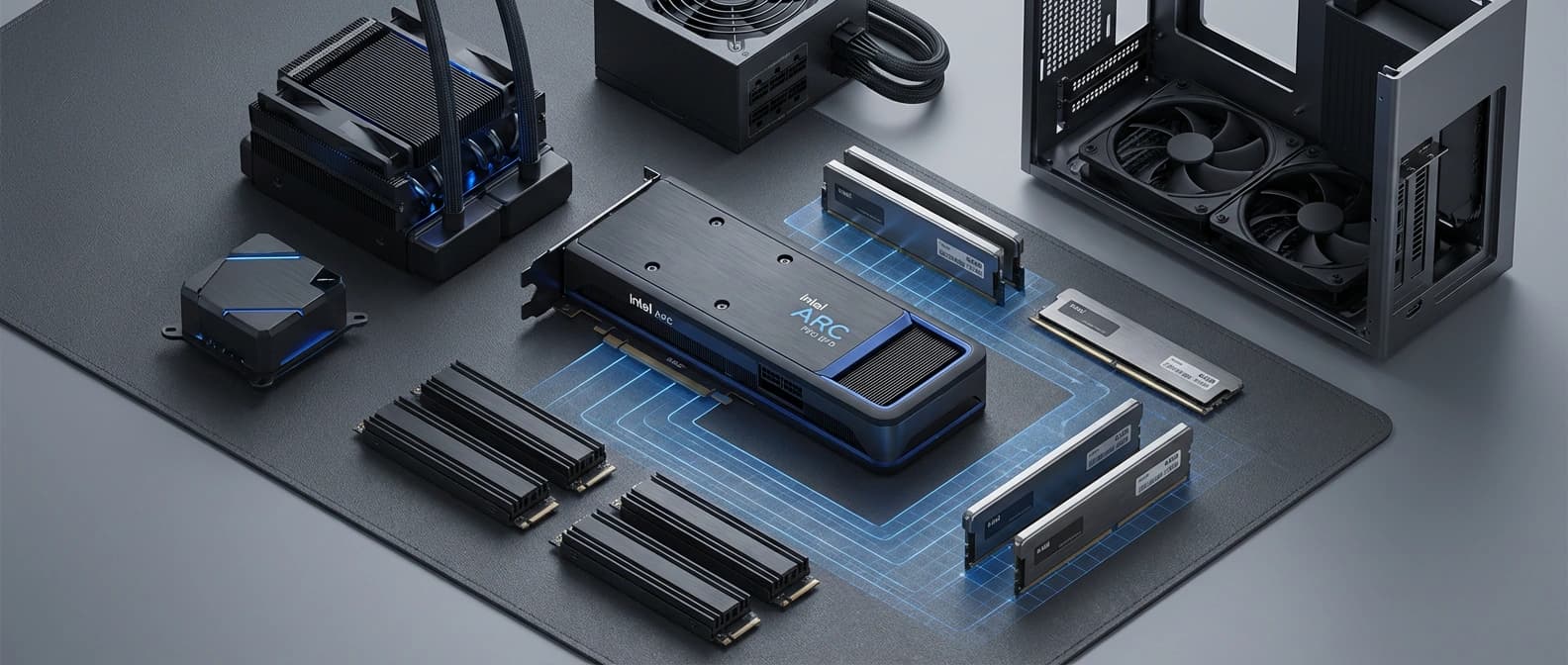
Third, keep the market framing tight. This is not really a gaming story wearing a fake mustache. Intel is framing the B70 around creators, workstations, and AI inference, and outlets like Tom’s Hardware made the same point plainly. If gamers experiment with it later, fine. That is not the main event.
My read on where the B70 could land
If independent reviewers can reproduce anything close to Intel’s value story, the Arc Pro B70 could become one of the most practical local-AI hardware launches in a while. The market has not exactly been drowning in sensible options for people who need more memory without vaulting into a much uglier price band.
If the numbers do not hold up, the launch is still revealing. It shows where the pressure is building. Builders want more VRAM without buying their way into a different tax bracket. Intel clearly sees that, and for once the headline spec lines up with the real pain.
So my take is simple. This is not a reason to rewrite your procurement policy tonight. It is a reason to pay close attention. A 32GB workstation card at $949 changes what a serious one-box local AI build might look like, and that is more useful than a lot of louder GPU news.
Source file
Public source trail
These links anchor the package to the underlying reporting trail. They are not a substitute for judgment, but they do show where the reporting starts.
Primary source for the Arc Pro B70 launch, 32GB VRAM spec, March 25 availability, $949 suggested starting price, partner list, and Intel’s own comparison claims versus Nvidia.
Useful secondary framing on why 32GB matters for local AI, and a reminder that independent non-AI benchmarks were missing at launch.
Secondary confirmation that the launch is aimed at AI and pro workloads rather than gaming, with price-to-memory as the hook.
Secondary confirmation of launch-day pricing and partner availability chatter; use Intel as the authority if timing varies by retailer or region.

About the author
Lena Ortiz
Lena tracks the economics and mechanics behind AI systems, from serving architecture and open-weight deployment to developer tooling, platform shifts, product decisions, and the operational tradeoffs that shape what teams actually run. Her reporting is aimed at builders and operators deciding what to trust, adopt, and maintain.
- 24
- Apr 10, 2026
- Berlin
Archive signal
Reporting lens: Operating leverage beats ideological posturing.. Signature: If the cost curve moves, the product strategy moves with it.
Article details
- Category
- AI Infrastructure
- Last updated
- April 11, 2026
- Lead illustration
- Intel's most interesting move is not another benchmark boast. It is making 32GB of VRAM look reachable in a serious local-AI workstation build.
- Public sources
- 4 linked source notes
Byline
Covers the economics, tooling, and operating realities that shape how AI gets built, shipped, and run.